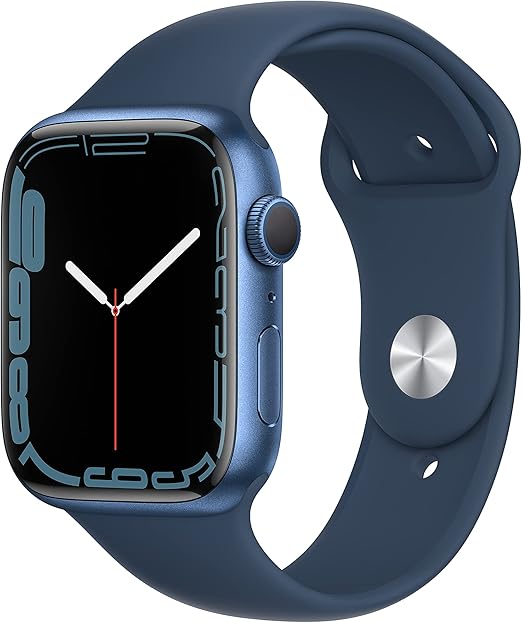
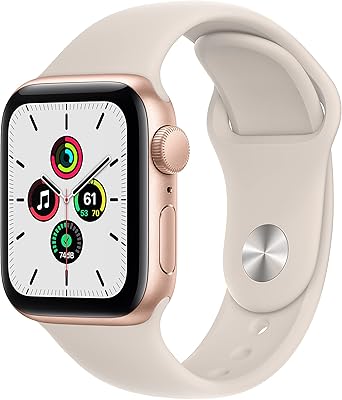
Apple vs Withings: Overview
Comparing Apple and Withings helps you determine which brand is best suited for your needs in Smart Watch. Both brands offer strong choices depending on your budget and key feature requirements.
Key Features & Comparison
Evaluate factors such as build quality, warranty, customer satisfaction, and total value before making your final purchase choice between Apple and Withings.
Battery Life
When examining battery endurance, Withings and Apple occupy opposite ends of the operational spectrum, dictated by their fundamentally divergent hardware architectures. Withings adopts a minimalist, ultra-efficient hybrid philosophy that pairs physical analog movements with low-draw sub-dials or grayscale PMOLED screens. By eliminating power-hungry, high-refresh displays and background-intensive computing processors, devices like the Withings ScanWatch 2 can reliably deliver between 30 to 35 days of continuous operation on a single charge. This monumental endurance drastically reduces charging cadence, making the device an uninterrupted passive health monitor that seamlessly captures nocturnal baseline metrics without the anxiety of daily battery depletion.
Conversely, the Apple Watch lineup—including the flagship Series and Ultra tiers—is engineered as an active, high-performance wrist computer equipped with luminous, LTPO OLED Always-On displays, multi-core system-in-package (SiP) processors, and persistent wireless telemetry. Consequently, standard Apple Watch models necessitate a daily charging regimen, typically yielding 18 to 36 hours of real-world use depending on GPS engagement and screen wake time, while the Apple Watch Ultra extends this ceiling to 36 to 72 hours via low-power mode optimizations. While Apple offsets this aggressive energy consumption through rapid magnetic charging architectures, users must accept the practical trade-off of structured, daily replenishment cycles in exchange for a dynamic, fully realized digital interface.
Build Quality & Durability
Withings approaches wristwear design from the vantage point of traditional horology, crafting devices that prioritize understated luxury, timeless aesthetics, and understated mechanical precision. Models within the ScanWatch family are fabricated utilizing high-grade 316L stainless steel cases paired with anti-reflective sapphire crystal glass across the majority of their tiers, conferring exceptional scratch resistance and resilience against accidental abrasions. The inclusion of mechanical, chrome-finished hands paired with subtle digital windows creates an elevated aesthetic suited for formal attire, while standard 5 ATM water resistance ratings ensure dependable safeguarding during shallow swimming and daily environmental moisture exposure.
Apple delivers an industrial, ultra-modern design language backed by extensive metallurgical choices and advanced composite engineering. The standard Apple Watch utilizes lightweight aerospace-grade aluminum or mirror-finished stainless steel with Ion-X or sapphire crystal glass respectively, while the ruggedized Ultra variant incorporates aerospace-grade titanium with raised bezel lips to protect the flat sapphire front crystal against direct impacts. Apple's structural engineering achieves rigorous certifications, including IP6X dust resistance, WR50 water resistance on base models, and 100-meter water resistance paired with EN13319 dive certification on the Ultra. This technical divergence marks Withings as a refined, dress-forward timepiece, whereas Apple represents an engineered tool built to endure high-velocity athletics and extreme ambient conditions.
Health & Fitness Tracking
In the health surveillance domain, Withings leans heavily into medical-grade, clinical biomarker observation. Its devices emphasize unobtrusive, passive diagnostics validated by clinical studies, offering comprehensive ECG recording to identify atrial fibrillation, SpO2 blood oxygen monitoring, and breakthrough continuous baseline body temperature monitoring using advanced miniaturized heat-flux sensors. Withings excels in sustained, long-term health trends, sleep architecture tracking, and cardiovascular wellness metrics that export cleanly into comprehensive clinical PDF reports for primary care physicians. However, its fitness tracking is relatively restrained, offering straightforward pacing, distance, and connected-GPS metrics that lack advanced athletic training analysis.
The Apple Watch provides a more dynamic, all-encompassing physiological and athletic tracking suite powered by deep sensor fusion and high-rate photoplethysmography (PPG). Beyond standard ECG and blood oxygen capabilities, Apple features dual-sensor retrospective ovulation tracking, sophisticated sleep-stage classification, cardio recovery estimates, and severe condition warnings such as Fall Detection and Crash Detection via high-g accelerometers. For fitness enthusiasts, Apple's proprietary dual-frequency GPS (L1 and L5 on Ultra), native integration with the three-ring activity architecture, custom interval workouts, running dynamics, and real-time power meter cycling connectivity far outclass Withings' capabilities, positioning Apple as the superior hybrid platform for both health safety and high-intensity athletic conditioning.
Smart Features & Connectivity
Smart capabilities reveal the starkest divide between the two brands, with Withings deliberately curbing connected functionality in favor of simplicity and cognitive peace. The small integrated digital display on a Withings hybrid watch delivers essential notifications—such as incoming caller ID, basic calendar alerts, and truncated messaging previews—via haptic feedback and simple text scrolling. However, it lacks an independent application ecosystem, voice assistant capabilities, on-device audio playback, and NFC-based digital payments. It acts purely as a secondary notification beacon rather than an interactive communication node, intentionally preventing screen fatigue and cognitive distraction.
In contrast, the Apple Watch operates as an extension of the iPhone and a stand-alone smart platform powered by watchOS. It features deep integration with the Apple ecosystem, providing full LTE cellular options, Siri voice processing, an expansive third-party App Store, customizable watch faces, full keyboard and dictation message replies, and Apple Pay contactless transactions. Users can stream music directly to wireless earbuds, manage HomeKit smart home accessories, and access native turn-by-turn haptic navigation directly on the wrist. For consumers prioritizing operational independence, real-time interactivity, and a seamless smart ecosystem, Apple holds an insurmountable advantage over Withings' deliberately tethered, low-interaction paradigm.
Compare current retail pricing, active promotions, and verified stock availability directly from authorized stores: