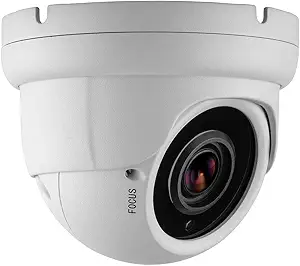
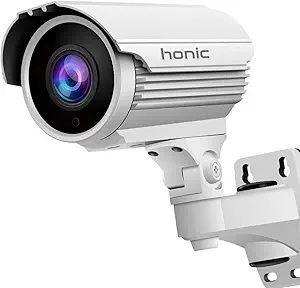
Netatm vs Honic: Overview
Comparing Netatm and Honic helps you determine which brand is best suited for your needs in Security Cameras. Both brands offer strong choices depending on your budget and key feature requirements.
Key Features & Comparison
Evaluate factors such as build quality, warranty, customer satisfaction, and total value before making your final purchase choice between Netatm and Honic.
Picture Quality
Netatmo models prioritize optical clarity and true-to-life color reproduction, leveraging wide-angle lenses paired with 1080p Full HD sensors that are optimized through custom ISP (Image Signal Processor) tuning. The brand focuses heavily on minimizing dynamic range blowouts, particularly in high-contrast outdoor environments, allowing details in shadowed areas to remain sharp without washing out brighter zones. Their infrared night vision is evenly distributed, avoiding the center-spot glare that often obscures facial features, while outdoor variants integrate high-intensity LED floodlights that deliver crisp, full-color nocturnal footage with minimal motion blur.
Honic, on the other hand, leans into higher raw pixel density, frequently offering 2K and 4K sensor options across its product lineup to deliver higher digital zoom headroom. While this sheer resolution captures fine stationary details well, Honic cameras often rely on aggressive post-processing sharpening and contrast enhancements that can introduce digital artifacts and grain in challenging illumination. For night performance, Honic incorporates dual-light switching mechanisms—shifting from standard IR to white-light LEDs upon motion detection—which provides adequate color illumination, though its optical dynamic range remains slightly more prone to edge distortion and clipping compared to Netatmo's calibrated optics.
Smart Features & Connectivity
Netatmo establishes itself as a leader in premium smart home integration, offering deep, native support for Apple HomeKit (including HomeKit Secure Video), Google Assistant, and Amazon Alexa. Its on-device artificial intelligence engine excels at distinguishing between people, pets, vehicles, and arbitrary motion, which drastically curtails false alerts without taxing the local network. Connectivity is rock-solid across standard 2.4 GHz Wi-Fi bands, engineered to maintain low latency when pinging local hubs or cloud-connected ecosystems, making it a frictionless choice for users invested in sophisticated multi-device automation routines.
Honic approaches connectivity with broader hardware versatility, often equipping its cameras with dual-band Wi-Fi (2.4 GHz and 5 GHz) and, in certain professional-grade models, dedicated RJ-45 Ethernet ports with Power over Ethernet (PoE) support. Its smart features cover standard motion, sound, and humanoid detection algorithms; however, processing is occasionally offloaded or relies on less granular heuristics, resulting in occasional false positives during extreme weather or sudden lighting shifts. While Honic supports mainstream third-party ecosystems like Alexa and Google Home, it lacks the deep, refined HomeKit integration that Netatmo provides, catering instead to users seeking straightforward remote viewing and flexible hardware-level network choices.
Privacy & Data Control
Privacy architecture is Netatmo's standout selling proposition, engineered specifically around a local-first philosophy. Footage and facial recognition data are processed on-device and stored locally on high-endurance encrypted microSD cards, entirely bypassing third-party cloud servers unless the user deliberately configures off-site backups to a personal FTP server or Dropbox account. This decentralized approach eliminates the vulnerability of centralized server breaches, ensures compliance with strict European GDPR standards, and guarantees that video telemetry remains solely under the physical and digital control of the homeowner.
Honic provides a more conventional consumer data structure that blends local microSD storage capabilities with hybrid cloud infrastructure. While users can opt out of cloud storage and run the devices via local recording loops or RTSP/ONVIF streams on local Network Attached Storage (NAS) setups, the default user experience encourages routing through proprietary cloud relay servers for remote access and push alerts. Honic utilizes standard AES encryption protocols for data in transit and at rest, but privacy-conscious consumers will find that Netatmo's total structural avoidance of mandatory cloud pipelines offers a superior guarantee against data harvesting and external compromise.
Subscription Plans
Netatmo operates on a strictly subscription-free ownership model that provides immense long-term value. Every feature—including continuous video recording, intelligent person and vehicle detection, customizable alert zones, and local video history retrieval—is fully unlocked straight out of the box without any recurring paywalls. This zero-fee structure insulates consumers from price hikes and unexpected feature deprecations, allowing owners to amortize the somewhat higher initial hardware cost over years of maintenance-free, fully operational surveillance.
Honic generally follows a tiered software-as-a-service (SaaS) architecture, where core baseline functionality such as live streaming and basic local recording are free, but extended value is locked behind recurring subscriptions. Cloud video history, extended event clip storage durations, and certain advanced AI analytical filters often require an active monthly or annual fee. While Honic’s initial hardware retail pricing is frequently lower than Netatmo's, the cumulative cost of ownership can surpass Netatmo over a two-to-three-year lifecycle if users require off-site cloud safeguards and premium alert management.