




Eufy vs Ring: Overview
Comparing Eufy and Ring helps you determine which brand is best suited for your needs in Security Cameras. Both brands offer strong choices depending on your budget and key feature requirements.
Key Features & Comparison
Evaluate factors such as build quality, warranty, customer satisfaction, and total value before making your final purchase choice between Eufy and Ring.
Picture Quality
Eufy consistently pushes the envelope in raw optical performance, offering resolutions spanning from sharp 2K up to native 4K UHD across its flagship outdoor and floodlight models. Its high-end cameras incorporate advanced BSI CMOS sensors paired with wide apertures and high-dynamic-range (HDR) processing, which prevents bright sunlight or car headlights from washing out critical facial features. Furthermore, Eufy’s premium hardware frequently integrates full-color night vision supported by bright, motion-activated LEDs or large sensors that capture ambient illumination without aggressive digital noise reduction, preserving fine textures like license plates and clothing patterns at greater distances.
Ring, by contrast, has historically standardized around 1080p Full HD resolution across its core catalog, only recently introducing 2K and 4K capabilities into its top-tier Pro and Plus configurations. While Ring's 1080p sensors are exceptionally well-tuned for edge-to-edge clarity and consistent color reproduction, they inevitably lack the digital zoom fidelity of Eufy’s 4K offerings, resulting in pixelation when cropping into distant action. Ring compensates for this with sophisticated lens distortion correction and a wider field-of-view (often reaching 150 to 180 degrees horizontally), though its infrared night vision can suffer from slight motion blur on rapid targets compared to Eufy’s higher-framerate, local-rendering architecture.
Smart Features & Connectivity
Eufy sets itself apart by conducting the vast majority of its artificial intelligence processing locally on the device or through its proprietary HomeBase hub. Using on-device BionicMind AI, Eufy cameras deliver rapid facial recognition, vehicle identification, and pet detection with virtually zero latency, as video feeds do not need to traverse remote cloud servers for computer vision analysis. In terms of ecosystem integration, Eufy provides broad flexibility with native support for Amazon Alexa, Google Assistant, and notably Apple HomeKit (including HomeKit Secure Video on select models), making it a versatile choice for multi-platform smart home setups.
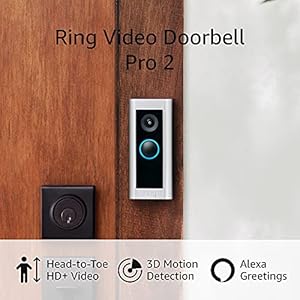
Ring operates as the cornerstone of Amazon’s smart home hardware ecosystem, featuring unrivaled integration with Alexa-enabled displays, Fire TVs, and Echo devices for seamless automated routines and instant video pop-ups. Ring’s 3D Motion Detection powered by radar technology is an industry benchmark, allowing users to map precise 'Bird's Eye View' zones to eradicate false alerts caused by windblown trees or passing traffic beyond property boundaries. However, Ring’s smart capabilities are fundamentally dependent on cloud connectivity for processing, and the brand completely lacks native support for Google Home or Apple HomeKit, restricting its utility strictly to Alexa-centric households.
Privacy & Data Control
Privacy and local data sovereignty represent Eufy’s primary market differentiator, as the brand is engineered around a local-first storage philosophy. Video feeds and event recordings are secured using military-grade AES-128 or AES-256 encryption and stored locally on high-endurance microSD cards or the HomeBase's expandable hard drives. While Eufy faced scrutiny in past years over unencrypted web portal thumbnail streams, it responded by overhauling its communication protocols, reinforcing transparent end-to-end encryption, and ensuring that users retain complete physical custody of their security footage without involuntary cloud handoffs.
Ring takes a centralized cloud approach, which requires users to place significant trust in Amazon’s remote infrastructure and corporate data policies. Ring has instituted robust safeguards, including mandatory two-factor authentication, end-to-end encryption for compatible hardwired and battery devices, and a comprehensive Control Center dashboard within the mobile app. Despite these technical strengths, Ring's cloud-dependent model means data leaves the local network by default, and historical controversies surrounding law enforcement access requests via the Neighbors app continue to make privacy-sensitive consumers cautious compared to local-storage alternatives.
Subscription Plans
Eufy provides an immense financial advantage by offering a complete, out-of-the-box security experience with zero mandatory recurring fees. Core capabilities—including multi-day video history, customized motion alerts, human detection, and automated smart tracking—are fully accessible free of charge due to local storage hardware. While Eufy does offer an optional cloud backup plan for users who demand off-site redundancy, the overwhelming majority of consumers can operate an entire multi-camera Eufy ecosystem for years without spending a single dollar beyond the initial hardware purchase.
Ring relies heavily on the Ring Protect subscription model to unlock the functional utility of its hardware. Without an active monthly or annual plan, Ring cameras are essentially restricted to real-time live viewing and push notifications, with zero recorded video history, no event playback, and stripped-down detection algorithms. While Ring Protect plans are competitively priced—especially the Pro tier, which bundles whole-home professional alarm monitoring and cellular backup—the cumulative lifetime cost of ownership is substantially higher than Eufy’s hardware-only investment model.