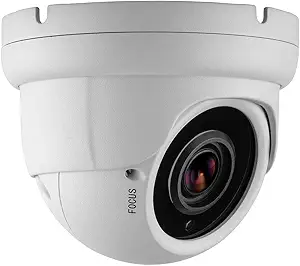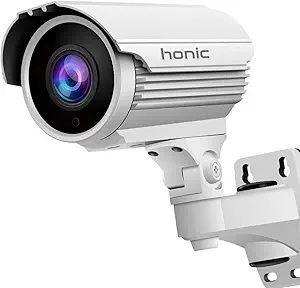








Blink vs Honic: Overview
Comparing Blink and Honic helps you determine which brand is best suited for your needs in Security Cameras. Both brands offer strong choices depending on your budget and key feature requirements.
Key Features & Comparison
Evaluate factors such as build quality, warranty, customer satisfaction, and total value before making your final purchase choice between Blink and Honic.
Picture Quality
When evaluating imaging performance, Blink cameras—such as the Outdoor 4—rely on a balanced 1080p Full HD sensor engineered primarily for energy efficiency rather than ultra-high-definition capture. Because Blink devices operate largely on battery power, their optical pipelines utilize aggressive compression algorithms to minimize bandwidth and power consumption. The resulting video feed delivers sharp daytime clarity with commendable color fidelity, an ample 143-degree diagonal field of view, and effective contrast handling under direct sunlight. However, low-light imaging relies on standard infrared illumination, which produces clear monochrome footage up to approximately 25 feet but inevitably lacks the nuanced detail and dynamic range required for reading license plates or discerning fine facial textures at greater distances.
Honic, which predominantly develops hardwired analog and IP commercial surveillance equipment, approaches picture quality from an enterprise engineering perspective. Many Honic offerings boast higher native resolutions, ranging from 2K (4MP) up to 4K (8MP), utilizing larger optical sensors and wider apertures that capture substantially more light. This architecture facilitates superior digital zooming with far less pixelation than Blink's constrained feeds. Furthermore, Honic models frequently integrate advanced image enhancement protocols like True Wide Dynamic Range (WDR), 3D Digital Noise Reduction (3D-DNR), and full-color night vision capabilities assisted by external warm lighting arrays, providing a marked technical edge in forensic clarity, low-light artifact reduction, and overall video precision in complex surveillance environments.
Smart Features & Connectivity
Blink prioritizes plug-and-play consumer convenience and tight integration within the smart home ecosystem, especially with Amazon Alexa. Communication is facilitated through proprietary low-power wireless protocols linking the cameras to a central Blink Sync Module, which then interfaces via standard 2.4 GHz Wi-Fi. This architectural setup optimizes battery longevity while still delivering vital smart functions such as customizable motion detection zones, two-way audio communication, and computer-vision-driven Person Detection on newer models. While these features are intuitive and provide near-instantaneous push notifications to mobile devices, the closed ecosystem lacks deep native interoperability with third-party automation hubs like Apple HomeKit or Google Home, limiting technical expansion for advanced smart home enthusiasts.
In contrast, Honic security cameras are engineered around open industry standards, typically utilizing Power over Ethernet (PoE) or robust Wi-Fi configurations that interface natively with Open Network Video Interface Forum (ONVIF) and RTSP protocols. While Honic may not offer the seamless consumer app experience or out-of-the-box voice assistant integration that Blink provides, it excels in raw edge-computing intelligence and enterprise connectivity. Honic firmware often incorporates hardware-level analytics such as perimeter intrusion detection, line crossing, unattended baggage alerts, and facial recognition directly on the camera or connected Network Video Recorder (NVR), offering a far more versatile and technically granular deployment framework for bespoke security networks.
Privacy & Data Control
Blink adopts a hybrid consumer cloud architecture where footage security and user data are fundamentally governed by Amazon's overarching infrastructure. Data transmitted to the Blink cloud is shielded via end-to-end encryption in transit (HTTPS/TLS) and encrypted at rest using AES-256 standards. While Blink provides an optional local storage route through a USB drive attached to the Sync Module 2, the system's management, verification handshakes, and remote clip playback remain tethered to Amazon's authentication servers. This reliance means users must trust a centralized, multi-tenant cloud ecosystem, which inherently exposes them to platform-level privacy policies, terms of service changes, and potential server outages.
Honic takes an entirely different stance toward data autonomy, catering to environments where air-gapped security and localized data sovereignty are paramount. By leveraging standalone NVRs, local microSD card slots, or localized Network Attached Storage (NAS) configurations, Honic systems can operate entirely isolated from the public internet. This localized architecture prevents unauthorized external access, eliminates telemetry gathering common in big-tech consumer hardware, and ensures that video streams remain exclusively within the property owner's physical or local network domain. For users prioritizing stringent data governance, zero cloud telemetry, and absolute control over their surveillance assets, Honic offers an objectively superior operational model.
Subscription Plans
Blink operates on a tiered software-as-a-service (SaaS) consumer model that heavily incentivizes monthly or annual subscription commitments. While basic live view and immediate motion alerts are free, key capabilities—such as 60-day cloud video history, rapid video sharing, live view recording, and advanced features like Person Detection—are locked behind the Blink Basic or Blink Plus subscription plans. Although these subscriptions are competitively priced within the consumer market and the Plus tier offers unlimited cameras alongside extended hardware warranties, the recurring operational cost accumulates over time, effectively rendering the cameras feature-limited paperweights if a user opts out of cloud integration without setting up local USB storage workarounds.
Conversely, Honic functions almost exclusively on a zero-subscription, traditional hardware procurement model. Once the initial investment in cameras, cabling, and recording infrastructure (such as an NVR or hard drive) is made, there are no ongoing licensing fees, per-camera cloud charges, or artificial software paywalls restricting access to advanced features. All analytics, continuous 24/7 recording, storage limits, and multi-channel remote streaming are dictated entirely by the hardware capacity chosen by the user. While Honic demands a higher initial capital expenditure and basic networking acumen for setup, it completely eliminates lifetime recurring ownership costs, making it significantly more economical for long-term multi-camera installations.