




Arlo vs Ring: Overview & Brand Philosophy
In the rapidly evolving landscape of smart home surveillance, Arlo and Ring represent two of the most influential, yet philosophically distinct, pioneers. Arlo originated as an offshoot of networking veteran Netgear before establishing itself as an independent, publicly traded entity. Arlo’s brand philosophy centers heavily on optical superiority, advanced video processing, and flexible hardware independence. By prioritizing high-resolution imaging—frequently pushing boundaries with 2K and 4K sensors—Arlo appeals to homeowners and enterprise users who refuse to compromise on visual fidelity, field-of-view breadth, and detailed forensic identification.
Conversely, Ring, an Amazon subsidiary, fundamentally altered the home security paradigm by transforming the humble front door into a perimeter-monitoring powerhouse. Ring’s philosophy is deeply rooted in neighborhood-centric security, seamless ecosystem connectivity, and frictionless accessibility. Rather than treating security cameras as isolated recording units, Ring views its hardware as integral endpoints within a broader, unified smart ecosystem that includes video doorbells, smart lighting, and fully monitored alarm systems. This approach emphasizes instant communication, community vigilance via its Neighbors network, and tight, native synergy with Amazon Alexa.
While both brands dominate market share, their strategic paths diverge significantly. Arlo functions primarily as an imaging specialist that delivers cutting-edge, versatile standalone cameras that integrate neutrally across Apple HomeKit, Google Home, and Amazon Alexa. Ring functions as an all-encompassing lifestyle security provider, leveraging Amazon’s infrastructure to deliver reliable, budget-conscious, and integrated residential protection. Choosing between them requires weighing Arlo's technological sophistication against Ring's holistic, user-friendly ecosystem.
Key Differences & Technological Comparison
The technological divergence between Arlo and Ring becomes evident when examining their camera optics, power delivery, local versus cloud infrastructure, and smart ecosystem integrations. Understanding these fundamental mechanical and software nuances is critical for deploying the right system for your property.
Video Resolution and Optical Quality
Arlo consistently leads in pure visual engineering. Its flagship outdoor lineups—such as the Arlo Ultra 2 and Arlo Pro 5S—boast native 4K and 2K HDR video capture. These sensors allow for significant digital zoom capabilities without instant pixel degradation, which is vital for discerning license plates or facial features at a distance. Furthermore, Arlo utilizes sophisticated dual-band Wi-Fi (2.4GHz and 5GHz) to manage higher bandwidth demands and offers ultra-wide fields of view up to 180 degrees with automatic de-warping. Ring has traditionally anchored its catalog to 1080p Full HD, prioritizing bandwidth efficiency and broad device compatibility over raw resolution. While Ring has introduced "Retina-grade" 2K options in select top-tier devices, Arlo maintains a broader portfolio of high-resolution sensors coupled with advanced color night vision powered by integrated high-output spotlights.
Ecosystem Integration and Smart Home Protocol
Ecosystem compatibility is one of the most critical deciding factors between these two manufacturers. Ring is intrinsically built around Amazon Alexa. While it operates adequately with Samsung SmartThings, it strictly excludes native Apple HomeKit integration and offers only rudimentary, read-only functionality with Google Assistant. In contrast, Arlo adopts an ecosystem-agnostic design. When configured with an Arlo SmartHub base station, many of Arlo's flagship cameras integrate directly into Apple HomeKit, providing Home app viewing and Siri automation, alongside native compatibility with Google Assistant, Amazon Alexa, and IFTTT. For multi-platform households or Apple-centric environments, Arlo offers superior flexibility.
Power Architecture and Hardware Footprint
Both brands offer wire-free battery-operated models, solar-assisted accessories, and traditional hardwired configurations. However, the execution varies. Arlo predominantly uses sleek, integrated, unibody magnetic enclosures with internal, removable rechargeable batteries or direct magnetic charging cables. This design allows for rapid deployment, micro-angle adjustments, and clean aesthetics. Ring often adopts a more robust, utilitarian casing that utilizes standard Quick-Release Battery Packs. Ring’s modular battery design allows users to swap depleted batteries without unmounting the entire camera housing, though the physical footprints of Ring's cameras tend to be boxier and more industrial compared to Arlo’s modern, minimalist silhouettes.
Storage Options and Subscription Models
Both manufacturers enforce subscription paywalls to unlock essential smart features, such as cloud video history, person/vehicle/animal detection, and customized activity zones. Without a subscription (Arlo Secure or Ring Protect), both systems are largely relegated to live-view monitors with real-time push alerts. However, Arlo maintains a distinct advantage for privacy-focused users: by introducing a physical Arlo SmartHub, users can establish direct-to-local USB or microSD storage that is accessible remotely via the Arlo app without a monthly fee. Ring, outside of its niche Ring Edge feature requiring the expensive Ring Alarm Pro base station with an integrated eero router, remains almost entirely tethered to Amazon Web Services (AWS) cloud storage.
Pros & Cons Comparison
Arlo
- Pro: Industry-Leading Resolution: Widespread availability of 2K and 4K HDR options that provide superior digital zoom clarity and forensic detail.
- Pro: Broad Ecosystem Interoperability: Exceptional native support for Apple HomeKit, Google Home, Amazon Alexa, and IFTTT.
- Pro: Local Storage Options: Capability to route footage to local microSD or USB drives via the Arlo SmartHub base station to bypass cloud dependencies.
- Pro: Advanced Visual Features: Ultra-wide fields of view (up to 180 degrees), optical auto-zoom and tracking, and robust color night vision.
- Con: Higher Initial Cost: Premium optical hardware and base station components demand a higher upfront financial investment.
- Con: Aggressive Subscription Dependencies: Without an Arlo Secure plan, camera utility drops significantly, limiting cloud storage and advanced artificial intelligence triggers.
- Con: Occasional Wake-Up Latency: Wire-free battery models can experience a slight delay in motion wake-up times when operating without a continuous power cable.
Ring
- Pro: Seamless Alexa & Smart Screen Integration: Unmatched, instantaneous integration with Echo Show devices, Fire TVs, and Alexa routines.
- Pro: Holistic Whole-Home Ecosystem: Direct hardware interoperability with the award-winning Ring Alarm system, Ring Smart Lighting, and Ring Doorระหว่าง devices.
- Pro: Cost-Effective Entry Point: Wide range of budget-friendly outdoor and indoor models with affordable single-device and whole-home cloud plans.
- Pro: User-Friendly Swappable Batteries: Quick-Release Battery Packs permit hot-swapping without unmounting the camera bracket.
- Con: Limited Video Resolution: The vast majority of the catalog is capped at standard 1080p, lagging behind modern 2K/4K industry benchmarks.
- Con: Fragmented Third-Party Compatibility: Virtually zero support for Apple HomeKit and severely degraded utility within the Google Home ecosystem.
- Con: Privacy Apprehensions: Historic controversies regarding data sharing, law enforcement collaboration programs, and cloud vulnerabilities have raised consumer privacy concerns.
Performance, Durability & Value Analysis
From an operational standpoint, both brands exhibit high long-term durability, but they cater to different operational profiles. Ring hardware is built to withstand extreme environmental conditions, demonstrating high resilience to thermal fluctuation, torrential rain, and UV degradation. Its physical build feels industrial, prioritizing structural durability over aesthetic minimalism. Performance-wise, Ring’s real-time alert latency over 2.4GHz connections is remarkably fast, particularly when communicating with Amazon Echo infrastructure. In contrast, Arlo focuses on precision engineering: its IP65-certified weather resistance shields intricate high-definition lenses, sensitive microphone arrays with active wind-noise cancellation, and integrated spotlights. While Arlo’s dynamic range and night imaging outperform Ring substantially in low-light environments, users must ensure an exceptionally robust Wi-Fi backhaul (or optimal placement of the proprietary SmartHub) to transmit heavy 2K or 4K data streams without packet dropouts or buffering.
When measuring total cost of ownership against delivered value, the evaluation shifts based on system scale. If your deployment goal is a quick, single-point front-door or patio monitor on a strict budget, Ring represents tremendous value; its initial hardware entry pricing is lower, and the basic Ring Protect plan remains accessible. However, as an installation scales to encompass multiple high-risk exterior perimeters where identification—rather than merely detection—is crucial, Arlo’s pricing premium proves justified. The ability of an Arlo 4K camera to pull legible text, distinct clothing patterns, and facial attributes provides quantifiable security utility that a 1080p sensor cannot replicate. While Arlo’s multi-camera subscription tiers (Arlo Secure Plus) sit at a higher price ceiling, the technological ceiling of the hardware ensures a significantly longer operational lifespan before technical obsolescence sets in.
Final Verdict: Which Brand Should You Choose?
Selecting between Arlo and Ring requires balancing your existing smart home framework against your visual security requirements.
Choose Arlo if: You demand the highest visual clarity available, value deep zoom capabilities, and operate within a mixed or Apple-centric smart home. Arlo is the definitive choice for consumers who require standalone outdoor perimeter surveillance that captures crystal-clear 2K or 4K evidence. It is also ideal for privacy-conscious users who prefer local base-station recording and wish to maintain platform freedom across Apple HomeKit, Google Assistant, and Amazon Alexa.
Choose Ring if: You are deeply embedded in the Amazon Alexa ecosystem, prioritize simplicity, and desire a comprehensive, turnkey home security solution. Ring is unmatched if you want your cameras, video doorbells, smart floodlights, and professionally monitored security alarm to live harmoniously inside a single, intuitive application. For the average homeowner seeking a cost-effective, dependable, and highly collaborative neighborhood defense system, Ring remains the pragmatic market benchmark.
Picture Quality
When evaluating picture quality between Arlo and Ring, the fundamental difference lies in hardware engineering and resolution ceilings. Arlo deliberately positions itself at the high-fidelity end of the market, offering models like the Ultra 2 and Pro 5S that output native 4K and 2K resolutions equipped with advanced High Dynamic Range (HDR). This higher pixel density, combined with high-grade optical lenses, translates to superior digital zoom capabilities; users can crop into license plates, facial features, or distant perimeter movement without the image immediately dissolving into pixelation. In contrast, Ring has traditionally standardized around 1080p Full HD across the majority of its floodlight, spotlight, and doorbell lineups, only recently introducing select "Pro" models with 1536p or head-to-toe aspect ratios. While Ring’s video stream is finely tuned for reliability and bandwidth efficiency, it cannot match Arlo’s pure resolving power, optical clarity, and color fidelity in high-contrast daytime lighting conditions.
Low-light performance and dynamic range further differentiate the two brands' optical engineering. Arlo integrates powerful, dedicated LED spotlights alongside larger image sensors with wider apertures, allowing for legitimate, full-color night vision with minimal motion blur, even in pitch-black environments. Ring handles low-light scenarios predominantly via traditional infrared illumination, producing clean black-and-white night vision; while its software-driven "Color Night Vision" attempts to ambiently colorize the frame, it often results in muted, muddy tones and increased sensor noise compared to Arlo’s true-color illumination. However, Arlo's pursuit of high fidelity introduces real-world trade-offs: streaming and storing 2K and 4K footage consumes significantly more Wi-Fi bandwidth and demands robust home network infrastructure, frequently resulting in brief buffering latencies during live-view initialization. Ring's compression algorithms and lower native resolutions yield exceptionally stable, low-latency video feeds that perform reliably even on congested or low-bandwidth networks.
Field-of-view (FOV) engineering and software distortion correction round out the comparison. Arlo generally pushes the boundary with ultra-wide lenses reaching up to 180 degrees diagonally, utilizing proprietary de-warping software to flatten the fisheye distortion at the edges of the frame. While this expansive view captures expansive driveways or yards in a single feed, it can soften edge-to-edge sharpness. Ring typically employs more conservative fields of view—between 140 and 160 degrees—or vertical-first aspect ratios (such as 1:1 on battery doorbells) optimized for porch and doorstep surveillance. Consequently, Ring often retains slightly better edge sharpness within its narrower frame, but Arlo wins definitively on overall image fidelity, dynamic contrast handling, and critical forensic detail.
Smart Features & Connectivity
From an engineering standpoint, Arlo and Ring approach smart features and connectivity with fundamentally different architectural philosophies. Arlo focuses heavily on edge-level and cloud-assisted computer vision, outfitting its ecosystem with sophisticated object recognition capabilities through Arlo Secure. Arlo’s cameras excel at granular detection, accurately distinguishing between people, animals, vehicles, and packages, alongside specialized acoustic monitoring for smoke and carbon monoxide alarms. In terms of connectivity, Arlo offers significant technical flexibility; high-end setups can utilize the Arlo SmartHub, which establishes a proprietary RF network (Sub-GHz and customized Wi-Fi) that offloads bandwidth strain from the home router, extends local range, and enables local microSD/USB storage. Furthermore, premium models support dual-band (2.4 GHz and 5 GHz) Wi-Fi, which substantially reduces latency and interference in congested smart home environments, though standalone cameras operating solely on 2.4 GHz can suffer from moderate wake-up latency when triggered.
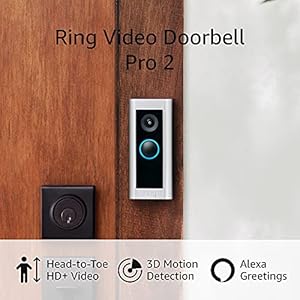
Ring, an Amazon subsidiary, anchors its connectivity and intelligence tightly within the broader Alexa ecosystem while emphasizing low-latency communication through proprietary protocols. While Ring’s artificial intelligence detection—such as package and person detection through Ring Protect—is reliable, it generally lacks the granular behavioral modeling found in Arlo's algorithms. Where Ring dramatically out-engineers Arlo is in physical and multi-device connectivity. Select Ring devices integrate Ring's internal radar technology for 3D Motion Detection and Bird’s Eye View, providing a dynamic aerial map of movement events that is unmatched by standard passive infrared (PIR) sensors. On the networking front, high-tier Ring cameras feature robust dual-band Wi-Fi and seamless integration with Amazon Sidewalk, a low-bandwidth, long-range shared network that preserves baseline connectivity even if home Wi-Fi flickers. Additionally, select Ring "Pro" offerings provide Power over Ethernet (PoE), delivering commercial-grade connectivity stability that battery-centric systems simply cannot match.
When weighing the practical trade-offs, the decision between Arlo and Ring hinges on platform agnosticism versus ecosystem depth. Arlo stands as the superior technical choice for multi-platform households, offering rare, native integration with Apple HomeKit (via the SmartHub), Google Home, and Amazon Alexa, paired with unmatched AI tagging precision. However, this flexibility comes at the cost of a strictly mandatory subscription tier to unlock basic smart alerts and video history. Conversely, Ring delivers an ultra-streamlined, responsive experience optimized exclusively for Amazon Alexa and Echo Show devices, supported by the hyper-local "Neighbors" app for community-sourced security intelligence. Ring’s reliance on cloud processing introduces latency risks if internet bandwidth drops, but its hardware versatility—spanning battery, solar, hardwired, and PoE connections—provides a more dependable connectivity backbone for users dedicated to the Amazon smart home framework.
Privacy & Data Control
When assessing privacy architecture and data stewardship, Arlo and Ring represent fundamentally divergent philosophies. Arlo has long positioned itself as a privacy-first hardware manufacturer, formally codifying this stance through an explicit "Privacy Pledge" that promises user footage will never be monetized, shared with third parties, or provided to law enforcement without a legally binding warrant. To reinforce this policy, Arlo supports local storage via optional SmartHub basestations (using microSD or USB drives), which allows users to keep recordings within their own network perimeter, bypassing the cloud entirely for maximum data sovereignty. In contrast, Ring’s engineering architecture is heavily reliant on Amazon’s cloud ecosystem (AWS), leaving local storage options limited to niche setups like Ring Alarm Pro with an active Ring Home subscription. Historically, Ring faced significant consumer scrutiny regarding data governance—specifically concerning its Neighbors app, deep collaborations with police departments, and past instances of unauthorized employee access to video feeds—forcing the brand into a reactive posture regarding data containment.
In response to consumer pushback, Ring has made substantial engineering strides, most notably by implementing end-to-end encryption (E2EE) for video transmissions. Ring’s advanced E2EE ensures that only enrolled mobile devices hold the private cryptographic keys necessary to decrypt video streams, mathematically precluding Amazon, law enforcement, and ISP snoopers from accessing the footage. However, activating Ring’s E2EE creates severe functional trade-offs: it disables cloud-dependent features such as rich notifications, video previews, Event Timeline scrolling, and integrations with Amazon Echo Show or third-party platforms. Arlo also employs robust standard cryptographic standards (TLS and 256-bit AES encryption) and introduced its own End-to-End Encryption deployment on select devices via the Arlo SmartHub, but it uniquely manages to retain a higher level of local functionality through Direct Storage Access on native hardware without systematically gutting the user experience.
Ultimately, the choice between Arlo and Ring regarding data control comes down to trust paradigms and architectural flexibility. Ring now offers the industry's most rigorous mathematical protection via E2EE, but choosing it neuters the deeply integrated, highly convenient Amazon ecosystem that attracts buyers to the platform in the first place. Furthermore, Ring's Ring Control Center—while an excellent, centralized dashboard for managing two-factor authentication (2FA), authorized client logins, and third-party service links—operates against the backdrop of Amazon's broader data-collection mandate. Arlo provides a cleaner corporate boundary for privacy-conscious users, offering legitimate off-cloud local recording options and rigid corporate data covenants without forcing the consumer to sacrifice core operational features like smart alerts, making Arlo the superior analytical choice for uncompromising, balanced data stewardship.
Subscription Plans
When evaluating cloud subscription ecosystems, Arlo and Ring diverge significantly in their pricing tiers, video storage capabilities, and the gatekeeping of advanced artificial intelligence features. Ring structures its ecosystem around the Ring Protect plans (Basic, Plus, and Pro). Ring's entry-level plan covers a single device, while the Plus tier provides unlimited camera support at a single location with 180-day video history, snapshot capture, and extended warranties. Arlo counters with its Arlo Secure plans (Single Camera, Multi-Camera, and Safe & Secure), retaining footage in the cloud for up to 30 days. While Ring offers a more generous video retention window, Arlo differentiates its platform through superior imaging pipeline integration, supporting up to 4K cloud recording on premium tiers, whereas Ring historically caps standard cloud playback resolution at 1080p, with only newer select models leveraging higher-resolution streams under optimized tier structures.
The core functional disparity lies in what features each brand cordons off behind their respective paywalls. Arlo adopts an aggressive monetization model where advanced computer vision—such as sophisticated object detection distinguishing between people, vehicles, animals, and package delivery, as well as customizable cloud activity zones—is almost entirely inaccessible without an active Arlo Secure subscription. Without it, most modern Arlo cameras are reduced to rudimentary motion alerts and live-view streaming, severely degrading their utility unless paired with a local SmartHub for network-attached storage playback. Ring, while also reserving package detection, rich notifications, and cloud history for paying subscribers, provides a slightly more functional out-of-the-box experience, particularly with its foundational motion-alerting architecture, while reserving professional monitoring and local cellular backup exclusively for its top-tier Ring Protect Pro plan via the Ring Alarm ecosystem.
From a practical consumer standpoint, the choice between Arlo and Ring comes down to high-resolution AI surveillance versus whole-home value. Arlo represents the superior technical ecosystem for users seeking granular computer vision, high-fidelity 2K and 4K forensic detail, and precision alerting, though at a steeper recurring operational cost, especially if adding continuous video recording (CVR), which requires a dedicated, pricey add-on per camera. Ring’s Protect plans, particularly the multi-device Plus and Pro tiers, provide vastly superior economies of scale for expansive properties deploying numerous cameras, video doorbells, and integrated security hardware. Users heavily invested in Amazon Alexa integration will find Ring's tiered pricing significantly more cost-effective over a multi-year deployment, whereas Arlo demands a premium investment purely justified by optical clarity and intelligent filtering.