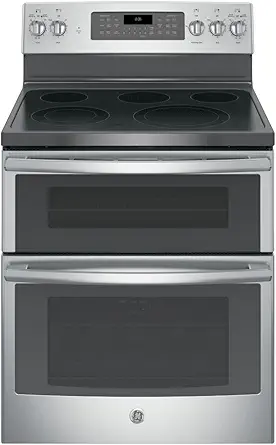
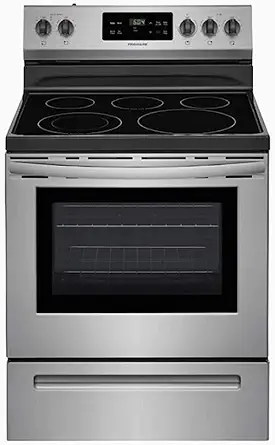
GE vs Frigidaire: Overview
Comparing GE and Frigidaire helps you determine which brand is best suited for your needs in Ranges. Both brands offer strong choices depending on your budget and key feature requirements.
Key Features & Comparison
Evaluate factors such as build quality, warranty, customer satisfaction, and total value before making your final purchase choice between GE and Frigidaire.
Features
Feature architecture between these two manufacturers highlights a fundamental difference in product development priorities. Frigidaire has established an aggressive competitive edge around specialized cooking modalities, prominently popularizing the built-in 'Air Fry' tray mechanism and 'Slow Cook' settings that reduce reliance on countertop appliances. Furthermore, Frigidaire’s push into induction technology, characterized by responsive 'Auto-Sizing' pan detection and ultra-responsive temperature modulation, offers high-efficiency electromagnetic cooking at prices traditionally reserved for standard radiant glass tops. Their ranges also frequently feature quick-clearing steam clean cycles designed for light, 30-minute maintenance without the heavy energy consumption and odor of traditional pyrolytic self-clean systems.
GE counters this strategy with a broader, more sophisticated technological backbone anchored by its SmartHQ Wi-Fi infrastructure. GE's smart platform not only provides standard remote preheating and timers, but actively updates appliance firmware to add new cooking modes post-purchase, such as 'No-Preheat Air Fry' and precision cooking probe integration that communicates directly with guided recipe software. On the cooktop level, GE excels with multi-ring power burners capable of scaling between low-wattage simmers and 20,000 BTU gas power outputs, alongside integrated edge-to-edge griddles that maximize cooking surface area. While Frigidaire excels at providing immediate, standalone hardware capabilities, GE provides a smarter, more expandable software ecosystem with superior heating element versatility.
Performance
In terms of thermal performance, both brands demonstrate strong engineering competency, yet they manifest their strengths differently depending on the energy source and cooking method. In the oven cavity, GE’s True European Convection—which integrates a dedicated third heating element surrounding the rear convection fan—consistently delivers superior airflow distribution, resulting in exceptional multi-rack baking uniformity and consistent browning on delicate pastries. GE’s electronic sensor systems continuously monitor oven temperatures, preventing the sharp thermal swings that can undermine technical baking. Conversely, Frigidaire utilizes its 'Total Convection' system across higher-tier models, which dynamically adjusts fan speeds and heating elements across various cooking profiles, achieving rapid crisping on roasted meats and fried foods that rivals dedicated countertop convection units.
On the cooktop surface, performance metrics diverge between gas and induction categories. Frigidaire’s induction ranges punch significantly above their weight class, delivering induction-driven rapid boil times that outpace GE's baseline radiant models and challenge GE's pricier induction variants, delivering near-instantaneous heat response and remarkable low-temperature simmer stability. On the gas front, GE generally pulls ahead with commercial-inspired burners that provide broader dynamic range, allowing users to transition seamlessly from a gentle 5,000 BTU melting simmer to a fierce 18,000 to 21,000 BTU sear. While Frigidaire delivers exceptional cooking speed and surface agility via induction, GE secures superior ambient baking balance and more versatile gas flame distribution for complex meal preparation.
Design
Design aesthetics and ergonomic engineering reveal contrasting brand philosophies regarding kitchen integration. Frigidaire leans heavily into a clean, commercial-inspired architectural language, characterized by crisp, angular handles, commercial-style control knobs, and their proprietary Smudge-Proof stainless steel finish, which significantly outperforms standard steel in resisting fingerprints and everyday grease. Their front-control slide-in units are engineered to overlap existing countertops effortlessly, creating a cohesive, built-in aesthetic without requiring extensive cabinetry modifications. However, lower-tier Frigidaire models occasionally incorporate lighter-gauge sheet metal in the storage drawer assembly and side paneling, reminding the user of their budget-friendly origins.
GE ranges exhibit a more robust, substantial structural mass, characterized by heavy-duty continuous cast-iron grates that span the entire cooktop surface, allowing seamless sliding of heavy Dutch ovens without tipping hazards. GE’s industrial design team emphasizes visual continuity, utilizing contoured bullnoses, backlit control dials, and high-definition capacitive touch panels that elevate the perceived build quality. Internally, GE oven cavities boast durable porcelain enameling paired with heavy-gauge, smooth-glide racking systems capable of handling large roasts without sagging. While Frigidaire delivers a sharper, modern European-inspired facade that keeps maintenance effortless, GE conveys greater tactile solidity and cohesive industrial refinement across all touchpoints.
Compare current retail pricing, active promotions, and verified stock availability directly from authorized stores: