
Epson vs Lexmark: Overview
Comparing Epson and Lexmark helps you determine which brand is best suited for your needs in Printers. Both brands offer strong choices depending on your budget and key feature requirements.
Key Features & Comparison
Evaluate factors such as build quality, warranty, customer satisfaction, and total value before making your final purchase choice between Epson and Lexmark.
Features
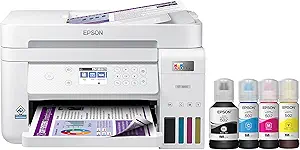
When examining hardware and software features, Epson emphasizes versatility, consumer accessibility, and cutting-edge media handling. Its consumer and prosumer EcoTank and WorkForce series frequently incorporate multi-function capabilities such as single-pass duplex scanning, wide-format paper paths capable of handling specialized fine-art substrates, and borderless photographic output. Connectivity is highly consumer-oriented, sporting intuitive Wi-Fi Direct, Apple AirPrint, and cloud integration managed through the polished Epson Smart Panel mobile application. In high-end commercial spaces, Epson’s precision printheads allow for multi-channel ink configurations—often employing six to ten distinct inks to achieve unparalleled color gamuts that standard four-color processes cannot replicate.
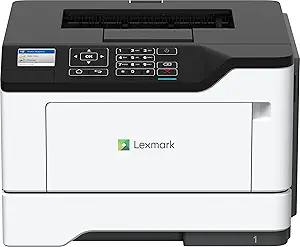
Lexmark counters with a software and hardware ecosystem engineered specifically for business automation and IT compliance. Its multifunction laser devices are equipped with sophisticated Embedded Solutions Framework (eSF) applications, enabling users to run custom workflows directly from the printer's large, responsive e-Task touchscreen interface. Lexmark shines brightest in security and fleet administration; features such as encrypted hard drives, rigorous user authentication protocols, digital signatures, and granular network port filtering are native across most models. While Lexmark devices generally lack the photographic media capabilities and borderless printing of Epson, they surpass Epson in office-centric handling through high-capacity paper trays, automated staple finishers, and multi-position hole-punch attachments designed for uninterrupted corporate productivity.
Performance
In terms of operational performance, the divergence between inkjet and laser architectures creates distinct operational advantages for each brand. Epson’s Heat-Free PrecisionCore technology eliminates the thermal warm-up phase required by traditional lasers, yielding rapid first-page-out times from a cold start while consuming significantly less electrical power. When evaluating output quality, Epson delivers industry-leading image depth, fine gradient resolution, and accurate color balance, making it dramatically superior for graphics, architectural mockups, and photography. However, when tasked with extremely high page volumes on standard copy paper, high-speed inkjet prints can occasionally suffer from minor ink-saturation cockling, and text edges—while sharp—do not possess the fused crispness inherent to toner.
Lexmark demonstrates its performance superiority through sheer velocity, duty cycle resilience, and unmatched monochrome text clarity. Utilizing advanced electrophotographic laser engines, Lexmark printers maintain blistering print speeds—often exceeding 40 to 60 pages per minute—without the slightest drop in clarity during sustained multi-thousand-page print runs. Micro-fine Unison toner formulation ensures that microscopic typography, bar codes, and complex vector schematics render with razor-sharp precision and instantaneous drying. Furthermore, Lexmark engines boast astronomical monthly duty cycles that would overwhelm typical inkjet printheads, making them vastly more dependable for environments that demand continuous, high-speed documentation without fear of mechanical fatigue or printhead clogging.
Design
Epson’s physical design philosophy prioritizes space optimization, ergonomic simplicity, and visible resource management. Modern EcoTank models feature seamlessly integrated, forward-facing ink reservoirs that allow users to monitor fluid levels at a glance, paired with keyed bottle nozzles that prevent cross-contamination during refills. The aesthetic tends to be modern and utilitarian, utilizing textured, matte-black or clean white plastics that blend comfortably into home offices, classrooms, or creative studios. While consumer chassis can sometimes exhibit slight flex in their telescoping trays and scanner hinges to keep unit weight manageable, Epson's professional and commercial lines are considerably reinforced, providing robust internal mechanics inside compact footprints.
In stark contrast, Lexmark machines are architected like industrial machinery, emphasizing rugged structural integrity, internal metal framing, and modular scalability. Designed to endure years of physical abuse in high-traffic corporate hallways, warehouse dispatch desks, and healthcare nurse stations, Lexmark devices feature heavy-gauge plastics, reinforced paper cassettes, and industrial-grade hinges. The overall footprint is substantially larger and heavier than equivalent Epson models, which can make initial placement cumbersome. However, this bulk is purposeful: the modular chassis allows IT administrators to stack additional high-capacity paper drawers, envelope feeders, and external output sorters directly onto the base unit, creating an exceptionally stable, floor-standing or heavy-desktop workstation built for endurance.