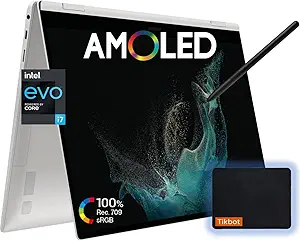
Samsung vs LG: Overview
Comparing Samsung and LG helps you determine which brand is best suited for your needs in Laptops. Both brands offer strong choices depending on your budget and key feature requirements.
Key Features & Comparison
Evaluate factors such as build quality, warranty, customer satisfaction, and total value before making your final purchase choice between Samsung and LG.
Affordability
When evaluating affordability, Samsung commands a significant structural advantage over LG by offering a substantially wider pricing spectrum. Samsung’s laptop strategy encompasses everything from sub-$400 entry-level models, such as the Galaxy Book Go and basic Chromebooks, to mid-range productivity clamshells and halo-tier devices like the Galaxy Book Ultra. This tiered architecture ensures that cost-conscious students and general office workers can enter the Samsung hardware ecosystem without stretching their budgets. In contrast, LG virtually ignores the entry-level and budget segments. LG concentrates its engineering and manufacturing almost entirely on its premium Gram lineup, setting a high baseline floor that rarely dips below the $1,000 threshold for current-generation configurations. For shoppers strictly seeking the lowest barrier to entry, Samsung provides clear accessibility where LG offers virtually no presence.
When examining the feature-to-price ratio in the competitive mid-to-high tiers ($900 to $1,600), the two manufacturers direct consumer dollars toward vastly different technical strengths. Samsung leverages its vertical supply-chain integration—most notably its leadership in display manufacturing—to deliver vibrant Dynamic AMOLED 2X panels and seamless mobile-ecosystem cross-connectivity at prices where competitors typically offer standard IPS displays. On the other hand, LG justifies the higher price tag of the Gram family through relentless mechanical miniaturization, utilizing specialized magnesium-alloy chassis designs that deliver sub-kilogram weights alongside class-leading 80Wh+ battery capacities. While an LG Gram provides superior port selection, thermal volume, and battery endurance per dollar spent, Samsung routinely beats LG on raw graphical performance and display caliber within identical price brackets.
Practical purchase dynamics and long-term value retention further differentiate both brands in real-world affordability. Samsung frequently engages in aggressive promotional strategies, bundle discounts, and high-value trade-in allowances across its global retail channels, which substantially lowers the actual street price compared to manufacturer suggested retail pricing (MSRP). However, this rapid promotional cycle also causes Samsung laptops to depreciate more quickly on secondary markets. LG takes a more conservative approach with fewer steep price drops outside major sales cycles, protecting initial investment equity but making initial acquisition costlier. Ultimately, consumers prioritizing upfront affordability, diverse configuration tiers, and high-end display fidelity per dollar will find better value in Samsung, whereas those willing to pay a premium for specialized ultra-lightweight mobility and all-day battery life will find LG’s pricing fully justified by its singular engineering focus.
Battery Life
When engineering for longevity away from the wall outlet, LG holds a decisive technical advantage by making battery endurance the foundational pillar of its laptop portfolio. Through its flagship Gram series, LG has achieved a masterclass in power-to-weight engineering, utilizing advanced high-density lithium-ion cells to pack massive capacities—often ranging from 72Wh to 90Wh—into magnesium-alloy chassis weighing scarcely over a kilogram. In contrast, Samsung’s Galaxy Book lineup adopts a more conventional premium design language, incorporating aluminum builds that house respectable, yet comparatively modest, 63Wh to 76Wh batteries. LG’s deliberate hardware choices, such as pairing deep capacity with specialized low-power, anti-glare IPS displays and ultra-conservative thermal envelopes, allow Gram laptops to consistently achieve 14 to 18 hours of real-world productivity, establishing the brand as the undisputed benchmark for marathon endurance in the ultrabook class.
Samsung’s approach to power consumption represents a distinct set of priorities where battery life is partially compromised to facilitate cutting-edge visual hardware. Most premium Galaxy Books sport high-refresh-rate Dynamic AMOLED 2X displays that, while visually striking with perfect contrast and vibrant colors, are inherently more power-hungry than LG’s non-OLED panels, particularly when displaying bright web pages and documents. Even with intelligent dynamic refresh rates and Intel Evo power-optimization algorithms, Samsung laptops typically yield between 8 to 11 hours of typical office productivity. While sufficient for a standard workday, Samsung requires users to actively manage display brightness, color profiles, and background processes to prevent rapid depletion, whereas an LG Gram delivers all-day, worry-free endurance under diverse workloads without requiring aggressive consumer intervention.
Where Samsung regains competitive ground is in its charging infrastructure and ecosystem utility. Samsung leverages compact Gallium Nitride (GaN) chargers ranging from 65W to 140W that rapidly replenish battery cells—often restoring up to 40% capacity in approximately 30 minutes—while functioning seamlessly across Galaxy smartphones and tablets via Universal USB-C Power Delivery. Samsung also integrates superior battery health protection software to mitigate long-term cell degradation. LG matches modern USB-C PD standards, but its charging speeds are generally more conservative, requiring longer periods to fill its larger-capacity reservoirs. Ultimately, consumers prioritizing raw, uninterrupted runtime for transatlantic travel or fieldwork will find LG vastly superior, while users who prefer faster top-up speeds, ecosystem cohesion, and are willing to trade a few hours of longevity for superior screen fidelity will lean toward Samsung.
Display
Samsung leverages its vertical integration with Samsung Display to dominate raw visual fidelity, outfitting the vast majority of its Galaxy Book lineup with class-leading Dynamic AMOLED 2X panels. These displays deliver infinite contrast ratios, deep inky blacks, and exceptional color saturation, routinely exceeding 120% of the DCI-P3 color space with VESA DisplayHDR True Black certification. Samsung also prioritizes visual fluidity, offering adaptive 120Hz refresh rates that make system navigation and creative workflows feel remarkably smooth. By contrast, LG focuses on productivity-driven engineering with its Gram series, heavily favoring high-resolution (WQXGA) 16:10 IPS panels, alongside selective ultra-thin OLED deployments in models like the Gram SuperSlim. While LG’s IPS offerings cannot match the contrast or HDR luminance of Samsung’s AMOLED screens, they deliver exceptional color accuracy (typically 99% DCI-P3) and rock-solid viewing angles without the risk of pixel degradation or burn-in.
The practical trade-offs between the two brands largely center on ambient lighting usability and ergonomic comfort. Samsung’s OLED panels produce punchy, cinematic visuals, but their glossy glass finishes—even with recent anti-reflective treatments—can struggle with glare in brightly lit office environments or outdoors. Furthermore, sensitive users may detect pulse-width modulation (PWM) flicker at lower brightness levels on Samsung's OLEDs. LG counterbalances this by equipping most Gram laptops with advanced anti-glare matte coatings that excel at diffusing harsh overhead lighting, making them significantly better suited for all-day spreadsheet and document processing. Additionally, the standard RGB subpixel layout on LG’s IPS displays provides sharper text rendering compared to the diamond PenTile subpixel matrix often found in AMOLED competitors, which can introduce subtle color fringing along high-contrast text edges.
Ultimately, your choice depends on whether your workload prioritizes multimedia immersion or utilitarian endurance. Samsung delivers a superior entertainment and content-creation canvas, combining responsive touch digitizers, fluid refresh rates, and unmatched dynamic range, though at the expense of higher battery consumption when displaying bright white pages. LG optimizes its screens for sustained mobile productivity, pairing taller aspect ratios with glare-free surfaces and power-efficient panels that maximize the chassis's legendary battery life. For cinema, photo editing, and rich multimedia, Samsung holds the technical edge; for long hours of text-heavy work and versatile performance across unpredictable lighting environments, LG’s display implementation remains the more practical tool.
Performance
When evaluating performance between LG and Samsung laptops, the fundamental differentiator lies in how each manufacturer balances thermal headroom against chassis dimensions. LG centers its laptop engineering entirely on the Gram series, an ecosystem defined by extreme lightweight design. Consequently, LG configures its Intel Core and Core Ultra processors with conservative thermal design power (TDP) targets. While LG Gram laptops deliver snappy burst performance, fast read/write speeds through PCIe Gen 4 SSDs, and smooth multitasking for productivity suites, they are intentionally constrained. In high-demand scenarios, LG’s lightweight cooling assemblies struggle to dissipate heat rapidly, leading to sustained clock-speed throttling. Aside from occasional configurations sporting lower-power discrete entry-level GPUs, LG largely relies on integrated Intel graphics, firmly positioning its performance profile toward enterprise productivity, coding, and basic content consumption rather than heavy media production.
Samsung takes a noticeably more aggressive, versatile approach with its Galaxy Book portfolio, particularly with the Galaxy Book Pro and Galaxy Book Ultra tiers. While standard Galaxy Book iterations compete directly with LG in thin-and-light mobile processing, the Galaxy Book Ultra line drastically outclasses LG’s ceiling by pairing high-wattage Intel Core H-series processors with dedicated NVIDIA GeForce RTX 40-series mobile GPUs. Samsung's internal engineering accommodates larger dual-fan cooling solutions and vapor chambers that sustain higher TDPs for significantly longer periods. This hardware disparity yields tangible advantages in graphical rendering, 4K video exports, machine-learning workflows, and moderate AAA gaming—areas where LG simply cannot compete. Even in ultrabook-tier comparisons, Samsung's dynamic power-shifting modes allow users to extract higher peak clocks when tethered to power compared to LG’s heavily efficiency-biased tuning.
Ultimately, the practical performance trade-offs highlight distinct user priorities. LG sacrifices raw, sustained horsepower to maximize power-to-weight ratios and battery endurance, providing consistent, quiet, and thermally controlled execution for day-to-day office computing without noisy fan ramp-ups. Samsung, conversely, accepts heavier chassis weights, louder active cooling under load, and faster battery depletion to deliver workstation-adjacent computing in a mobile footprint. For consumers whose performance requirements revolve around spreadsheets, compilation, web apps, and continuous remote workflows, LG provides sufficient, thermally polite processing; however, for power users requiring hardware acceleration for creative or compute-intensive workloads, Samsung is the clear performance victor.
Compare current retail pricing, active promotions, and verified stock availability directly from authorized stores:
Compare current retail pricing, active promotions, and verified stock availability directly from authorized stores: