Razer vs Samsung: Overview & Brand Philosophy
The laptop market features few contrasts as stark and fascinating as the divide between Razer and Samsung. Razer, born out of competitive gaming culture, has spent over a decade establishing itself as the premier purveyor of luxury, high-performance computing hardware. Operating under the ethos "For Gamers. By Gamers," the Irvine-based brand treats its laptop line—the Razer Blade family—not merely as computing machines, but as high-end lifestyle statements. Razer’s philosophy centers on extreme mechanical density: packing desktop-grade processing power, dedicated graphics chips, and cutting-edge cooling arrays into minimalist, unibody aluminum enclosures that rival Apple's MacBook line in aesthetic precision.
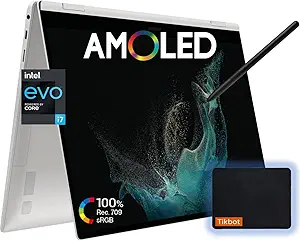
Conversely, Samsung approaches personal computing through the lens of expansive hardware synergy, screen dominance, and ultra-portable efficiency. As a global consumer electronics titan, Samsung’s computing philosophy is anchored in the Galaxy ecosystem, positioning its Galaxy Book lineup as the natural workstation extension to its industry-leading smartphones, tablets, and smart monitors. Rather than targeting maximum raw frame rates at the expense of portability, Samsung focuses on structural lightness, battery conservation, and visual supremacy through its proprietary Dynamic AMOLED display technologies. For Samsung, a laptop is a dynamic productivity hub engineered for mobile professionals, students, and digital creators who prioritize everyday agility and cross-device continuity.
These divergent design philosophies yield vastly different user experiences. Razer focuses on structural rigidity, thermals, and raw computing horsepower capable of demanding tasks like AAA gaming, local machine learning deployments, and complex 3D rendering. Samsung prioritizes feathery travel weights, integrated software ecosystems, clean modern styling, and vivid media consumption. Deciding between the two requires understanding whether your computational needs are bounded by GPU thermal ceilings or enhanced by ultra-mobile workflow integration.
Key Differences & Technological Comparison
The primary architectural divergence between Razer and Samsung lies in performance hardware and thermal engineering. Razer Blades are purpose-built to dissipate enormous amounts of heat generated by high-wattage Intel Core i7/i9 or AMD Ryzen processors paired with high-TGP (Total Graphics Power) NVIDIA GeForce RTX series GPUs. To achieve this in a compact form factor, Razer relies on custom vacuum-sealed copper vapor chambers and dual or triple high-fin-density liquid crystal polymer fans. In contrast, Samsung Galaxy Books—excluding occasional niche SKUs featuring entry-to-mid-tier mobile discrete GPUs—are engineered around lower-wattage, Intel Core Ultra or Evo-certified platforms utilizing integrated Arc graphics or modest dedicated chips. They rely on compact heat pipes and whisper-quiet fans tuned primarily for battery preservation and silent desktop productivity rather than sustained peak clock speeds.
Chassis construction and physical form factors represent another significant rift. Razer utilizes CNC-milled T6-grade aerospace aluminum blocks for every chassis, which are subsequently anodized and treated with an electrochemically applied anti-fingerprint coating. This gives Razer laptops class-leading structural integrity, but it also results in substantial heft, with models commonly weighing between 4.0 and 7.0 pounds. Samsung opts for advanced magnesium-aluminum alloys and ultra-thin profiles, yielding full-sized 15.6-inch and 16-inch laptops that weigh under 3.5 pounds—and 13-inch variants that float around the 2-pound threshold. While remarkably easy to transport, Samsung's ultra-thin lids and keyboard decks inherently exhibit slightly more structural flex under intentional pressure than Razer's rigid unibody frames.
In the realm of display technology, both brands lead their respective categories, but serve different visual priorities. Samsung integrates its market-defining Dynamic AMOLED 2X displays across nearly the entire Galaxy Book Pro and 360 lines, offering native 3K resolutions, infinite contrast ratios, deep true blacks, 120% DCI-P3 color gamut coverage, and S-Pen active digitizer support on 2-in-1 convertibles. Razer counters with panel options explicitly tuned for high-speed responsiveness and creative fidelity: high-refresh IPS panels ranging from 240Hz to 360Hz, alongside select dual-mode mini-LED panels capable of physically toggling between ultra-high-definition 4K at 120Hz for creative work and FHD+ at 240Hz for competitive gaming.
Software ecosystems illustrate the final major contrast. Razer laptops run lean Windows installations managed primarily through Razer Synapse, a utility designed to govern per-key Chroma RGB illumination, custom fan curves, performance overclocking profiles, and macro bindings. Samsung layers Windows with the proprietary Samsung Galaxy Ecosystem suite: Multi Control, Quick Share, Second Screen (turning Galaxy tablets into wireless external monitors), and seamless clipboard/call forwarding across mobile devices. Samsung transforms Windows into a holistic ecosystem experience, whereas Razer treats the OS as a performance arena.
Pros & Cons Comparison
Razer Laptops
- Pro: Exceptional Thermal and Processing Power: Accommodates full-power NVIDIA RTX GPUs and flagship CPUs for high-end gaming and 3D modeling.
- Pro: Class-Leading Build Quality: Precision-engineered CNC aluminum unibody construction provides industry-leading structural rigidity.
- Pro: High-Performance Display Options: Industry-first dual-mode mini-LED and ultra-high-refresh-rate panels with exceptional color accuracy.
- Pro: Superior Input Hardware: Premium glass trackpads, high-quality audio arrays, and individual per-key Razer Chroma RGB customization.
- Con: Prohibitive Price Points: Significant price premium over equivalent internal specifications from competitors.
- Con: Sub-Par Unplugged Endurance: High-TDP hardware limits battery life severely, necessitating continuous proximity to a bulky power brick.
- Con: Portability Penalties: Substantially heavier than mainstream productivity laptops, limiting continuous mobility.
Samsung Laptops
- Pro: Market-Leading Display Quality: Breathtaking Dynamic AMOLED 2X panels with deep blacks, HDR500 certification, and broad color volumes.
- Pro: Extreme Portability: Remarkably thin, featherweight profiles make them among the easiest productivity machines to travel with.
- Pro: Comprehensive Ecosystem Synergy: Unmatched integration for owners of Samsung Galaxy smartphones, tablets, and wearables.
- Pro: Outstanding Battery Efficiency: Low-power optimization delivers prolonged all-day use away from wall outlets, supported by compact USB-C chargers.
- Con: Thermal Throttling Under Sustained Loads: Ultra-thin chassis and limited thermal dissipation mean low ceilings for sustained 3D gaming or rendering.
- Con: Subtle Chassis Flex: The reliance on lightweight magnesium alloys leads to more flex in the lid and keyboard deck compared to solid CNC aluminum.
- Con: Galaxy-Centric Value: Many key software conveniences provide zero utility to consumers using non-Samsung mobile devices.
Performance, Durability & Value Analysis
When assessing raw computational longevity and performance stability, Razer and Samsung serve polar opposite use cases. Razer's machines are continuous-workload workhorses. If your daily cycle includes compiling massive codebases, rendering complex 8K timelines in DaVinci Resolve, or pushing uncapped frames in modern graphical simulations, a Razer Blade maintains high clock speeds where a Samsung machine would thermal-throttle to baseline frequencies. However, high-thermal, high-draw components carry intrinsic long-term reliability risks. Historically, high-density gaming laptops require diligent preventative maintenance: routine chassis dust clearing, thermal paste replacements over multi-year cycles, and monitoring for battery swelling caused by heat retention. Razer's hardware is robustly built externally, but its high-stress internals require informed ownership to sustain their peak potential.
Samsung laptops, by comparison, inhabit a lower-stress thermal bracket that often results in greater component longevity under conventional daily workloads. While you cannot expect a Galaxy Book to competently execute sustained AAA gaming or intensive local workstation computations, its everyday performance across office workflows, massive web sessions, UI development, and media editing is fluid and stable. From a financial perspective, Samsung offers substantially higher value per dollar for general-purpose users. Their entry and mid-tier retail pricing often undercuts Razer by 40% to 60%, and they frequently include functional accessories like the S-Pen directly in the box. Razer commands an uncompromising luxury premium; you are paying a surcharge for structural density, industrial engineering, and mobile gaming performance that only a specific subset of power users truly require.
Final Verdict: Which Brand Should You Choose?
Selecting the optimal laptop comes down to identifying whether your core computing profile is governed by mobile flexibility or raw computational limits.
Choose Razer if: You are an uncompromising gamer, architect, game developer, or creative professional who requires mobile desktop replacement power inside an impeccably crafted, MacBook-grade Windows chassis. If your budget is flexible, you appreciate industrial design, and you are prepared to trade battery endurance and light carry weight for maximum graphics compute and elite refresh rates, Razer stands uncontested in the premium performance space.
Choose Samsung if: You are an executive, digital nomad, student, or creative writer who prioritizes visual brilliance, featherweight portability, and prolonged battery life over GPU wattage. If you are already invested in the Samsung mobile ecosystem, the seamless cross-device productivity features make a Galaxy Book an exceptionally cohesive and cost-effective daily driver that minimizes travel strain while delivering the best OLED media experience on the market.
Affordability
When evaluating affordability, Razer and Samsung occupy starkly different positions in the laptop market, reflecting fundamentally opposed pricing strategies and target demographics. Razer firmly positions itself as an ultra-premium boutique manufacturer, rarely offering entry-level configurations. Its flagship Razer Blade lineup commands a substantial price premium, starting well into the mid-tier bracket and frequently scaling past four thousand dollars for high-end configurations. This steep pricing is driven by high-cost engineering choices, including unibody CNC-milled aluminum chassis, bespoke vapor chamber cooling solutions, per-key RGB lighting, and cutting-edge mobile GPUs from NVIDIA. While the build quality and performance density are exceptional, the cost-to-performance ratio for everyday computing tasks is low, as consumers pay a distinct "lifestyle premium" for the brand's aesthetic refinement and high-end gaming pedigree.
In contrast, Samsung leverages its vast component manufacturing infrastructure to offer a far more accessible, tiered pricing spectrum that delivers superior broad-market value. Through its Galaxy Book lineup, Samsung provides accessible entry-level to mid-range options, such as the standard Galaxy Book, alongside higher-tier configurations like the Galaxy Book Pro and Galaxy Book Ultra. Samsung’s affordability advantage is bolstered by in-house vertical integration, particularly regarding its world-class dynamic AMOLED displays, memory modules, and solid-state storage. This allows Samsung to equip sub-$1,000 to mid-range machines with display panels and battery efficiencies that rival devices costing hundreds of dollars more, offering everyday consumers, students, and professionals exceptional real-world utility without the punitive price floor associated with boutique gaming hardware.
Ultimately, the practical trade-offs regarding affordability hinge on intended use-case and thermal requirements. Razer provides virtually no budget-conscious alternatives, meaning budget-sensitive buyers must either sacrifice hardware specifications or seek refurbished inventory to enter the ecosystem. However, for users demanding sustained GPU-intensive computing and maximum structural rigidity in a compact form factor, Razer’s high initial outlay amortizes well in build longevity and thermal resilience. Samsung represents the more pragmatically affordable choice for the mainstream market, maximizing feature-per-dollar ratios through superior display technology, lightweight portability, and seamless Android ecosystem integration, while reserving its premium pricing strictly for its dedicated creative and power-user configurations.
Battery Life
When evaluating battery life, Razer and Samsung represent fundamentally opposing engineering philosophies driven by their target demographics. Razer designs high-performance gaming and creator machines, such as the Blade series, which prioritize raw thermal dissipation, dedicated NVIDIA GeForce RTX graphics, and high-refresh-rate displays. Even with large 65Wh to 99.9Wh batteries—the latter deliberately engineered to sit just below the legal FAA flight limit—Razer laptops face immense baseline power draw. While Razer implements NVIDIA Advanced Optimus and dynamic display refresh switching to disable the power-hungry discrete GPU during basic tasks, typical real-world battery life hovers between four to six hours of light productivity, dropping precipitously to under two hours during heavy rendering or gaming. In essence, Razer uses large battery cells not to provide all-day off-grid longevity, but to sustain brief bursts of extreme system power without sudden voltage drops.
Conversely, Samsung focuses on ultra-portable, productivity-first computing through its Galaxy Book lineup, where energy efficiency is a primary design pillar. Samsung leverages low-power Intel Core Ultra processors and ARM-based Qualcomm Snapdragon chips, eschewing high-wattage dedicated graphics in most configurations to achieve exceptional battery longevity. Coupled with Samsung’s proprietary Eco-OLED display technology—which dynamically reduces energy consumption by altering pixel drive rates—the Galaxy Book series consistently achieves between 12 to 18 hours of continuous, real-world productivity on a single charge. Furthermore, Samsung benefits from aggressive system-level power management integrated with the broader Galaxy ecosystem, alongside high-efficiency USB-C PD fast chargers that are significantly more compact and travel-friendly than the bulky 230W to 330W GaN power bricks required by Razer.
Ultimately, the practical trade-off between these brands comes down to portable stamina versus portable workstation capability. Razer is best suited for power users who demand uncompromising desktop-grade performance and are comfortable working within arm's reach of a wall outlet, using the battery merely as a temporary bridge between desks. Samsung is the clear winner for business professionals, students, and frequent travelers who require true all-day, unplugged autonomy without battery anxiety, trading peak graphical horsepower for unmatched operational efficiency and lightweight convenience.
Display
Razer and Samsung approach laptop display engineering from fundamentally divergent philosophies, each excelling in distinct technical metrics. Razer tailors its panels toward high-performance gaming, esports, and hybrid creative workloads, prioritizing blistering refresh rates, low response times, and exceptional color fidelity. Across its Blade lineup, Razer offers bleeding-edge options, including high-refresh QHD and 4K displays that push up to 240Hz and beyond, as well as dual-mode Mini-LED configurations capable of switching between high-resolution creative modes and high-frequency competitive gaming modes. Furthermore, Razer treats color accuracy seriously, with factory-calibrated panels boasting 100% DCI-P3 coverage and Calman verification, ensuring high-end visual fidelity for video editors and gamers alike. The practical trade-off, however, lies in power consumption; these performance-oriented, high-wattage panels aggressively drain battery life, and peak brightness on standard IPS models can sometimes struggle in direct sunlight compared to modern OLED alternatives.
Conversely, Samsung leverages its industry-leading position as a display manufacturer to dominate in panel chemistry and contrast ratios with its Dynamic AMOLED 2X technology found in the Galaxy Book series. Samsung’s displays are characterized by virtually infinite contrast, true deep blacks, and a VESA DisplayHDR True Black certification, providing an unmatched viewing experience for media consumption, HDR video editing, and everyday productivity. Operating predominantly at a refined 3K (2880x1800) resolution with a 120Hz variable refresh rate, Samsung prioritizes cinematic vibrance, exceptionally broad dynamic range, and blue-light reduction for eye comfort. Touchscreen functionality and S-Pen active digitizer support are also frequently integrated into Samsung's convertible and ultra-thin chassis, granting versatility that Razer rarely provides. The engineering limitation for Samsung rests in competitive gaming viability; while its OLED panels deliver instantaneous pixel response times, the capped 120Hz refresh rate and potential risk of burn-in under static productivity interfaces present minor compromises for ultra-demanding users.
Ultimately, the choice between Razer and Samsung hinges on whether a user prioritizes motion performance or visual depth. Razer is the definitive choice for competitive gamers, technical power users, and 3D artists who require blisteringly fast refresh rates, peak sustained brightness through advanced Mini-LED backlighting, and flexible multi-resolution scaling. Samsung is the superior option for digital illustrators, business professionals, and media-focused consumers who prioritize the punchy color saturation, true blacks, high power efficiency, and pen-enabled interactivity that only custom-engineered OLED displays can deliver.
Performance
When evaluating performance between Razer and Samsung, the two brands engineer their laptops for fundamentally different computing paradigms. Razer focuses almost exclusively on peak, sustained graphical and computational power designed for hardcore gamers, 3D animators, and heavy creative workflows. Its flagship Blade lineup leverages high-TGP (Total Graphics Power) NVIDIA GeForce RTX discrete GPUs paired with unlocked Intel Core i9 or AMD Ryzen 9 processors. To maintain this high-wattage throughput without catastrophic thermal throttling, Razer engineers custom, full-coverage vapor chamber cooling systems supplemented by dual-exhaust fans and aircraft-grade aluminum chassis that act as passive heat sinks. In contrast, Samsung prioritizes ultra-portable computational efficiency through its Galaxy Book series, predominantly utilizing lower-power Intel Core Ultra or mobile processors with integrated graphics, with select models offering lower-wattage discrete GPUs strictly intended for creative acceleration rather than prolonged high-load rendering.
The feature sets and technical strengths directly reflect these divergent design philosophies. Razer equips its machines with high-refresh-rate displays (reaching up to 240Hz or 360Hz), factory-calibrated color profiles, and overclockable RAM and storage configurations that cater to real-time rendering demands, physics simulations, and AAA gaming. Samsung, on the other hand, directs its engineering prowess toward daily productivity and seamless multitasking within the Galaxy ecosystem. Samsung's hardware incorporates low-power LPDDR5X memory and intelligent cooling profiles designed to keep fan noise to an absolute minimum. While a Galaxy Book excels at bursting through photo edits, complex spreadsheets, and media consumption without breaking a sweat, it simply lacks the thermal headroom and power distribution necessary to match Razer's raw compute power in sustained multi-threaded workloads.
Ultimately, the practical trade-off between the two brands boils down to uncompromised muscle versus battery longevity and portability. Razer delivers desktop-class performance that conquers intensive benchmarks and rendering queues, but this comes at the cost of aggressive power draw, requiring massive proprietary power bricks and resulting in severely limited untethered battery life. Samsung trades that upper-tier graphics ceiling for extraordinary power efficiency; its laptops run exceptionally cool on standard USB-C PD charging, deliver all-day battery life, and retain peak single-core performance while disconnected from the wall. Consumers demanding maximum graphical horsepower and sustained high-load execution will find Razer vastly superior, whereas mobile professionals seeking quiet, enduring, and responsive everyday performance will be better served by Samsung.
Compare current retail pricing, active promotions, and verified stock availability directly from authorized stores: