Razer vs LG: Overview
Comparing Razer and LG helps you determine which brand is best suited for your needs in Laptops. Both brands offer strong choices depending on your budget and key feature requirements.
Key Features & Comparison
Evaluate factors such as build quality, warranty, customer satisfaction, and total value before making your final purchase choice between Razer and LG.
Affordability
When analyzing affordability, Razer and LG target entirely distinct budget mentalities, with neither brand catering to entry-level shoppers. Razer operates almost exclusively in the ultra-premium gaming and creator market, positioning its Razer Blade lineup at price points that frequently cross into the high thousands. The premium pricing reflects CNC-milled aluminum chassis, cutting-edge thermal vapor chambers, and top-of-the-line internal components. However, this engineering carries a steep 'Razer tax,' meaning consumers pay a considerable premium for brand prestige, aesthetic refinement, and dense, compact builds that offer low performance-per-dollar compared to the broader market.
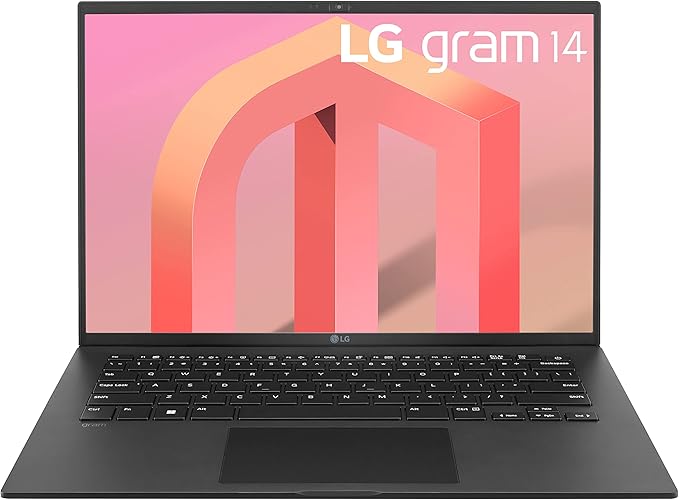
Conversely, LG’s laptop division—headlined by the LG gram series—targets the mid-to-high-tier productivity market with a focus on ultralight portability rather than sheer compute power. While LG grams are not budget devices, their pricing is significantly more accessible than Razer's portfolio and frequently aligns better with general consumer needs. LG delivers exceptional value in terms of materials science, utilizing lightweight magnesium alloy frames and bundling high-capacity batteries at prices that compete comfortably with premium ultrabooks from Dell and Apple. For users seeking standard office, educational, or creative tasks, LG presents a far more economical investment, whereas Razer's steep cost of entry is only justified for specialized, power-hungry workflows.
Battery Life
Battery life represents one of the starkest contrasts between Razer and LG laptops, driven by diametrically opposed engineering philosophies. Razer equips its Blades with high-capacity lithium-ion cells—often close to the legal 99.9Wh flight limit—yet struggles to deliver true all-day longevity. The presence of power-hungry high-TDP processors, dedicated discrete NVIDIA GPUs, high-refresh displays, and proprietary Synapse software results in substantial idle and active drain. Even with modern dynamic refresh rates and graphics switching (NVIDIA Advanced Optimus), users rarely achieve more than four to six hours of real-world productivity use, making the proprietary power brick an unavoidable travel companion.
In contrast, the LG gram lineup is an industry benchmark for endurance, routinely delivering between 12 to 20 hours of real-world operation on a single charge. LG achieves this through the use of high-density battery chemistries paired with low-TDP Intel Core and Evo-certified processors, optimized integrated graphics, and highly efficient display panels. Furthermore, LG systems excel at lightweight USB-C Power Delivery charging, allowing users to leave heavy chargers at home and top up using standard mobile phone power banks. For mobile professionals, frequent flyers, and students where uninterrupted autonomy is paramount, LG vastly outperforms Razer.
Display
Razer approaches display engineering with an uncompromising focus on gaming agility, color precision, and premium visual fidelity. Blade models are famous for offering class-leading refresh rates reaching up to 240Hz, 360Hz, or beyond, paired with blisteringly fast response times and NVIDIA G-Sync support to eliminate screen tearing. Higher-end Razer configurations also feature stunning dual-mode mini-LED panels capable of switching between native 4K 120Hz for creator workflows and FHD 240Hz for competitive gaming, or high-contrast OLED options covering 100% of the DCI-P3 color space. Every Razer panel arrives factory-calibrated, making them exceptional tools for digital artists and gamers alike, provided users don't mind the higher battery consumption.
LG counters with an orientation toward productivity, screen real estate, and eye comfort. LG gram displays predominantly utilize 16:10 aspect ratios across 14-inch to 17-inch sizes, offering significantly more vertical viewing space for spreadsheets, coding, and document processing. LG employs vibrant IPS panels and, in recent iterations, striking OLED options with wide DCI-P3 color gamuts and deep contrast. While LG displays generally limit their refresh rates to 60Hz or 90Hz and suffer from slower pixel response times that make them ill-suited for fast-paced gaming, their anti-glare coatings and expansive screen-to-body ratios excel in brightly lit corporate environments and prolonged office workflows.
Performance
Performance benchmarks showcase Razer as an apex predator in mobile compute and graphical processing. Engineering its chassis around high-wattage Intel Core i9 and AMD Ryzen 9 processors alongside full-power NVIDIA GeForce RTX 40-series mobile GPUs, Razer extracts maximum frame rates and rendering prowess. To sustain this, Razer relies on sophisticated custom vapor chambers and dual-fan exhaust systems designed to mitigate thermal throttling in slender profiles. As a result, Razer machines crush heavy 3D rendering, video encoding, machine learning tasks, and AAA gaming, operating in an entirely different performance tier that rivals desktop replacements.
LG designs its hardware around sustained thermal efficiency and quiet operation within impossibly thin chassis, which naturally limits raw peak performance. Relying primarily on 15W to 28W Intel processors with integrated Intel Iris Xe or Intel Arc graphics (with occasional lower-tier discrete options like the RTX 3050), the LG gram excels at day-to-day multitasking, web browsing, data analysis, and moderate photo editing. Under prolonged intensive loads, thermal throttling occurs much earlier due to minimalistic heat pipes and lightweight cooling structures designed to prioritize low weight over thermal dissipation. For intensive graphical compute and workstation-grade operations, Razer is undeniably superior, while LG remains tuned purely for snappy ultralight office computing.
Compare current retail pricing, active promotions, and verified stock availability directly from authorized stores:
Compare current retail pricing, active promotions, and verified stock availability directly from authorized stores: