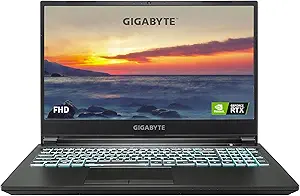
Razer vs GigaByte: Overview
Comparing Razer and GigaByte helps you determine which brand is best suited for your needs in Laptops. Both brands offer strong choices depending on your budget and key feature requirements.
Key Features & Comparison
Evaluate factors such as build quality, warranty, customer satisfaction, and total value before making your final purchase choice between Razer and GigaByte.
Affordability
When evaluating affordability, Gigabyte holds a substantial and consistent advantage across nearly every hardware tier. Known for delivering high-performance specifications at accessible price points, Gigabyte's gaming and creator lineups—namely the G-series, Aorus, and Aero laptops—routinely undercut the competition. The brand achieves aggressive pricing by utilizing composite plastics or hybrid chassis construction, streamlining accessories, and focusing budget allocation directly toward core compute components like the CPU and GPU. For cost-conscious consumers, college students, and esports enthusiasts, a Gigabyte machine often represents one of the lowest barriers to entry for current-generation silicon, yielding superior frame rates per dollar spent.
Conversely, Razer operates explicitly in the ultra-premium segment, commanding a significant price premium that can sometimes exceed comparable Gigabyte hardware by hundreds or even thousands of dollars. Razer positions its Blade series as the pinnacle of luxury portable computing, justifying its pricing with monolithic CNC-milled aluminum unibodies, anodized finishes, proprietary cooling architectures, and exceptional quality control. While buyers receive immaculate craftsmanship, a sleek aesthetic, and zero structural flex, the sheer cost proposition of a Razer Blade frequently puts it out of reach for mainstream consumers who are purely seeking raw hardware performance on a strict budget.
Battery Life
Battery performance in high-powered gaming laptops is notoriously difficult to optimize, yet Razer generally extracts superior longevity compared to Gigabyte. Razer equips the Blade series with high-capacity batteries, often pushing near the 80 to 99.9Wh legal airline limit. Combined with finely tuned firmware, well-implemented advanced Optimus switching, and efficient vapor chamber thermal dissipation that reduces passive power draw, Razer Blade laptops frequently deliver respectable productivity runtimes of 5 to 7 hours under light-to-moderate workloads. While intensive gaming off the charger still drains the pack rapidly, Razer's idle efficiency and standby power states are among the best engineered in the Windows gaming space.
Gigabyte laptops, on the other hand, show noticeable variance in endurance depending on the sub-brand and target audience. While creator-focused Aero models incorporate larger batteries with moderate battery-saving software profiles, the budget-oriented G-series and mainstream Aorus gaming units frequently carry smaller capacity packs (often around 54Wh to 76Wh) to keep total costs down. Coupled with aggressive default power profiles, background utility software, and less granular display power management, Gigabyte laptops often struggle to surpass 3 to 5 hours of routine web browsing or video streaming, necessitating frequent proximity to an AC power brick.
Display
Display technology represents a fiercely competitive battlefield for both manufacturers, but their philosophies cater to subtly different visual demands. Razer heavily prioritizes versatility, factory calibration, and aspect ratio modernism. Modern Razer Blade laptops overwhelmingly employ 16:10 aspect ratios that enhance both vertical productivity and gaming immersion, with options spanning ultra-fast 240Hz/360Hz QHD panels to breathtaking 4K OLED touchscreens. Razer's hallmark is panel precision; virtually every panel leaves the factory custom-calibrated with 100% DCI-P3 or sRGB coverage, high peak nit brightness, and ultra-thin bezels that match the device's minimalist design language.
Gigabyte takes a specialized, split approach depending on whether the user selects an Aorus or an Aero device. The creator-centric Gigabyte Aero series is legendary for its factory X-Rite and Pantone-certified 4K AMOLED and OLED displays, offering class-leading contrast ratios, deep inky blacks, and phenomenal color accuracy that rivals or exceeds Razer's top tier for video and photo editing. Meanwhile, the Aorus gaming lines lean hard into competitive refresh rates, offering blisteringly fast 360Hz FHD panels tailored for esports. However, entry-level Gigabyte models sometimes cut corners on maximum panel brightness and color gamut coverage, making Razer the more consistently reliable brand across its entire portfolio.
Performance
In terms of pure hardware execution and sustained performance, both brands boast distinct thermal and engineering strategies. Razer utilizes bespoke, ultra-thin vapor chamber cooling paired with high-fin-density heat exchangers to fit flagship Intel Core or AMD Ryzen CPUs and NVIDIA GeForce RTX graphics into impossibly slim chassis profiles. However, thermodynamic laws impose limits: because the Blade chassis is so remarkably thin, Razer frequently tunes its components to slightly more conservative Total Graphics Power (TGP) envelopes or relies on subtle thermal throttling under multi-hour sustained loads to prevent outer chassis temperatures from becoming uncomfortably hot to the touch.
Gigabyte, unburdened by an obsessive quest for sub-20mm chassis thickness, often prioritizes maximum silicon throughput and high TGP headroom. Laptops in the Aorus lineup feature the robust Windforce Infinity cooling system, utilizing massive copper heat pipes, thicker chassis dimensions, and aggressive fan curves. This allows Gigabyte to push full-wattage power delivery to both CPU and GPU simultaneously without as much concern for surface temperatures or acoustic subtlety. While this leads to louder fan profiles and a bulkier physical footprint, Gigabyte consistently achieves class-leading raw gaming benchmarks and high sustained rendering performance that can outpace similarly configured Razer machines.
Compare current retail pricing, active promotions, and verified stock availability directly from authorized stores:
Compare current retail pricing, active promotions, and verified stock availability directly from authorized stores: