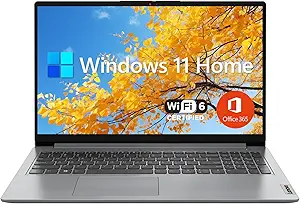
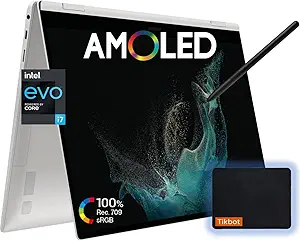
In the dynamic world of laptop computing, two industry heavyweights, Samsung and Lenovo, stand at the forefront of innovation and versatility. With their cutting-edge features and commitment to user-centric design, these brands have earned the trust and admiration of users worldwide. As we embark on this journey of comparison, we delve deep into the realms of Samsung and Lenovo laptops, uncovering the distinctive strengths and features that set them apart. Join us as we explore which brand emerges as the ultimate champion in this epic clash of innovation.
Key Features Comparison
Affordability
When it comes to the aspect of price, both Samsung and Lenovo laptops offer a range of options to cater to different budget categories. Samsung laptops, known for their high-quality display and sleek design, tend to be priced at the higher end of the spectrum. Their latest models, such as the Galaxy Book Flex and Galaxy Book Ion, are equipped with latest technologies like QLED display and wireless power share, but they also come with a hefty price tag. On the other hand, Lenovo laptops are generally more affordable, making them a popular choice among budget-conscious consumers. However, it's worth noting that Lenovo doesn't compromise on technology or performance despite their lower price point. They offer a variety of laptops with the latest processors, high-quality displays, and robust build quality. Their ThinkPad series, for instance, is highly regarded for its durability and performance. While Lenovo may not have the same premium feel as Samsung, they do offer excellent value for money. Compared to other brands, both Samsung and Lenovo have their unique strengths in terms of price. Samsung's higher price range is justified by its premium features and design, while Lenovo offers solid performance and features at a more affordable price point.
Battery Life
Samsung laptops, particularly the Galaxy Book Flex series, are renowned for their impressive battery life. The Galaxy Book Flex boasts a 69.7 Wh battery that can last up to 20 hours on a single charge, depending on the usage. This is an impressive feature for users who need to work on their laptops for extended periods without access to a power source. However, some users have reported that the battery life decreases significantly when using heavy applications or multiple programs simultaneously. On the other hand, Lenovo laptops, especially the ThinkPad X1 Carbon series, also offer commendable battery life. The ThinkPad X1 Carbon, with its 51Wh battery, can last up to 15.5 hours on a single charge, according to Lenovo. However, independent tests have shown that the battery life can be closer to 10 hours with regular use, which is still respectable. Lenovo's Rapid Charge technology also allows for quick recharging, with 80% battery life restored in just an hour. While Lenovo's battery life may not match Samsung's in terms of hours per charge, the Rapid Charge feature can be a significant advantage for users who can take short breaks to recharge. Comparatively, both brands offer competitive battery life, with Samsung taking a slight edge in terms of longevity per charge, but Lenovo offering faster recharge times.
Display
Samsung laptops are known for their high-quality displays. Most of their models, such as the Samsung Galaxy Book Flex, come with QLED (Quantum Dot LED) displays, which offer vibrant and accurate colors, excellent brightness, and sharp details. The QLED technology is one of the latest in the market and is typically found in high-end televisions. Samsung is one of the few laptop manufacturers that use this technology, giving them an edge in terms of display quality. However, the glossy finish on some of their screens can cause reflections, which might be an issue in brightly lit environments. On the other hand, Lenovo laptops offer a range of display options across their models. Their high-end laptops like the Lenovo ThinkPad X1 Carbon come with 4K UHD (Ultra High Definition) displays that provide excellent color accuracy and sharpness. Some of their models also offer OLED (Organic Light Emitting Diodes) display technology, which provides deep blacks and high contrast ratios. However, Lenovo's lower-end models often come with average quality displays, which might not be suitable for tasks that require color accuracy. While Lenovo's display technology might not be as advanced as Samsung's QLED, they offer a wider range of options to cater to different user needs and budgets.
Performance
When evaluating raw processing power and thermal engineering, Lenovo holds a commanding advantage across diverse computing workloads. Lenovo's expansive catalog—spanning the flagship ThinkPad enterprise lines, high-performance Legion gaming rigs, and versatile Yoga convertibles—benefits from decades of industrial-grade thermal optimization. High-end Lenovo models frequently leverage vapor chamber cooling, dual liquid-crystal polymer fans, and rear-exhaust architecture, allowing them to extract sustained maximum clock speeds from Intel Core Ultra, AMD Ryzen, and high-wattage NVIDIA GeForce RTX discrete GPUs without aggressive thermal throttling. This aggressive power tuning and sophisticated thermal headroom make Lenovo machines exceptionally reliable for sustained, CPU- and GPU-intensive tasks like 3D rendering, software compiling, and high-frame-rate gaming.
Samsung approaches performance through the lens of ultra-portable efficiency and mobile-first productivity, prominently represented by its Galaxy Book series. Engineered with ultra-thin, lightweight chassis, Samsung laptops utilize Intel Core Ultra architectures optimized primarily for burst workloads, low-latency responsiveness, and whisper-quiet operation rather than extended high-TDP performance. While devices like the Galaxy Book Ultra incorporate dedicated discrete graphics, their slim profiles enforce stricter thermal and power limits compared to Lenovo's thicker, performance-tuned equivalents. However, Samsung offsets these absolute-power trade-offs by delivering superior energy efficiency, responsive on-device AI integration via Intel NPUs, and frictionless inter-device synergy that accelerates daily productivity within the broader Samsung Galaxy hardware ecosystem.
Conclusion
In the battle of Samsung vs. Lenovo laptops, both brands offer compelling options tailored to different preferences and priorities. Samsung excels in design, innovation, and premium features, making it the ideal choice for users who value style and versatility. Lenovo, on the other hand, shines in reliability, performance, and affordability, appealing to users who demand productivity and value for money. Ultimately, the choice between Samsung and Lenovo laptops depends on individual preferences, whether it's a preference for design and innovation or performance and affordability. Whichever path you choose, both Samsung and Lenovo continue to push the boundaries of laptop technology, driving innovation and inspiring users worldwide. So, whether you're team Samsung or team Lenovo, rest assured that the future of laptop computing is in capable hands, thanks to these two industry giants.