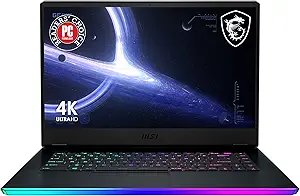
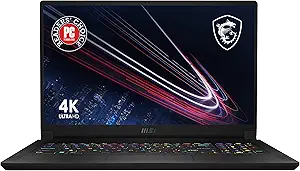
MSI vs Microsoft: Overview
Comparing MSI and Microsoft helps you determine which brand is best suited for your needs in Laptops. Both brands offer strong choices depending on your budget and key feature requirements.
Key Features & Comparison
Evaluate factors such as build quality, warranty, customer satisfaction, and total value before making your final purchase choice between MSI and Microsoft.
Affordability
When evaluating affordability, MSI and Microsoft approach value from fundamentally different market positions. MSI primarily targets gamers, creators, and power users who prioritize price-to-performance metrics above all else. In the budget to mid-range tier, MSI’s lineups—such as the GF, Thin, and Cyborg series—deliver substantial computational and graphics capability, including dedicated NVIDIA GPUs, at highly accessible price thresholds. While MSI achieves these lower price points by employing more polycarbonate in chassis construction, standardizing cooling modules, and occasionally utilizing utilitarian display panels, buyers receive an extraordinary amount of raw silicon per dollar spent. Even in their premium creator and workstation segments, MSI consistently undercuts similarly configured boutique laptops while delivering bleeding-edge hardware.
Microsoft Surface devices, conversely, occupy a boutique ecosystem where pricing reflects industrial design, unique form factors, and integration rather than purely internal computing horsepower. Base-tier Surface models like the Surface Laptop Go provide a sleek aluminum finish and premium aesthetics at a moderate entry point, yet they often feature compromises such as modest base storage and non-backlit keyboards. Higher-end models, including the flagship Surface Laptop and the convertible Surface Laptop Studio, command a substantial premium that directly competes with enterprise-grade luxury machines. For buyers seeking maximum processing muscle per dollar, MSI represents the more cost-effective investment, whereas Microsoft’s pricing structure asks consumers to pay primarily for precision craftsmanship, specialized 2-in-1 touchscreen functionality, and refined build ergonomics.
Battery Life
Battery performance reveals a stark divergence in operational focus, hardware optimization, and architectural choices between MSI and Microsoft. MSI designs laptops predominantly oriented toward high-performance sustained workloads, which historically requires power-hungry Intel H-series or AMD HX-series processors combined with dedicated graphics processing units. Consequently, even MSI's productivity and ultraportable ranges, like the Modern and Prestige series, often yield modest battery runtimes ranging from four to eight hours under typical productivity workloads. When pushed with intensive tasks or 3D rendering, MSI machines deplete their high-capacity batteries rapidly, necessitating frequent reliance on bulky, high-wattage power bricks that somewhat detract from overall on-the-go portability.
Microsoft has turned battery endurance into one of the hallmark selling points of the Surface family, especially with its aggressive adoption of ARM architecture via Qualcomm Snapdragon X processors alongside finely tuned x86 options. Surface Laptop and Pro configurations engineered with modern ARM chips achieve remarkable efficiency, frequently delivering twelve to twenty hours of genuine real-world unplugged productivity. Furthermore, Microsoft's deep, native integration of Windows power states, aggressive system-level standby management, and tightly monitored background resource allocation mean Surface machines exhibit negligible battery drain during sleep. For professionals, students, and frequent travelers requiring reliable, all-day autonomous operation without charger anxiety, Microsoft holds a decisive, architectural advantage over MSI.
Display
Display engineering highlights the distinct audiences both manufacturers cultivate, with MSI catering to visual fluidity and color precision for high-framerate tasks, and Microsoft prioritizing productivity canvas and touch interaction. MSI equips the vast majority of its machines with high-refresh-rate panels—ranging from 144Hz up to 360Hz—paired with variable refresh rate technologies like NVIDIA G-Sync to eliminate visual tearing. For its creative laptops, MSI heavily embraces Mini-LED and high-resolution OLED technology, offering DCI-P3 wide color gamuts, deep black levels, and HDR certifications. These panels are engineered primarily in 16:9 or 16:10 aspect ratios optimized for immersive gaming, video editing, and dynamic media consumption, accompanied by anti-glare matte coatings that minimize ambient reflections in diverse lighting environments.
Microsoft Surface displays, marketed under the proprietary PixelSense branding, are engineered explicitly for creative tactile workflows and document productivity. Surface screens utilize a signature 3:2 aspect ratio, which provides substantially more vertical screen real estate compared to standard widescreen monitors, dramatically reducing scrolling when reading code, text, or spreadsheets. Every modern Surface features high-density touchscreens with active stylus pen support featuring haptic feedback and near-zero latency for digital illustration and handwritten note-taking. While recent Surface iterations incorporate dynamic 120Hz refresh rates, they rarely match MSI's ultra-high refresh speeds or specialized color-calibration toolsets, opting instead for exceptionally sharp, glossy, optically bonded glass panels that excel in color fidelity, contrast, and tactile responsiveness.
Performance
In the realm of raw processing power, thermal dissipation, and sustained computational output, MSI is a market powerhouse. MSI engineers its laptops with advanced thermal architecture—featuring multi-fan Cooler Boost designs, dense copper heat pipes, and large exhaust chambers—specifically built to accommodate high Total Graphics Power (TGP) limits. This thermal headroom enables MSI laptops to extract maximum sustained performance from elite multicore CPUs and high-wattage discrete GPUs without severe thermal throttling. Whether executing multi-threaded code compilations, running 4K video renders, or processing complex 3D simulations, MSI machines are configured to run hard for extended durations, making them industry favorites for enthusiasts, gamers, and engineering professionals who demand uncompromising raw throughput.
Microsoft approaches performance through the lens of responsive daily productivity, seamless multitasking, and whisper-quiet efficiency rather than brute-force horsepower. Most Surface models are constrained by ultra-thin, fanless, or minimalist cooling enclosures, which inevitably limit sustained thermal dissipation and cap the thermal design power (TDP) of their processors. While the Surface Laptop Studio offers dedicated graphics suitable for casual content creation and light CAD work, it operates at lower power limits compared to equivalent MSI offerings. Instead, Microsoft focuses on instantaneous wake times, fast burst performance, and specialized hardware such as powerful Neural Processing Units (NPUs) to accelerate AI-driven Windows Copilot tasks. Consequently, while Microsoft delivers a smooth and silent operational experience for day-to-day office and creative workflows, MSI remains vastly superior for heavy sustained computational loads and intensive graphics-driven tasks.
Compare current retail pricing, active promotions, and verified stock availability directly from authorized stores: