MSI vs LG: Overview
Comparing MSI and LG helps you determine which brand is best suited for your needs in Laptops. Both brands offer strong choices depending on your budget and key feature requirements.
Key Features & Comparison
Evaluate factors such as build quality, warranty, customer satisfaction, and total value before making your final purchase choice between MSI and LG.
Affordability
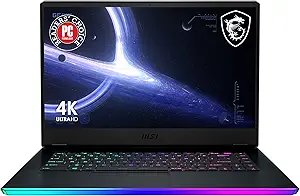
When analyzing affordability, MSI presents a vastly broader price spectrum designed to cater to budget-conscious gamers, mainstream professionals, and enthusiast spenders alike. MSI's entry-level and mid-range lineups, such as the Thin, Cyborg, and Modern series, offer aggressive component-to-dollar ratios by packing dedicated graphics processing units and capable multicore processors into chassis priced well under four figures. However, achieving these accessible entry points frequently requires engineering trade-offs, often manifesting as cheaper plastics, modest trackpads, and budget-tier cooling assemblies that prioritize pure hardware capability over structural refinement.
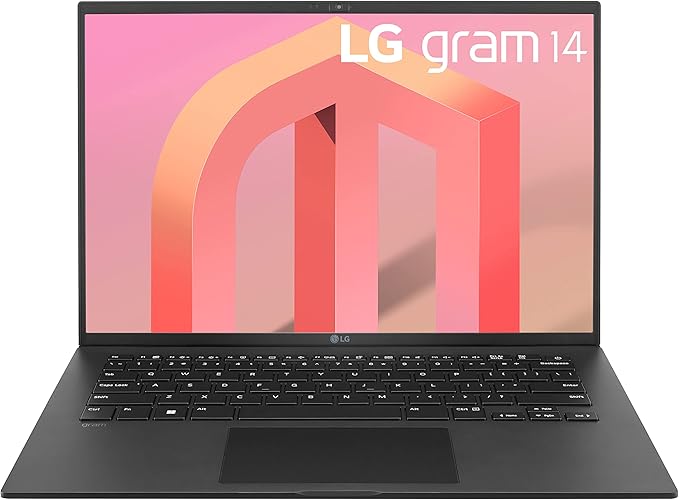
Conversely, LG focuses almost exclusively on the premium ultraportable segment through its Gram series, positioning its products at higher entry-level and mid-tier price thresholds. LG laptops generally command higher prices out of the gate because consumers are paying for specialized lightweight engineering, such as magnesium-alloy unibody construction and mil-spec durability certifications, rather than raw compute muscle. While an entry-level MSI laptop will routinely provide superior gaming performance and raw compute per dollar compared to a similarly priced LG, LG justifies its cost through exceptional chassis refinement, featherweight ergonomics, and long-term daily usability that holds its value well in executive and enterprise environments.
Battery Life
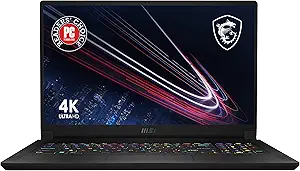
Battery endurance represents a distinct ideological divergence between these two manufacturers, heavily influenced by their target audiences. MSI laptops are predominantly optimized for high-power thermal envelopes, frequently pairing demanding 45-watt or higher processors with power-hungry discrete NVIDIA GeForce RTX graphics. Even when equipped with the maximum legal 99.9-watt-hour battery capacities in flagship lines like the Raider or Stealth, high-refresh-rate displays and intensive hardware architectures typically deplete the system within three to six hours under mixed productivity workloads, necessitating frequent tethering to heavy AC power bricks.
LG, on the other hand, stands as an industry benchmark for ultrabook battery longevity. The LG Gram lineup pairs capacious 72-to-80-watt-hour batteries with highly efficient 15-to-28-watt Intel U- and P-series processors and integrated graphics, entirely unburdened by high-draw discrete components. This design philosophy routinely delivers 12 to 18 hours of real-world productivity on a single charge. Furthermore, LG utilizes aggressive platform-level power management, including display auto-dimming and intelligent background thread allocation, enabling mobile professionals to work across long-haul flights or full business days completely untethered from external power sources.
Display
In display technology, MSI tailors its panels toward fluid motion, minimal latency, and competitive advantages in high-framerate environments. MSI laptops prominently feature high-refresh-rate IPS-level and OLED displays ranging from 144Hz to an extraordinary 360Hz, often offering QHD or 4K resolutions with wide DCI-P3 color gamuts and high peak brightness in their Creator and Titan tiers. The brand emphasizes features like NVIDIA G-Sync and rapid gray-to-gray response times, which eliminate tearing and ghosting during fast-paced sequences, making their displays ideal for 3D animators, video editors, and esports enthusiasts.
LG leverages its parent corporation's world-class display division to prioritize visual fidelity, pixel density, and ergonomic productivity. LG Gram laptops typically feature 16:10 aspect ratio IPS and OLED panels with crisp WQXGA (2560x1600) resolutions, offering substantially more vertical screen real estate for coding, document processing, and data analysis. While LG's panels generally operate at standard 60Hz or modest 144Hz refresh rates and lack the rapid response times essential for competitive gaming, they excel in anti-glare coatings, 99% DCI-P3 color accuracy, and uniform backlighting, creating a soothing and expansive visual workspace for extended productivity sessions.
Performance
Performance benchmarks highlight fundamentally different internal architectures, thermal designs, and intended operational workloads. MSI operates as an uncompromised high-performance powerhouse, deploying high-TDP (Thermal Design Power) Intel Core HX-series and AMD Ryzen 9 processors alongside full-wattage discrete GPUs up to the NVIDIA RTX 4090. MSI backs this hardware with complex cooling ecosystems—such as the Cooler Boost architecture with dual-to-triple fan configurations and extensive heat pipe matrices—allowing sustained peak compute for AAA gaming, complex 3D rendering, and heavy computational compiling with minimal sustained thermal throttling.
LG takes an ultraportable, efficiency-first approach with the Gram family, strictly utilizing modern Intel Core and Ultra processors engineered for lean thermal envelopes. While capable of effortlessly handling heavy multitasking, office suites, 4K media playback, and lightweight photo editing, the Gram is severely constrained by its featherlight chassis and compact cooling systems. Under sustained multithreaded loads, LG's hardware will quickly hit thermal boundaries and throttle back clock speeds to prevent overheating and maintain quiet acoustics, inherently limiting its capability for prolonged, high-intensity processing tasks compared to MSI’s heavily cooled, high-output machines.
Compare current retail pricing, active promotions, and verified stock availability directly from authorized stores:
Compare current retail pricing, active promotions, and verified stock availability directly from authorized stores: