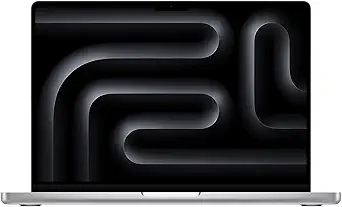
MSI vs Apple: Overview
Comparing MSI and Apple helps you determine which brand is best suited for your needs in Laptops. Both brands offer strong choices depending on your budget and key feature requirements.
Key Features & Comparison
Evaluate factors such as build quality, warranty, customer satisfaction, and total value before making your final purchase choice between MSI and Apple.
Affordability
When evaluating affordability, Apple and MSI target fundamentally different philosophies of consumer value and price segmentation. Apple maintains a strictly premium pricing architecture with a high baseline cost of entry. Even its base-tier MacBook Air models hover near the four-figure mark, and the brand notoriously applies aggressive markups for unified memory and solid-state storage upgrades that are soldered directly to the logic board. While this pricing structure limits access for budget-conscious buyers, Apple offsets this through exceptional resale retention, superior build longevity, and a comprehensive ecosystem package that includes a curated operating system with complimentary productivity software.
Conversely, MSI adopts a wide-spectrum pricing model that spans from ultra-budget productivity notebooks to ultra-enthusiast desktop replacements. MSI offers far more hardware utility per dollar in the entry-to-midrange segments, particularly for users seeking discrete graphical horsepower at accessible price points. Crucially, MSI notebooks frequently feature user-accessible RAM and M.2 PCIe NVMe slots, substantially lowering total cost of ownership by allowing consumers to buy lower-spec configurations and upgrade internal components as their budget allows, rather than paying exorbitant initial platform premiums.
Battery Life
In terms of battery endurance, Apple represents the undisputed pinnacle of contemporary mobile computing thanks to its custom ARM-based Apple Silicon architecture. By co-designing hardware and macOS software, MacBooks achieve staggering levels of performance-per-watt efficiency, routinely delivering between 15 to 22 hours of real-world productivity on a single charge. Because the unified architecture maintains its microarchitectural efficiency across varied thermal envelopes, Apple laptops exhibit minimal idle power draw and deliver near-identical performance whether operating plugged into a wall outlet or running entirely on battery power.
MSI notebooks, predominantly powered by high-wattage Intel or AMD x86 processors alongside discrete NVIDIA GeForce RTX graphics, face substantial engineering hurdles regarding energy efficiency. While MSI's business-oriented lines like the Prestige or Modern series achieve respectable full-day runtimes of 8 to 11 hours, their high-performance and gaming rigs frequently exhaust their cells within 3 to 6 hours of moderate use. Furthermore, achieving maximum compute and render throughput on an MSI machine necessitates a connection to AC power, as aggressive battery drain limits throttle peak clocks to preserve cell integrity, leaving the platform fundamentally tethered to the power grid for intensive workloads.
Display
Apple’s display engineering is renowned for its clinical color accuracy, rigorous factory calibration, and consumer consistency across form factors. Across the MacBook Air and Pro lines, panels feature wide DCI-P3 color gamuts, high pixel densities through Apple’s proprietary Retina scaling, and adaptive True Tone technology. The higher-tier MacBook Pro models raise this benchmark via Liquid Retina XDR displays, utilizing mini-LED backlights with thousands of local dimming zones to achieve 1,000 nits of sustained full-screen brightness, 1,600 nits peak HDR highlights, and buttery-smooth 120Hz ProMotion variable refresh rates designed specifically for media mastery and color grading.
MSI approaches visual engineering through an enthusiast and gaming lens, prioritizing rapid pixel response times, bleeding-edge refresh rates, and custom panel configurations. While entry-tier MSI models often compromise with standard sRGB IPS panels exhibiting mediocre luminance, their flagship Creator and Titan machines rival Apple with brilliant 4K Mini-LED panels or rich, deep-black OLED displays. Gamers and 3D animators benefit immensely from MSI's adoption of ultra-fast 240Hz and 360Hz refresh rates with sub-millisecond response times, an area where Apple's relatively sluggish pixel transition times (despite ProMotion) fall noticeably short for competitive, high-motion scenarios.
Performance
Apple’s computational performance is defined by its system-on-chip (SoC) engineering, unifying high-bandwidth memory with high-efficiency multi-core CPUs, neural processing units, and high-core-count GPUs. This microarchitecture grants Apple unprecedented responsiveness in specialized creative workloads like ProRes video transcoding, audio production, and massive photo composition in environments like Final Cut Pro and Logic. Because thermal dissipation demands are minimal relative to throughput, MacBooks maintain sustained peak performance silently or near-silently, operating without the aggressive thermal throttling or fan noise typical of high-density x86 platforms.
MSI’s performance profile, however, is geared toward brute-force, uncapped computational power and unbridled graphical versatility. By pairing flagship unlocked desktop-class mobile CPUs with full-TGP NVIDIA GeForce RTX graphics processors, MSI easily dominates Apple in raw 3D rasterization, ray tracing, complex CAD rendering, and dedicated gaming performance. Supported by aggressive multi-fan cooling arrays and liquid metal thermal interfaces, MSI extracts maximum clocks out of its silicon. While this architecture results in loud acoustic profiles and elevated thermal output under load, it unlocks support for broad industry libraries like CUDA, DirectX 12 Ultimate, and unconstrained high-performance PC gaming where Apple remains fundamentally constrained.
Compare current retail pricing, active promotions, and verified stock availability directly from authorized stores: