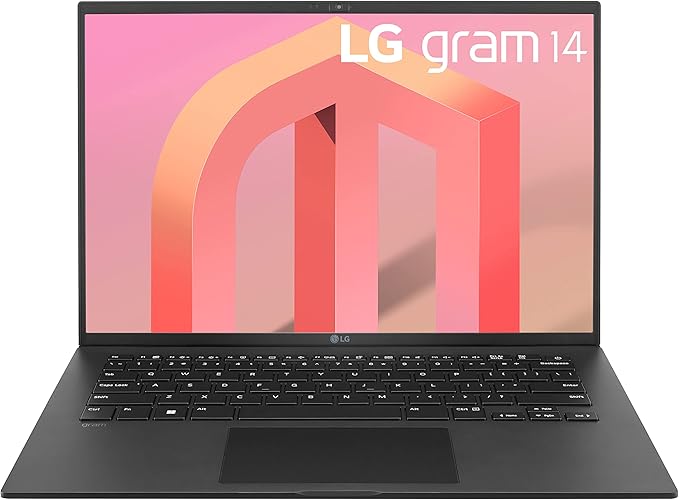
Microsoft vs LG: Overview
Comparing Microsoft and LG helps you determine which brand is best suited for your needs in Laptops. Both brands offer strong choices depending on your budget and key feature requirements.
Key Features & Comparison
Evaluate factors such as build quality, warranty, customer satisfaction, and total value before making your final purchase choice between Microsoft and LG.
Affordability
When evaluating affordability, Microsoft and LG adopt distinctly different pricing philosophies that cater to separate market segments. Microsoft positions its Surface lineup primarily in the premium tier, often competing directly with Apple. While Microsoft does offer budget-accessible entry points—such as the Surface Laptop Go—these lower-tier configurations frequently make significant compromises, including lower screen resolutions, smaller base storage capacities, and absent features like keyboard backlighting. Furthermore, Microsoft’s pricing structure becomes substantially steep as consumers scale up RAM and internal solid-state storage. Proprietary accessories, like the Surface Pen and detachable Type Covers for their 2-in-1 tablets, are rarely bundled, which meaningfully increases the total cost of ownership for buyers seeking the full Surface experience.
Conversely, LG focuses its efforts on the upper-midrange to premium ultraportable segment through the LG gram series, delivering a more generous out-of-the-box value proposition. Although LG laptops command premium starting prices and rarely dip into the true budget bracket, they generally offer superior baseline specifications for the money compared to equivalently priced Surface models. LG typically equips its entry configurations with generous solid-state drives, ample RAM, and full-featured port selections that eliminate the immediate need for expensive proprietary dongles or docking stations. For budget-conscious professionals who measure affordability by hardware longevity, component capability, and standard-inclusion accessories, LG often yields a higher performance-to-price ratio despite its lack of sub-$500 entry-level models.
Battery Life
Battery performance represents a foundational engineering pillar for the LG gram line, frequently granting the brand an edge over Microsoft in pure untethered endurance. LG accomplishes remarkable runtimes by pairing low-power display panels and aggressive thermal/power management profiles with unusually high-capacity batteries—often ranging from 72Wh to 90Wh—crammed into ultralight magnesium-alloy chassis. In real-world office productivity workflows, web browsing, and local media playback, modern LG gram laptops routinely surpass 12 to 16 hours of continuous use. This makes LG one of the premier choices for mobile professionals, business travelers, and students who require true all-day longevity without needing to carry a power adapter.
Microsoft's battery life outcomes are historically more varied, heavily dictated by the processor architecture and form factor of a given model. Intel-powered Surface Pro and Surface Laptop devices typically deliver modest to good endurance, averaging around 8 to 10 hours of active productivity, constrained in part by high-resolution PixelSense touchscreens and smaller physical chassis volumes. However, Microsoft has made monumental strides with its Qualcomm Snapdragon X-series ARM-powered Copilot+ Surface devices. These ARM-based models deliver exceptional power efficiency that rivals and occasionally exceeds LG’s best numbers, particularly under native ARM applications. Nevertheless, while Microsoft’s ARM hardware offers extraordinary endurance, LG retains a more consistent track record of exceptional battery longevity across an entirely x86-native software ecosystem without translation penalties.
Display
Display engineering highlights a classic philosophical division: Microsoft champions high-density, touch-centric productivity screens, whereas LG focuses on expansive, anti-glare real estate optimized for visual consumption and content creation. Microsoft’s proprietary PixelSense displays are among the finest in the industry, distinguished by their 3:2 aspect ratios which maximize vertical screen real estate for coding, reading, and document editing. Almost every Surface display integrates highly responsive 10-point multi-touch and active stylus digitizers with haptic feedback, catering directly to digital artists, annotators, and note-takers. Furthermore, higher-end Surface models feature dynamic 120Hz refresh rates, delivering exceptionally smooth system animations, pen tracking, and scrolling experiences.
LG, on the other hand, leverages its parent corporation's world-class panel manufacturing to outfit the gram lineup with top-tier IPS and vibrant OLED options. LG primarily employs a 16:10 aspect ratio, which strikes a versatile balance between document productivity and 16:9 media playback with minimal letterboxing. While LG models typically feature standard 60Hz panels and often reserve touch functionality for specific 2-in-1 variants, they excel in color accuracy, typically covering 99% of the DCI-P3 color gamut, and feature superior anti-glare matte coatings that combat harsh ambient reflections better than Microsoft's glossy glass panels. Users prioritizing stylus input, tactile interaction, and vertical workflow space will favor Microsoft, while those who prioritize glare mitigation, expansive panel sizes up to 17 inches, and vibrant color gamuts will find LG superior.
Performance
Sustained computing performance between Microsoft and LG reveals distinct thermal engineering approaches and workload targets. LG designs its gram series around ultra-low mass, utilizing magnesium-alloy bodies that weigh barely over two pounds. While this engineering feat is impressive, the thin enclosure necessitates conservative thermal dissipation ceilings. Under heavy, sustained multi-core workloads such as long video exports, 3D rendering, or sustained compilation tasks, LG grams tend to throttle CPU clock speeds more aggressively to prevent thermal buildup and keep fan noise unobtrusive. Consequently, while LG laptops feel snappy and responsive during bursty day-to-day office tasks, they are not optimized for sustained peak-load computing unless configured with specialized discrete graphics options.
Microsoft provides a broader spectrum of performance characteristics across its tiered portfolio. The flagship Surface Laptop Studio series features robust vapor-chamber cooling, higher thermal envelopes, and dedicated NVIDIA RTX graphics, outperforming any standard LG gram in intensive creative and computational workflows. For standard ultraportables, Microsoft’s latest pivot to ARM-based Snapdragon X Elite chips provides high single-core responsiveness and remarkable efficiency, frequently outpacing the thin-and-light x86 processors used by LG in burst workloads. However, buyers must weigh Microsoft's cutting-edge processing speed against application compatibility, as legacy x86 applications running under Windows on ARM emulation can experience performance degradation, an issue LG’s fully native Intel architectures do not encounter.
Compare current retail pricing, active promotions, and verified stock availability directly from authorized stores:
Compare current retail pricing, active promotions, and verified stock availability directly from authorized stores: