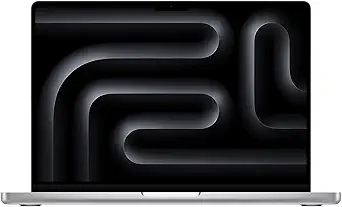
Microsoft vs Apple: Overview
Comparing Microsoft and Apple helps you determine which brand is best suited for your needs in Laptops. Both brands offer strong choices depending on your budget and key feature requirements.
Key Features & Comparison
Evaluate factors such as build quality, warranty, customer satisfaction, and total value before making your final purchase choice between Microsoft and Apple.
Affordability
When evaluating affordability, Microsoft generally presents a more accessible spectrum of initial price points across its Surface family, though this entry advantage can be deceptive. Devices like the Surface Laptop Go and base Surface Pro configurations lower the financial barrier to entry, offering students and budget-conscious professionals sleek hardware without an exorbitant upfront cost. Furthermore, Windows-based machines benefit from frequent third-party retail promotions, educational bundle discounts, and a broader refurbishment market. However, Microsoft's pricing architecture mirrors Apple's premium strategy when consumers begin scaling hardware specifications, as upgrading RAM and internal storage quickly drives prices into high-tier territory, while proprietary accessories like the Surface Pen and Type Cover are frequently sold separately rather than included in the box.
Apple, conversely, avoids the budget laptop space entirely, positioning the MacBook Air as its baseline offering with a higher initial investment threshold. While this renders Apple less accessible for buyers seeking sub-$800 hardware, the brand excels in total cost of ownership (TCO) and long-term value retention. MacBooks historically depreciate at a substantially slower rate than Windows machines, commanding premium resale prices on secondary markets years after purchase. Additionally, Apple laptops include all requisite human-interface components out of the box with class-leading keyboards and force-touch trackpads, meaning users rarely face mandatory auxiliary hardware purchases. Consequently, while Microsoft wins on immediate upfront accessibility, Apple often yields a more economically sound investment over a multi-year lifecycle.
Battery Life
The battery performance landscape underwent a seismic shift with Apple's transition to proprietary Apple Silicon, establishing a standard of efficiency that remains the benchmark in mobile computing. MacBooks powered by the M-series processors (ranging from the M-series base chips to the Pro and Max tiers) achieve remarkable endurance, frequently delivering between 15 to 22 hours of continuous productivity on a single charge. Crucially, Apple's ARM-based architecture exhibits minimal power draw during idle states and maintains uniform efficiency whether running on battery or connected to a wall outlet, eliminating the performance throttling traditionally used by laptops to preserve energy reserves.
Microsoft has historically lagged in battery longevity due to the higher power consumption of x86 Intel and AMD architectures coupled with the thermal constraints of thin-and-light chassis designs, often resulting in real-world runtimes between 8 to 11 hours. However, the introduction of Copilot+ PCs powered by Qualcomm Snapdragon X Elite and X Plus ARM processors has dramatically narrowed this chasm. Modern ARM-based Surface laptops now deliver genuine all-day endurance that closely rivals the MacBook Air, operating with exceptional efficiency during native tasks. Nevertheless, when legacy x86 emulation is required on these Windows on ARM systems, power consumption spikes unpredictably, giving Apple's mature, fully native software ecosystem the advantage in overall battery consistency and longevity.
Display
Display engineering represents a philosophical divergence between the two brands, distinguished by form factor, input methodology, and color execution. Microsoft outfits its Surface lineup with signature PixelSense displays that utilize a productive 3:2 aspect ratio, maximizing vertical screen real estate for document processing, coding, and web browsing. Microsoft heavily prioritizes direct interactivity, integrating multi-touch capacitive panels and precise digital stylus support with haptic feedback into virtually every Surface screen. This versatility appeals deeply to visual artists, annotators, and tactile learners, although the reflective glass required for digitizer integration can introduce noticeable glare in brightly lit professional environments.
Apple approaches display technology from an angle of absolute optical fidelity and viewing comfort rather than physical touch interactivity. The Liquid Retina and Liquid Retina XDR displays found across the MacBook Air and MacBook Pro lineups feature higher pixel densities, expansive P3 wide color gamuts, and industry-standard True Tone ambient adaptation. The higher-tier MacBook Pro models raise the engineering bar further with mini-LED backlighting, achieving 1,600 nits of peak HDR brightness, exceptional contrast ratios with inky blacks, and 120Hz ProMotion adaptive refresh rates. While Apple staunchly refuses to integrate touchscreens into macOS, its panels offer superior color calibration out of the box and unmatched visual dynamic range for professional creative workflows.
Performance
Performance benchmarks highlight fundamentally different engineering frameworks, particularly regarding software-hardware integration. Apple’s M-series system-on-chip (SoC) architecture unifies the CPU, GPU, Neural Engine, and memory into a single high-bandwidth package, delivering extraordinary single-core responsiveness and sustained multi-threaded throughput. Because macOS is optimized specifically for this unified hardware, MacBooks execute professional workloads—such as 4K/8K ProRes video editing, audio production, and machine learning models—with exceptional speed while generating negligible heat and noise. The architectural synergy ensures that even fanless models, such as the MacBook Air, perform intensive computing tasks without thermal collapse.
Microsoft provides a more diversified, multi-architecture performance profile, incorporating Intel Core Ultra, AMD Ryzen, and Qualcomm Snapdragon processors across its portfolio. High-end configurations of the Surface Laptop Studio and professional Surface devices integrate discrete NVIDIA GeForce RTX graphics, granting Microsoft a distinct advantage in raw 3D rendering, traditional CAD engineering applications, and mainstream AAA PC gaming—territories where Apple's native software catalog remains limited. While traditional x86 Surface devices can suffer from thermal throttling and audible fan noise under heavy continuous loads, and Windows on ARM occasionally encounters compatibility friction with specialized legacy software, Microsoft offers a broader ceiling of specialized hardware configurations for users tied to the Windows software ecosystem.
Compare current retail pricing, active promotions, and verified stock availability directly from authorized stores: