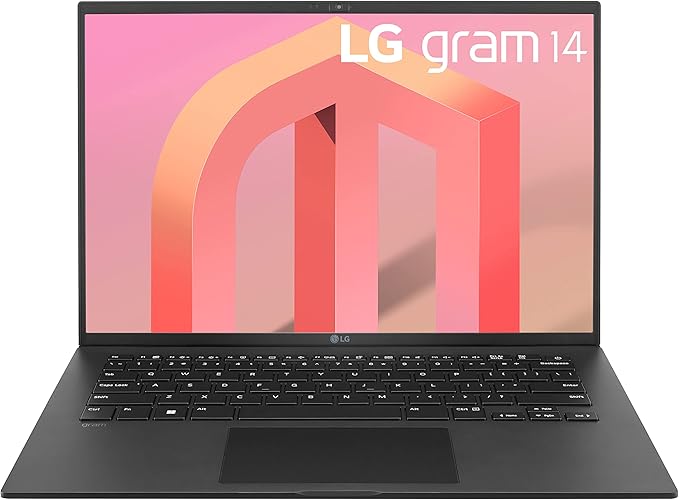
LG vs Apple: Overview
Comparing LG and Apple helps you determine which brand is best suited for your needs in Laptops. Both brands offer strong choices depending on your budget and key feature requirements.
Key Features & Comparison
Evaluate factors such as build quality, warranty, customer satisfaction, and total value before making your final purchase choice between LG and Apple.
Affordability
When evaluating affordability, Apple and LG approach value from radically different pricing architectures and hardware philosophies. Apple positions its MacBook lineup strictly in the premium tier, establishing a high barrier to entry with base models like the MacBook Air starting near a thousand dollars. However, the true cost challenge with Apple lies in its aggressive upselling strategy and proprietary component pricing. Upgrades to unified memory and solid-state storage are notoriously expensive, often costing hundreds of dollars for increments that cost pennies on the open market. While Apple devices retain their secondary market resale value far better than Windows competitors, the initial capital outlay makes Apple a prohibitive choice for budget-conscious buyers seeking optimal hardware-per-dollar ratios.
In contrast, LG’s Gram series operates within a more flexible pricing spectrum, frequently offering better baseline component configurations for the money. While top-tier Gram models with discrete GPUs and high-resolution OLED panels reach premium price tags comparable to Apple’s MacBook Pro line, LG routinely delivers larger screen real estate, higher standard storage capacities, and broader port selections at lower retail thresholds. Furthermore, LG laptops are subject to regular retail discounts, promotional bundles, and aggressive seasonal sales, unlike Apple’s rigid price protection. For users prioritizing maximum screen size, lightweight portability, and storage capacity relative to expenditure, LG represents a considerably more accessible investment.
Battery Life
Apple revolutionized laptop endurance with the transition to its custom ARM-based Apple Silicon architecture, establishing an industry benchmark that remains exceptionally difficult to match. Because Apple designs both the hardware silicon and the macOS operating system in tandem, MacBooks achieve unprecedented energy efficiency. Whether handling passive web browsing or intensive computational tasks like 4K video editing, an Apple MacBook Pro or Air sips minimal wattage, translating into real-world battery runtimes that reliably stretch between 15 to 22 hours depending on the chassis and chip tier. Critically, Apple machines maintain this exceptional battery performance without throttling performance when disconnected from wall power, preserving full processing power on the go.
LG has historically treated battery longevity as a core engineering pillar of its Gram family, outfitting its ultra-lightweight chassis with massive internal batteries, often ranging up to 80 to 90 watt-hours. When paired with modern Intel Core Ultra processors, LG Grams deliver impressive battery endurance that can comfortably cover a full 10 to 14-hour workday under standard productivity workloads. However, the inherent power demands of the x86 architecture and Windows background processes introduce greater variance under heavy workloads compared to Apple Silicon. While LG’s endurance is among the best in the Windows ecosystem, demanding tasks drain the battery significantly faster, and peak performance is often throttled on DC power to conserve charge.
Display
Apple’s display engineering is renowned for its industry-leading color calibration, peak luminance, and visual uniformity. The Liquid Retina XDR displays found on the MacBook Pro line utilize advanced mini-LED backlighting, achieving extreme dynamic range with 1,000 nits of sustained full-screen brightness, 1,600 nits of peak HDR brightness, and a 1,000,000:1 contrast ratio with virtually zero blooming. Combined with ProMotion 120Hz variable refresh rates, comprehensive P3 wide color gamut support, and True Tone ambient adaptation, Apple delivers an uncompromising visual experience tailored specifically for creative professionals, colorists, and media consumers who demand color accuracy straight out of the box.
LG, a global pioneer in display panel manufacturing, equips its Gram series with exceptional IPS and vibrant OLED screen options that excel in clarity and color saturation. LG's OLED configurations deliver absolute black levels, infinite contrast ratios, and blistering response times, surpassing Apple's mini-LED panels in pixel-level contrast without any halo effects. Furthermore, LG provides a broader array of form factors, including anti-glare matte coatings that excel in brightly lit environments, 16:10 productivity aspect ratios across 16-inch and 17-inch form factors, and versatile 2-in-1 convertible touchscreens with active stylus support. However, LG’s panels generally lag behind Apple’s mini-LEDs in peak sustained HDR brightness and adaptive high-refresh-rate integration.
Performance
Apple’s M-series silicon represents a paradigm shift in performance-per-watt metrics, leveraging unified memory architecture to obliterate traditional data transfer bottlenecks between the CPU and GPU. Apple laptops excel remarkably in sustained creative workloads, such as multi-stream ProRes video editing, complex audio arrangement, and local machine learning compilation. The dedicated Media Engines and high-bandwidth memory allow even base-tier M-series chips to export video and render graphics at speeds that rival high-wattage desktop systems, all while operating completely silently or with near-silent fan profiles. However, Apple’s closed ecosystem and graphics API limit its viability for native high-end PC gaming and niche enterprise engineering software.
LG counters by outfitting the Gram series with the latest multi-core Intel Core and Core Ultra processors, occasionally paired with entry-level discrete NVIDIA GeForce RTX graphics in select configurations. This hardware profile provides robust, responsive multi-threaded performance for enterprise multitasking, data analysis, and software development within the flexible Windows ecosystem. LG machines support native compatibility with virtually all legacy and modern business software, specialized CAD programs, and broader PC gaming libraries via DirectX. The major trade-off lies in thermal dissipation: due to the Gram's hyper-lightweight magnesium alloy chassis, prolonged heavy computational loads can lead to thermal throttling and noticeable fan acoustics sooner than on Apple's thermal-efficient architectures.
Compare current retail pricing, active promotions, and verified stock availability directly from authorized stores:
Compare current retail pricing, active promotions, and verified stock availability directly from authorized stores: