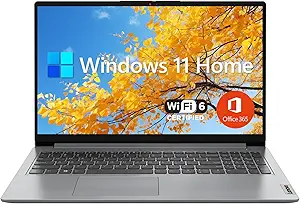
Lenovo vs MSI: Overview & Brand Philosophy
In the vast landscape of personal computing, few rivalries highlight differing corporate DNAs quite like Lenovo and Micro-Star International (MSI). Lenovo, a global heavyweight tracing its enterprise roots back to the acquisition of IBM’s PC division, operates with an omnipresent philosophy: versatile, ergonomic, and engineered for mass reliability. From corporate boardrooms dominated by the legendary ThinkPad lineup to competitive gaming arenas championed by the Legion sub-brand, Lenovo designs with wide-market accessibility, modular serviceability, and user-centric ergonomics at the forefront.
Conversely, MSI emerged from the enthusiast hardware and motherboard market, retaining a high-performance, enthusiast-first ethos across its product lines. While MSI has recently made deliberate, impressive strides into the business and content creator spaces through its Prestige and Creator series, its core identity remains inextricably tied to high-frame-rate gaming laptops such as the Raider, Stealth, and Titan series. MSI views the laptop as an aggressive performance vessel, prioritizing thermal dissipation headroom, overclocking capability, and raw component throughput above all else.
The philosophical divide between the two manufacturers comes down to specialized power versus broad-spectrum utility. Lenovo seeks to dominate the computing landscape by offering refined devices for every tier of consumer—students, corporate IT fleets, general home users, and esports players alike. MSI directs its focus toward power users who demand unapologetic silicon performance and desktop-replacement capabilities, accepting the trade-offs of aggressive styling and proprietary tuning utilities to achieve top-tier benchmarks.
Key Differences & Technological Comparison
When analyzing build quality, keyboard engineering, display technology, and thermal design, several clear distinctions separate Lenovo and MSI across their modern laptop portfolios:
Chassis Architecture and Industrial Design: Lenovo favors understated, functional design languages. Even its dedicated Legion gaming machines utilize anodized aluminum lids and low-profile aesthetics that blend comfortably into professional workspaces. In contrast, MSI leans into aggressive gamer styling for its performance models, often integrating extensive RGB lightbars, angular vents, and prominent branding. While MSI’s high-end titanium-aluminum alloys in the Stealth and Titan series are structurally formidable, Lenovo maintains better structural consistency across its mid-range tiers, particularly through the use of reinforced plastics, carbon fiber, and magnesium-aluminum blends found in the IdeaPad Pro, Yoga, and ThinkPad lineups.
Keyboard and Input Ergonomics: Lenovo holds an undisputed reputation for keyboard ergonomics. The iconic ThinkPad "smile" keycaps, deep travel distances, and tactile feedback mechanisms provide the gold standard for long-form typing. Even the Legion line features the TrueStrike keyboard, offering 100% anti-ghosting and soft-landing sub-millimeter switches. MSI approaches input from a gaming perspective, frequently partnering with SteelSeries to engineer per-key RGB illuminated keyboards. While excellent for gaming actuation and customization, MSI keyboards often feature shallower key travel, a flatter profile, and non-standard key layouts that demand a steeper learning curve for productivity-focused users.
Thermal Engineering and Performance Profiles: MSI prioritizes raw thermal capacity through its proprietary Cooler Boost technology, packing systems with high fin-density heatsinks, shared heat pipes, and high-RPM dual/triple fans. This allows MSI to sustain extreme TDPs (Thermal Design Power) on CPUs and GPUs, often out-benchmarking competitors in pure clock speeds at the expense of elevated fan noise. Lenovo counters with its proprietary Legion Coldfront and Intelligent Cooling architectures, which leverage AI-driven firmware (Lenovo AI Engine+) to dynamically balance acoustics, surface temperatures, and thermal headroom. Lenovo’s thermal solutions generally deliver quieter operation under mixed loads compared to MSI's louder, high-velocity fan profiles.
Display and Creative Features: Both brands embrace high-refresh-rate panels, but their priorities differ. Lenovo places heavy emphasis on 16:10 aspect ratios across nearly all tiers, maximizing vertical screen real estate for documents and timelines, paired with factory-calibrated OLED and IPS options supporting Dolby Vision. MSI focuses heavily on esports refresh rates (up to 360Hz and 480Hz) and creator-specific True Color validation, offering Mini-LED panels with high local dimming zones on its flagship machines to cater directly to video editors and immersive gamers.
Pros & Cons Comparison
Lenovo: Pros
- Industry-Leading Ergonomics: Renowned keyboards with superior tactile feedback and comfortable key travel across ThinkPad, Yoga, and Legion lines.
- Balanced Acoustic Thermals: Proprietary cooling firmware delivers quiet fan operation during everyday productivity and moderate workloads.
- Vast Product Diversity: Unmatched portfolio breadth spanning budget-conscious IdeaPads to enterprise-grade ThinkPads and convertibles.
- Productivity-Centric Displays: Widespread adoption of taller 16:10 aspect ratios across consumer and enterprise categories.
- Enterprise Support & Parts Availability: Extensive global service infrastructure, enterprise warranty options, and accessible repair documentation.
Lenovo: Cons
- Pre-Installed Software: Consumer tiers frequently include unnecessary bloatware and trial applications that require initial cleanup.
- Conservative Aesthetic: Designs can feel utilitarian or plain for users seeking distinct, high-personality hardware.
- Soldered Memory Constraints: Many modern thin-and-light models utilize non-upgradable soldered RAM, limiting future expansion.
MSI: Pros
- Maximum Hardware Utilization: High wattage allocations to CPUs and GPUs allow components to perform at the peak of their silicon potential.
- Advanced Hardware Customization: SteelSeries-powered per-key RGB control, extensive BIOS tuning capabilities, and specialized performance dashboards.
- Cutting-Edge Display Options: Early deployment of ultra-high refresh rates, Mini-LED backlighting, and factory-calibrated color spaces.
- High Upgradeability: Gaming and performance tiers routinely feature accessible dual SO-DIMM slots and multiple high-speed M.2 NVMe slots.
MSI: Cons
- Aggressive Fan Acoustics: Cooler Boost fans can reach high decibel levels during sustained gaming or heavy rendering workflows.
- Budget Build Inconsistencies: Entry-level and lower mid-range laptops (e.g., GF and Bravo series) often exhibit noticeable chassis flex and weaker hinge designs.
- Subpar Battery Optimization: Aggressively tuned components and hungry display panels typically yield below-average battery life when unplugged.
Performance, Durability & Value Analysis
From an endurance perspective, both manufacturers present clear trade-offs tied directly to product pricing tiers. Lenovo demonstrates exceptional build consistency, with its mid-range and premium lines (ThinkPad, Legion, Yoga) regularly passing rigorous MIL-STD-810H durability testing. Lenovo's reinforced internal frames and drop-resistant hinge mechanisms offer excellent structural longevity, making them resilient daily drivers for mobile professionals and students. MSI’s durability curve is more polarized: while its top-tier Titan and Raider models utilize robust materials that withstand intense heat and structural stress, its budget-tier gaming models have historically faced consumer scrutiny over brittle hinge assemblies and lower-grade chassis plastics. For long-term hardware survivability in sub-$1,000 price brackets, Lenovo holds a measurable advantage.
When evaluating value, the assessment depends heavily on the intended use case. MSI offers exceptional price-to-performance metrics for gamers and 3D visual artists who prioritize pure clock speeds and GPU wattage over all else; an MSI chassis routinely provides higher frame rates per dollar than competing brands due to unlocked thermal ceilings. However, Lenovo provides superior total ownership value for consumers seeking a versatile, holistic package. Lenovo laptops consistently achieve better battery conservation, superior built-in webcams, richer audio profiles, and unmatched typing interfaces, delivering a more complete daily computing experience that retains functional value long after raw processor benchmarks have been superseded.
Final Verdict: Which Brand Should You Choose?
Your choice between Lenovo and MSI should be driven by how you prioritize peak computing power versus comprehensive daily usability:
Choose Lenovo if:
- You need a dependable daily productivity machine for business, coding, academic writing, or general office administration.
- You prioritize best-in-class keyboard ergonomics, quiet fan profiles, and long battery life.
- You want a discrete, clean-looking gaming laptop (such as the Legion Pro 5 or 7) that delivers high-tier gaming performance without drawing unwanted attention in professional environments.
- You are shopping in the budget-to-midrange space ($500 to $1,000) and demand reliable structural integrity and hinge durability.
Choose MSI if:
- Your primary focus is high-performance gaming, esports, or intensive 3D rendering where maximum GPU wattage and frame rates are critical.
- You enjoy granular control over hardware profiles, hardware-level thermal modes, and internal component upgrades like dual-channel RAM and multiple storage drives.
- You want specialized enthusiast features such as mechanical switches, extreme-refresh-rate panels, or vibrant, high-output RGB customization.
- You plan to use your laptop primarily as a desk-bound workstation or desktop replacement where continuous wall power is guaranteed and fan noise is a secondary concern.
Affordability
When evaluating affordability in the laptop space, Lenovo and MSI approach value engineering from fundamentally different market positions. Lenovo commands a decisive advantage in broad-spectrum affordability thanks to its massive supply chain scale and extensive market penetration across every tier. From entry-level Ideapads and Chromebooks under $400 to aggressive mid-range pricing in the LOQ and Legion gaming lines, Lenovo consistently optimizes price-to-performance by utilizing custom chassis tooling, diverse component partnerships with both AMD and Intel, and high-volume purchasing. Their lower-cost devices rarely feel entirely compromised; instead, Lenovo strategically retains high-utility features—such as full-travel keyboards and robust thermal heat-pipe layouts—while making cost-cutting compromises in less critical areas, such as using plastic sub-frames or displays with modest 45% NTSC color gamut coverage.
Conversely, MSI’s interpretation of affordability is heavily focused on the budget-to-midrange gaming and performance segment through lines like the GF, Thin, and Cyborg series. MSI aggressively targets the absolute lowest price points for dedicated GPUs, often allowing gamers to acquire modern NVIDIA RTX silicon for hundreds less than the competition. However, this raw component affordability involves substantial engineering trade-offs. To hit lower price barriers, MSI frequently relies on lightweight, flexible plastics, inferior single-fan or restrictive thermal cooling designs, notoriously fragile hinge assemblies, and displays compromised by low refresh rates and sluggish response times. Where Lenovo balances the entire system architecture to ensure baseline durability, budget MSI laptops prioritize the internal processor and graphics card, cutting corners on chassis integrity and peripheral hardware.
Ultimately, the practical trade-off between the two brands rests on how a buyer defines value over time. MSI remains an attractive option for strictly budget-constrained enthusiasts seeking the highest theoretical computing power per dollar, provided they are willing to accept thermal throttling, lower-tier mechanical build quality, and louder operational noise. Lenovo, however, delivers a superior overall standard of holistic affordability. Even within its aggressively priced budget and midrange tiers, Lenovo sustains better component synergy, superior structural engineering, better battery optimization, and a more dependable after-purchase depreciation curve, making their laptops a much safer financial investment for mainstream consumers, students, and budget-conscious gamers alike.
Battery Life
When evaluating battery life, Lenovo holds a significant competitive advantage over MSI due to its diversified portfolio, advanced thermal dynamics, and deep software-hardware integration. Lenovo implements aggressive, highly refined power-management profiles across its line of laptops, most notably through Lenovo Vantage. In their productivity-oriented ThinkPad, Yoga, and IdeaPad lineups, Lenovo frequently leverages ultra-low-power display panels, intelligent dynamic refresh rate switching, and high-density battery cells (often ranging from 57Wh to upwards of 86Wh). Combined with finely tuned ACPI platform profiles that efficiently throttle background processor states when on DC power, Lenovo's ultraportables routinely deliver 10 to 15+ hours of real-world office productivity and media playback. Even within their gaming-focused Legion series, Lenovo utilizes smart MUX switches (Advanced Optimus) and hybrid GPU-offloading modes that yield respectable 5 to 7-hour runtimes—figures that are exceptionally rare in high-TDP gaming chassis.
Conversely, MSI’s engineering identity is deeply rooted in high-performance computing, competitive gaming, and desktop replacement architecture, where untethered endurance often takes a backseat to sustained clock speeds and thermal dissipation. While modern MSI devices—such as the Creator, Prestige, and Stealth series—have made noticeable strides by packing maximum-allowable 99.9Wh batteries, their efficiency optimization tends to be less refined than Lenovo's. MSI Center provides discrete user scenarios (Super Battery, Silent, Extreme Performance), but the platform often struggles with aggressive background power draw, less consistent automated GPU idling, and power-hungry display backlights (particularly on high-refresh OLED and Mini-LED configurations). Consequently, high-end MSI laptops frequently burn through battery reserves in 3 to 5 hours under modest mixed workloads, and true gaming sessions away from the outlet are generally constrained to under 90 minutes with significant thermal and computational throttling.
Ultimately, the practical trade-off between the two brands centers on workflow continuity versus raw, unconstrained power delivery. Consumers requiring multi-day stand-by reliability, predictable all-day productivity without an AC adapter, and versatile, standardized USB-C Power Delivery ecosystem charging will find Lenovo vastly superior. MSI remains a viable choice for power users who view the battery primarily as an integrated uninterruptible power supply (UPS) meant to bridge short gaps between desk setups, but Lenovo's superior firmware optimization, granular power states, and component-level efficiency make it the undisputed leader in holistic battery performance.
Display
Lenovo and MSI approach laptop display engineering from distinct operational philosophies, shaped by their primary market demographics. Lenovo prioritizes versatility, ergonomic comfort, and productivity-oriented specifications across its expansive lineup. In its flagship ThinkPad and Yoga series, Lenovo excels at integrating productivity-centric 16:10 aspect ratios, high-resolution OLED panels, and advanced eye-care technologies like TÜV Rheinland Low Blue Light certification. The brand's PureSight display technology, found in its premium Yoga and Legion devices, offers exceptional factory color calibration (covering 100% sRGB and DCI-P3), high dynamic range (Dolby Vision support), and adaptive refresh rates that dynamically balance battery efficiency with visual fluidity. While Lenovo’s budget-oriented IdeaPad models sometimes compromise on brightness with standard 250-to-300-nit, 45% NTSC panels, its mid-to-high-tier screens deliver remarkable color accuracy, superior anti-glare coatings, and well-distributed backlighting with minimal IPS glow.
Conversely, MSI concentrates its engineering prowess heavily on high-performance gaming and professional creative workflows. MSI is an industry frontrunner in pushing extreme refresh rates, being among the first to bring 240Hz, 360Hz, and even 480Hz displays to market in lines like the Raider and Titan. MSI’s technical standout is its adoption of high-end Mini-LED technology via its AmLED panels, which produce blistering peak brightness levels exceeding 1,000 nits along with VESA DisplayHDR 1000 certification for transformative contrast ratios that rival OLED without the risk of burn-in. In its Creator series, MSI implements True Color technology, guaranteeing each panel is individually factory-tuned to Delta E < 2 precision across Adobe RGB and DCI-P3 color spaces. However, the trade-off with MSI lies in panel consistency across its lower-tier lineups; the budget Thin, Katana, and Modern series often employ dated displays plagued by low color gamut coverage, poor response times that cause motion ghosting, and narrow viewing angles.
When evaluating practical trade-offs, the choice between Lenovo and MSI hinges on your primary use case. Lenovo provides a more universally cohesive display portfolio; its business and consumer laptops favor everyday usability, featuring superior anti-reflective treatments, wider viewing angles, touch and stylus integration, and power-saving features ideal for mixed-light productivity. MSI, by contrast, sacrifices battery optimization and anti-glare effectiveness in pursuit of raw visual horsepower. If your priority is bleeding-edge gaming motion clarity or uncompromised HDR luminance for intense media creation, MSI's upper-tier Mini-LED and ultra-high refresh panels take the lead. Yet, for an optimal balance of color fidelity, resolution scaling, eye comfort, and consistency across varied price tiers, Lenovo emerges as the more well-rounded display manufacturer.
Performance
When evaluating performance, Lenovo and MSI represent two distinct engineering philosophies, largely dictated by their historical roots in enterprise computing and high-octane gaming, respectively. Lenovo demonstrates exceptional versatility and performance consistency across its broad portfolio, from the enterprise-grade ThinkPad series to the enthusiast-focused Legion gaming lineup. Lenovo’s primary engineering strength lies in its proprietary thermal management, notably the Legion Coldfront vapor chamber technology and intelligent AI Engine+ (LA chip deployment), which dynamically balances CPU and GPU power allocations based on real-time loads. This granular control allows machines like the ThinkPad P-Series workstations and Legion Pro laptops to maintain high sustained clock speeds under heavy, prolonged multi-threaded workloads without succumbing to aggressive thermal throttling. Lenovo consistently delivers balanced performance profiles that prioritize a low noise-to-thermals ratio, stable wattage delivery through reliable voltage regulation modules (VRMs), and exceptional efficiency when operating on battery power.
Conversely, MSI adopts an aggressive, raw-performance paradigm that is engineered to squeeze the maximum possible frame rates and computing power out of its hardware. MSI’s gaming and creator powerhouses, such as the Titan, Raider, and Creator series, are celebrated for pushing silicon to its absolute thermal and electrical limits. Through its Cooler Boost Titan architecture, which frequently incorporates up to four fans and eight or more heat pipes, MSI enables industry-leading Total Graphics Power (TGP) allocations alongside extreme processor wattage. Furthermore, MSI heavily caters to enthusiasts by offering deep, low-level hardware control, including advanced BIOS access and comprehensive overclocking capabilities through the MSI Center software. This approach provides a noticeable performance edge in peak burst performance, GPU-intensive 3D rendering, and competitive gaming, where raw, unconstrained power takes precedence over acoustics or operational efficiency.
The practical trade-offs between the two brands ultimately hinge on the user's operational priorities. MSI’s uncompromising focus on peak wattage and frame-rate ceilings often leads to significantly louder fan profiles, higher surface temperatures, and steep battery degradation under load, making their machines less ideal for sustained, quiet professional environments. In addition, MSI’s budget-to-midrange offerings (such as the Katana or Thin series) occasionally feature constrained TGP ratings and less sophisticated thermals compared to Lenovo’s comparable LOQ line. Lenovo strikes a more refined balance, offering predictable sustained output, class-leading acoustics, and superior low-wattage optimization that benefits both creators and enterprise professionals who need stable performance away from the wall outlet. For pure, uncapped hardware throughput and overclocking headroom, MSI holds the enthusiast crown; however, for dependable, thermally balanced, and acoustically managed sustained computing, Lenovo delivers the superior overall engineering package.