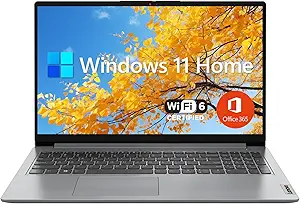
Lenovo vs Microsoft: Overview & Brand Philosophy
In the expansive landscape of personal computing, few rivalries illustrate contrasting philosophies as distinctly as Lenovo and Microsoft. Lenovo, a titan born from the acquisition of IBM’s Personal Computing Division, operates with the mindset of a comprehensive hardware manufacturer. Its design ethos centers on functional engineering, ergonomics, and exhaustive market segmentation. From the enterprise-standard ThinkPad series to the consumer-focused Yoga and Legion gaming lines, Lenovo’s priority is to offer a specialized machine tailored to virtually every conceivable user tier, workload, and budget threshold.
Conversely, Microsoft approaches the laptop sector as an architect demonstrating an idealized vision for its own operating system. The Surface family was conceived not merely to capture market share, but to establish premium hardware benchmarks that elevate Windows 11. Microsoft's brand philosophy is rooted in minimalism, premium industrial design, and seamless software-hardware synergy. Rather than flooding the market with hundreds of SKUs, Microsoft curates a lean lineup emphasizing high-resolution touch displays, distinctive 3:2 aspect ratios, and versatile form factors aimed at professionals, creatives, and modern knowledge workers.
Ultimately, this matchup pits Lenovo’s engineering pragmatism, vast catalog, and component diversity against Microsoft’s tightly controlled, design-led vision. While Lenovo innovates through modularity, durability testing, and thermal headroom, Microsoft innovates through aesthetic refinement, digital inking capabilities, and native software integration, presenting consumers with two radically different avenues to the modern Windows computing experience.
Key Differences & Technological Comparison
The technological divergence between Lenovo and Microsoft is evident across display tech, input ergonomics, performance tuning, and repairability:
- Form Factors and Display Technology: Microsoft popularized the productivity-focused 3:2 aspect ratio with its PixelSense displays, offering significantly more vertical screen real estate for documents, coding, and web navigation. These panels universally feature multi-touch support and low-latency pen capabilities. Lenovo, while adopting 16:10 displays widely across its portfolio, provides superior panel diversity, allowing buyers to configure laptops with high-refresh-rate IPS panels, matte anti-glare coatings, or vibrant 4K OLED screens tailored to media consumption or gaming.
- Keyboard and Input Engineering: Lenovo’s ThinkPad keyboards remain the undisputed gold standard for physical input, delivering deep key travel (typically 1.5mm), sculpted keycaps, structural stability, and the iconic TrackPoint nub. Microsoft’s Surface keyboards, whether the Alcantara-covered type covers of the Surface Pro or the integrated decks of the Surface Laptop, focus on quiet, low-profile actuation and a crisp, modern tactile response accompanied by best-in-class haptic glass touchpads.
- Silicon Diversity and Thermal Architecture: Lenovo partners extensively with Intel, AMD, and NVIDIA, allowing users to configure machines with high-TDP processors, dedicated workstation GPUs, or gaming-grade graphics backed by robust multi-fan cooling systems. Microsoft historically favored Intel, though recent iterations heavily integrate Qualcomm’s ARM-based Snapdragon X platforms to maximize battery efficiency and on-device AI throughput. Microsoft designs for fanless operation or whisper-quiet thermal envelopes, deliberately sacrificing peak sustained graphics performance for portability and silent running.
- Modularity and Serviceability: Lenovo has consistently prioritized enterprise fleet deployment and repairability, offering accessible chassis designs where RAM, SSDs, Wi-Fi modules, and batteries can be upgraded or serviced. While Microsoft has made commendable strides in recent generations by making SSDs accessible via a magnetic door on Surface devices, their tightly sealed, bonded aluminum enclosures remain fundamentally less modular than Lenovo's business-grade chassis.
Pros & Cons Comparison
Lenovo
- Pros:
- Unmatched keyboard ergonomics and typing comfort on ThinkPad models.
- Broad configuration options covering entry-level to high-end workstation performance.
- Superior port selection (Thunderbolt 4, native HDMI, RJ-45 Ethernet, USB-A) without requiring dongles.
- Higher sustained performance due to aggressive thermal cooling architectures.
- Class-leading enterprise durability standards (MIL-STD-810H certification).
- Cons:
- Fragmented product line can cause confusion for casual shoppers.
- Consumer-grade tiers (such as IdeaPad) lack the exceptional build quality of ThinkPads.
- Pre-installed OEM software and bloatware are common on consumer lines.
Microsoft
- Pros:
- Exceptional industrial build quality using premium aluminum and magnesium alloys.
- Signature 3:2 PixelSense displays optimized for reading, writing, and creative work.
- Pure, bloatware-free Windows installation with direct, day-one firmware updates.
- Best-in-class Windows Hello facial recognition and haptic feedback trackpads.
- Industry-leading digital pen integration and 2-in-1 detachable form factors (Surface Pro).
- Cons:
- High entry price with steep surcharges for storage and memory upgrades.
- Minimal port selection, heavily reliant on USB-C and proprietary Surface Connect ports.
- Limited options for high-end discrete gaming or intensive 3D rendering workflows.
Performance, Durability & Value Analysis
When measuring performance and thermal endurance, Lenovo generally holds the advantage in demanding workloads. Thanks to larger chassis designs and dual-fan exhaust configurations, laptops like the ThinkPad P-Series, ThinkPad X1 Extreme, or Legion series can run at sustained peak clock speeds without encountering the severe thermal throttling that sometimes restricts ultra-thin hardware. Microsoft designs the Surface line for brief bursts of responsiveness rather than sustained, hours-long rendering or compiling tasks. However, Microsoft’s latest push into ARM architecture with Snapdragon X chips has fundamentally altered its battery longevity, enabling Surface laptops to easily deliver all-day endurance that outpaces many Intel-based Lenovo equivalents under light-to-moderate office workflows.
From a durability and long-term value perspective, the assessment hinges on how each brand mitigates physical degradation. ThinkPads are legendary for surviving drops, liquid spills, and field abuse, reinforced by internal magnesium roll cages and carbon-fiber-reinforced plastics. In contrast, Microsoft devices behave more like fine jewelry; their unibody anodized aluminum resists structural flex admirably, but surfaces are prone to micro-scratches and dents over years of mobile transit. When looking at monetary value, Lenovo offers significantly more computing power per dollar spent, particularly in the mid-range bracket ($700–$1,200). Microsoft positions itself firmly in the premium category, requiring consumers to pay a noticeable luxury tax for its screen ratios, fit-and-finish, and minimalist industrial design.
Final Verdict: Which Brand Should You Choose?
Choosing between Lenovo and Microsoft ultimately comes down to whether your workflow prioritizes computational utility and ergonomics, or aesthetic refinement and versatile multi-touch productivity.
Choose Lenovo if:
- You are a developer, writer, data analyst, or enterprise professional who values typing ergonomics, sustained processing power, and modular repairability above all else.
- You require specific physical ports (such as HDMI, Ethernet, or legacy USB-A) for presentations and legacy equipment without carrying dongles.
- You need high-end dedicated GPU acceleration for 3D modeling, video rendering, or gaming.
- You are shopping within a strict mid-range budget where price-to-performance ratio is your primary purchasing metric.
Choose Microsoft if:
- You want the sleekest, most refined Windows computing experience available, akin to the craftsmanship of Apple's MacBooks.
- Your workflow thrives on digital note-taking, sketching, reading PDFs, or using a detachable 2-in-1 tablet interface (Surface Pro).
- You prefer a 3:2 screen ratio that maximizes vertical visibility for spreadsheets, documents, and web apps.
- You value a pristine, out-of-the-box software experience with zero third-party bloatware and instant biometric authentication.
Affordability
When evaluating affordability, Lenovo holds a commanding, near-unassailable lead over Microsoft through its sheer breadth of product tiers and economies of scale. Lenovo approaches market pricing with a granular strategy, saturating budget and midrange segments through its IdeaPad, Yoga, and ThinkBook lines. Consumers can acquire competent, daily-driver computing for well under $500, often equipped with capable AMD Ryzen or Intel Core i3/i5 processors, adequate port selection, and serviceable 1080p displays. In contrast, Microsoft positions its Surface portfolio almost exclusively within the premium tier. While Microsoft has attempted entry-level inroads with the Surface Laptop Go series, these machines inevitably force severe engineering and spec compromises—such as sub-1080p displays, eMMC base storage, and absent biometric authentication—to achieve price points that Lenovo easily undercuts while offering superior hardware specifications.
In the mid-to-high-end pricing brackets, the value-to-cost ratio continues to diverge based on how each company engineers its devices. Microsoft’s pricing reflects high research and development overhead for bespoke, signature technologies, including custom 3:2 PixelSense touchscreens, magnetic chassis engineering, and precision haptic trackpads. However, their exorbitant markup on memory and storage upgrades—charging premium sums for 16GB or 32GB RAM jumps—severely degrades their affordability for power users. Lenovo, conversely, maximizes component density per dollar across both consumer and commercial segments. In models like the ThinkPad E-series or mid-tier Legion gaming rigs, Lenovo frequently retains modular SO-DIMM RAM slots and secondary M.2 SSD bays, allowing users to buy lower-tier SKUs and perform cost-effective aftermarket upgrades that are physically impossible on Microsoft's permanently soldered, glued-shut architectures.
Ultimately, the practical trade-off between the two brands comes down to vertical lifestyle appeal versus horizontal utility and longevity. Purchasing an affordable Microsoft laptop typically means accepting an underpowered or dated specification sheet simply to gain access to the prestigious Surface aesthetic, native Windows optimization, and premium aluminum build. Lenovo redefines affordability by focusing on functional utility, raw multi-core performance, and long-term cost of ownership, heavily supported by widespread parts availability and easier enterprise repairability. For budget-conscious consumers, students, and fleet-purchasing businesses, Lenovo provides vastly superior computational power, battery capacity, and upgradeability per dollar spent, leaving Microsoft as a boutique alternative rather than a true competitor in pricing accessible value.
Battery Life
When evaluating battery performance, Microsoft and Lenovo take fundamentally different engineering approaches that cater to distinct end-user priorities. Microsoft's Surface lineup has historically pursued a unified hardware-software synergy, culminating in their latest transition to ARM-based Qualcomm Snapdragon X-series processors in models like the Surface Laptop 7 and Surface Pro 11. By tightly integrating Windows 11 with custom silicon and energy-efficient PixelSense displays, modern Microsoft machines deliver exceptional real-world longevity, routinely clocking between 14 to 18 hours of continuous, productivity-focused use. In contrast, Lenovo approaches endurance through raw hardware diversification and thermal scaling. Across their vast portfolio—ranging from the enterprise-standard ThinkPad series to the sleek Yoga and high-drain Legion devices—Lenovo relies predominantly on x86 architectures from Intel and AMD. They compensate for these naturally hungrier platforms by equipping their chassis with larger physical cell capacities (often maxing out near the 99.9Wh flight-legal limit) and leveraging specialized thermal designs to prevent battery degradation under sustained loads.
Feature-wise, both manufacturers offer distinct advantages in power management and daily charging mechanics. Lenovo dominates in terms of technical utility, fine-tuning, and rapid deployment. Through the Lenovo Vantage software suite, users gain granular control over charge thresholds to preserve battery chemistry longevity, dynamic power profiles tied to AI-driven cooling engines, and proprietary Rapid Charge technology that can boost a device to 80% capacity within 60 minutes. Microsoft presents a more streamlined, hands-off approach through Windows Native Smart Charging, which automatically caps limits based on user patterns to prevent battery swelling without requiring manual configuration. While Microsoft machines excel at modern connected standby—losing negligible charge overnight thanks to optimized low-power states—their smaller physical battery capacities mean that heavier legacy x86 emulation on ARM chips or sudden intensive workloads (such as on the Intel-based Surface Laptop Studio) cause battery runtime to drop more precipitously than on competing Lenovo machines.
Ultimately, the trade-off centers on predictability versus broad-spectrum resilience. Microsoft provides peerless, lightweight efficiency for mobile professionals whose routines revolve around web browsing, native Office apps, and multimedia, yielding some of the highest endurance figures on modern consumer ultrabooks without thermal throttling. Conversely, Lenovo offers far greater resilience across high-demand computing tasks. While a thin-and-light Lenovo Yoga running an OLED panel may yield slightly less runtime than an equivalent Surface, Lenovo’s business-tier ThinkPads offer superior battery serviceability, consistent performance during native software development, and the ability to brute-force extended runtimes through sheer cell volume. For seamless, all-day unplugged productivity, modern Microsoft hardware has the edge; for heavy processing fidelity and rapid charge cycling under industrial workloads, Lenovo remains the more robust platform.
Display
When evaluating display technology, Microsoft takes a highly uniform, productivity-first approach across its Surface lineup, centered almost entirely on its signature 3:2 PixelSense screens. This taller aspect ratio provides significantly more vertical screen real estate, making it an industry benchmark for productivity workflows like document editing, programming, and web browsing. Microsoft engineers these displays with an emphasis on touch responsiveness and precision stylus interaction, backed by high-resolution panels, factory color calibration supporting sRGB and DCI-P3 profiles, and dynamic refresh rates up to 120Hz on flagship models like the Surface Pro and Surface Laptop Studio. Furthermore, the optical bonding and low-glare glass used in PixelSense displays provide exceptional clarity and paper-like haptics with the Surface Slim Pen. However, Microsoft’s panel diversity remains rigid; the company has been slow to adopt OLED technology broadly across its mainstream fleet and rarely targets ultra-high brightness levels suitable for harsh outdoor use, prioritizing consistent digital penmanship and office workflows instead.
In contrast, Lenovo utilizes a segmented, breadth-over-uniformity engineering strategy that offers far superior display variety tailored to distinct market niches. Within the business-focused ThinkPad line, Lenovo ranges from matte, anti-glare IPS displays with integrated privacy guards (Privacy Guard) to stunning 4K and 2.8K OLED Dolby Vision panels. For high-end creators and general consumers, the Yoga series aggressively deploys ultra-vibrant, high-contrast PureSight OLED displays that feature deep, true blacks and infinite contrast ratios that drastically outperform Microsoft’s standard IPS panels for media consumption and creative production. Additionally, Lenovo heavily dominates the gaming space with its Legion lineup, deploying high-refresh 16:10 panels pushing 165Hz to 240Hz with G-Sync support and 500+ nits of brightness. The primary engineering trade-off for Lenovo is inconsistency: unlike Microsoft’s guaranteed baseline of high-resolution touchscreens, entry- and mid-tier Lenovo laptops often ship with budget-oriented 300-nit, 45% NTSC panels that suffer from poor color accuracy and dim backlighting.
Ultimately, the practical choice between Microsoft and Lenovo displays hinges on whether a user values a singular, refined productivity canvas or targeted display performance. Microsoft wins on touch fidelity, active digitizer integration, and the ergonomic advantages of the 3:2 aspect ratio, making it the superior option for note-takers, sketch artists, and document-heavy professionals. Lenovo, however, holds the technical advantage for users demanding visual specialization. By offering true matte finishes for bright office environments, industry-leading OLED panels for deep HDR content creation, and blistering refresh rates for high-velocity computing, Lenovo provides access to superior raw display technologies, provided the consumer actively avoids their baseline, entry-level display configurations.
Performance
When evaluating performance, Microsoft and Lenovo operate with fundamentally distinct engineering philosophies. Microsoft focuses on tightly integrated, optimized performance tailored to everyday productivity and creative tasks, primarily through its Surface lineup. Historically reliant on custom-tuned Intel processors, Microsoft has aggressively pivoted toward ARM-based computing with Qualcomm Snapdragon X Elite and Plus chipsets in its latest Surface Pro and Surface Laptop iterations. This shift delivers exceptional thermal efficiency, rapid wake times, and industry-leading battery life with robust NPU (Neural Processing Unit) integration for local AI workloads. However, Microsoft's sustained performance ceiling remains comparatively low; under prolonged, multi-threaded computational stress or heavy 3D rendering, thermal throttling can occur due to the compact, aesthetic-first chassis designs and prioritized quiet acoustic profiles.
Lenovo, conversely, approaches performance with sheer diversity and raw, unthrottled power, driven by advanced engineering and diverse hardware partnerships across Intel, AMD, and Nvidia. From the enterprise-grade ThinkPad series to the high-performance Legion gaming and workstation-class ThinkStation mobile laptops, Lenovo maximizes hardware headroom. Its proprietary Legion Coldfront and advanced vapor chamber thermal management systems allow components to sustain substantially higher Total Graphic Power (TGP) and processor wattage for extended periods without degradation. Where Microsoft offers limited high-end discrete GPU options—largely restricted to the niche Surface Laptop Studio—Lenovo delivers everything from energy-efficient ultrabook platforms to systems housing desktop-class Nvidia GeForce RTX 4090 laptop GPUs and multi-core AMD Ryzen processors designed for intensive scientific computing, high-framerate gaming, and rapid 8K video exports.
Ultimately, the practical trade-offs between the two brands hinge on peak computational requirements versus efficiency. Microsoft holds the advantage in immediate, snappy responsiveness, cutting-edge AI processing efficiency, and lightweight productivity where seamless hardware-software harmony matches the macOS ecosystem experience. Lenovo, however, is the clear victor in raw, sustained performance and versatile scalability. Consumers requiring granular control over thermal envelopes, overclocking configurations, heavy parallel processing, or serious GPU-accelerated workloads will find Lenovo’s expansive catalog significantly more capable, whereas users prioritizing reliable, cool-running daily performance and extended off-charger usability will find Microsoft’s modern architectures more than sufficient.
Compare current retail pricing, active promotions, and verified stock availability directly from authorized stores: