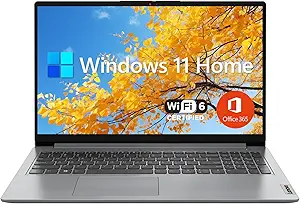
Lenovo vs LG: Overview
Comparing Lenovo and LG helps you determine which brand is best suited for your needs in Laptops. Both brands offer strong choices depending on your budget and key feature requirements.
Key Features & Comparison
Evaluate factors such as build quality, warranty, customer satisfaction, and total value before making your final purchase choice between Lenovo and LG.
Affordability
When analyzing pricing architecture, Lenovo operates with one of the most segmented and price-inclusive portfolios in the personal computing industry. By leveraging massive supply chain scale, Lenovo delivers options that cover every budget tier, from sub-$500 entry-level IdeaPads to high-end enterprise ThinkPads and Legion gaming rigs. In the budget to mid-range categories, Lenovo consistently incorporates cost-efficient materials, such as polycarbonate chassis and budget-tier AMD or Intel processors, enabling everyday consumers and students to attain functional computing power without paying an aesthetic or ultra-lightweight tax. Furthermore, their frequent seasonal discounting and corporate perk programs provide unmatched value at lower price points.
In stark contrast, LG deliberately avoids the budget category entirely, focusing its engineering and pricing strategy primarily on the premium ultraportable segment through its LG Gram series. Because LG prioritizes aerospace-grade magnesium alloy construction, custom high-density battery engineering, and featherweight form factors, their baseline entry price generally sits significantly higher than Lenovo's entry tiers. While an LG laptop rarely competes on raw affordability or sticker price, it offers substantial long-term value for buyers who specifically require top-tier port selection, durability certifications, and extreme weight reduction in a single machine. However, for sheer financial flexibility and feature-to-dollar maximization across all pricing bands, Lenovo remains the clear victor.
Battery Life
LG stands out as an industry titan in battery efficiency, predominantly through its flagship LG Gram line. LG capitalizes on its parent corporation's proprietary battery chemistry advancements to integrate remarkably high-capacity cells—often ranging from 72Wh to 90Wh—into laptops weighing under three pounds. Combined with aggressive Intel Evo platform optimizations, dynamic refresh rates, and low-power IPS panels, LG machines routinely achieve between 12 and 18 hours of real-world productivity usage. This makes LG the premier choice for frequent travelers, academics, and mobile professionals who cannot afford to be tethered to a wall charger or carry secondary power banks during full-day excursions.
Lenovo presents a more fragmented battery landscape due to the sheer diversity of its hardware catalog. While business-centric ThinkPad T and X series models with larger battery cells can comfortably deliver all-day endurance, and models like the Yoga Slim achieve impressive runtimes through efficient AMD Ryzen configurations, performance-oriented lineups tell a different story. Lenovo's Legion gaming machines and high-performance Creator laptops demand substantial wattage, often depleting power reserves within 3 to 6 hours under moderate stress. While Lenovo counteracts this with Rapid Charge technology—capable of restoring 80% battery capacity in under an hour—LG maintains a superior reputation for sustained, unplugged operating life out of the box.
Display
LG leverages its position as a global leader in panel fabrication to equip its consumer laptops with exceptional displays, often adopting 16:10 aspect ratios that expand vertical screen real estate for workflow efficiency. The LG Gram lineup primarily features anti-glare IPS panels with native WQXGA (2560x1600) resolutions, high peak brightness, and near-perfect 99% DCI-P3 color gamut coverage, making them exquisite tools for photo editing and media consumption. In recent years, LG has also introduced stunning OLED configurations with near-infinite contrast ratios, deep blacks, and VESA DisplayHDR True Black certifications, ensuring visual fidelity that rivals dedicated creative workstations.
Lenovo offers an equally impressive, if more varied, visual ecosystem across its product tiers. While entry-level IdeaPads may disappoint with dimmer 250-nit, 45% NTSC TN panels to keep costs low, Lenovo's premium Yoga, ThinkPad, and Legion tiers feature some of the finest displays on the market. Legion gaming laptops boast high-refresh-rate (up to 240Hz) PureSight panels with G-Sync support and low response times, outperforming LG in fast-motion clarity. Additionally, Lenovo's premium OLED Yoga models deliver breathtaking color accuracy and stylus integration for digital illustrators. While LG maintains higher baseline display quality across its entire lineup, Lenovo provides better specialized panels tailored to high-refresh gaming and enterprise anti-privacy needs.
Performance
Lenovo holds a commanding advantage in raw compute and sustained thermal performance due to its expansive engineering breadth and advanced chassis designs. Within its Legion and ThinkPad P-Series ecosystems, Lenovo implements sophisticated dual-fan thermal modules, vapor chambers, and aggressive power limits (TGP/TDP) that allow both Intel and AMD processors and dedicated NVIDIA RTX graphics cards to operate at peak sustained clock speeds. Whether handling complex 3D CAD modeling, 4K multi-stream video editing, or AAA gaming, Lenovo’s thermal headroom ensures minimal thermal throttling under sustained multi-threaded workloads, catering directly to power users and creative professionals.
Conversely, LG engineers its laptops with a distinct focus on portability over sustained maximum wattage. While LG Gram systems utilize modern Intel Core processors capable of swift burst speeds during daily multitasking, their ultra-thin chassis and conservative single-fan thermal systems necessitate lower sustained thermal design power (TDP) thresholds. Under intense, long-duration processing loads—such as rendering or compiling—LG hardware will throttle performance earlier than a comparable Lenovo machine to maintain acceptable chassis temperatures and low acoustic noise. While LG is more than adequate for office productivity, light content creation, and media streaming, Lenovo is fundamentally better equipped for heavy-duty computational demands.
Compare current retail pricing, active promotions, and verified stock availability directly from authorized stores:
Compare current retail pricing, active promotions, and verified stock availability directly from authorized stores: