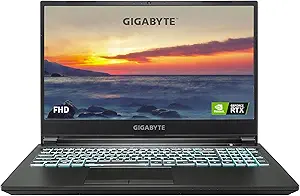
Lenovo vs GigaByte: Overview
Comparing Lenovo and GigaByte helps you determine which brand is best suited for your needs in Laptops. Both brands offer strong choices depending on your budget and key feature requirements.
Key Features & Comparison
Evaluate factors such as build quality, warranty, customer satisfaction, and total value before making your final purchase choice between Lenovo and GigaByte.
Affordability
When evaluating affordability, Lenovo holds a significant competitive advantage due to its vast manufacturing scale and multi-tiered portfolio. Lenovo addresses virtually every price bracket, from sub-budget IdeaPads starting under $400 to mid-range Yoga portables and high-end ThinkPads. In the gaming domain, Lenovo's LOQ series provides newcomers and price-conscious enthusiasts access to modern silicon (such as Intel Core i5 or AMD Ryzen 5 paired with RTX 4050/4060 graphics) at aggressive price points without stripping down essential thermal hardware. Furthermore, Lenovo's frequent retail discounts, student incentives, and abundant configuration choices allow buyers to precisely tailor hardware to their budget limits without forced compromises.
Gigabyte, on the other hand, operates primarily as an enthusiast and gaming-focused vendor, which shifts its baseline price floor considerably higher. Rather than competing in the ultra-budget productivity space, Gigabyte concentrates on the value-to-performance ratio in the entry-to-mid gaming segment through its G5 and G6 series. These machines often represent some of the most cost-effective avenues for acquiring a discrete modern GPU, occasionally undercutting Lenovo's gaming options on pure component specs per dollar. However, this value proposition comes with noticeable trade-offs in chassis materials, port placement, and acoustic tuning. While Gigabyte excels at providing raw gaming hardware for the money, Lenovo delivers a broader, more comprehensive definition of affordability spanning all user segments.
Battery Life
Battery performance is an area where Lenovo distinctly outperforms Gigabyte, courtesy of aggressive software optimization, versatile hardware choices, and advanced power management. Across its flagship ThinkPad, Yoga, and Slim lines, Lenovo integrates energy-efficient displays, high-density batteries reaching up to 80-99Wh capacities, and tailored firmware profiles via Lenovo Vantage. This architecture allows many productivity models to achieve genuine all-day endurance, frequently exceeding 10 to 14 hours of continuous productivity workloads. Even in the gaming sector, Lenovo's Legion laptops feature dynamic MUX switches and NVIDIA Advanced Optimus that automatically shut down power-hungry discrete graphics on battery power, extending web browsing and office usage well beyond average gaming standards.
Conversely, Gigabyte systems struggle significantly with battery longevity, largely because their primary architectural focus rests squarely on stationary gaming and creative performance. The cooling design and power delivery of chassis lines like the AORUS and AERO prioritize sustained peak wattage over micro-power states and idling efficiency. Even premium AERO models designed for creators often fall short of competitive endurance targets, rarely sustaining more than 5 to 6 hours away from an outlet, while the budget G5/G6 lineups can deplete their smaller 54Wh batteries in as little as 2.5 to 4 hours of standard office use. Gigabyte relies heavily on bulky external power bricks, making the brand far less suitable for users requiring true mobile decoupling and extended off-grid endurance.
Display
Lenovo offers one of the most diverse and technologically refined display catalogs on the market. In professional and thin-and-light segments, Lenovo has aggressively embraced 16:10 aspect ratios, offering ultra-sharp OLED and IPS panels across the Yoga and ThinkPad lineups featuring deep black levels, full DCI-P3 color coverage, and Dolby Vision certification. For competitive gamers, Lenovo's Legion series introduces high-spec PureSight Gaming displays, standardizing 165Hz to 240Hz refresh rates, QHD+ resolutions, low response times, and 500 nits of brightness. Crucially, Lenovo ensures uniform calibration, hardware-level low blue light emissions, and anti-glare coatings, delivering panels tailored accurately to the target demographic's specific visual needs.
Gigabyte counters with a display strategy deeply rooted in high-end creative workflows and competitive eSports demands. Through its AERO series, Gigabyte was an early pioneer in factory-calibrated displays, with each panel individually tested to achieve stringent X-Rite Pantone color accuracy certifications and high-resolution 4K OLED fidelity, making them exceptional tools for colorists and video editors. In the AORUS gaming space, Gigabyte frequently deploys blistering refresh rates up to 360Hz or modern QHD OLED gaming panels. However, the contrast between tiers is stark: while top-tier AORUS and AERO screens are stunning, Gigabyte's budget G-series machines often settle for washed-out, 45% NTSC panels with low peak brightness, resulting in an inconsistent panel quality baseline compared to Lenovo's more dependable standards.
Performance
Lenovo's approach to performance is marked by refined engineering, sophisticated thermal dynamics, and intelligent hardware scaling. In its enthusiast Legion and high-end ThinkPad P-series mobile workstations, Lenovo utilizes proprietary ColdFront thermal systems paired with dual vapor chambers and hybrid phase-change thermal compound. This allows Lenovo machines to push high sustained total system wattage—often running flagship mobile GPUs at their full 140W–175W TGP ceiling without immediate thermal throttling. Furthermore, Lenovo's integrated AI Engine+ proactively monitors frame rates, component temperatures, and background loads to dynamically reallocate wattage between the CPU and GPU in real time, delivering consistent framerates and stable rendering benchmarks with moderate acoustic output.
Gigabyte approaches performance with the uncompromising philosophy of a dedicated motherboard and desktop GPU manufacturer. Its AORUS flagship systems are tuned for raw, brute-force throughput, often configuring the highest thermal envelopes possible using Windforce Infinity cooling systems with multiple heat pipes and dual 12V fans. For sheer burst processing and unconstrained desktop-replacement gaming, top-tier Gigabyte laptops frequently challenge and sometimes edge out equivalent Lenovo configurations in synthetic benchmarks and raw frames. The major trade-off lies in refinement: under peak loads, Gigabyte laptops tend to produce substantially louder fan whine, higher surface chassis temperatures, and software control centers that lack the polished automation found in Lenovo's ecosystem.