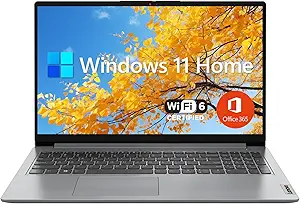
Lenovo vs Acer: Overview
Comparing Lenovo and Acer helps you determine which brand is best suited for your needs in Laptops. Both brands offer strong choices depending on your budget and key feature requirements.
Key Features & Comparison
Evaluate factors such as build quality, warranty, customer satisfaction, and total value before making your final purchase choice between Lenovo and Acer.
Affordability
When evaluating affordability, Acer has historically positioned itself as one of the most aggressive price-to-performance leaders in the consumer laptop market. Through lines like the Aspire and Nitro series, Acer systematically undercuts competitors by prioritizing core internal hardware over luxury chassis materials. This engineering philosophy allows budget-conscious shoppers and entry-level gamers to acquire modern processors and dedicated GPUs at lower entry thresholds. However, Acer's cost-saving measures are often transparent, manifesting in heavier plastic constructions, less refined trackpads, and basic cooling systems that fulfill fundamental requirements without offering premium durability.
Lenovo approaches affordability with a broader, tiered portfolio that bridges economy and structural reliability through sub-brands like IdeaPad and LOQ. While an entry-level Lenovo may carry a modest price premium of five to ten percent over an identically configured Acer, Lenovo consistently offsets this gap with superior ergonomic design, specifically class-leading keyboard switches and more rigid structural reinforcements. Rather than simply competing in a race to the absolute bottom on retail pricing, Lenovo focuses on sustained total cost of ownership by integrating better hinge mechanisms and standardized chassis components, offering greater long-term value for consumers with strictly defined budgets.
Battery Life
Lenovo holds a distinct engineering advantage in battery life and power management across both its ultraportable and enterprise segments. Models within the ThinkPad, Yoga, and Slim families frequently utilize high-capacity battery cells paired with sophisticated thermal-throttling algorithms and Lenovo Vantage software, which offers granular control over charging thresholds and hardware performance states. Furthermore, Lenovo's aggressive adoption of energy-efficient platform architectures, such as AMD Ryzen U-series silicon and low-power display panels, consistently yields real-world runtimes that exceed full-day productivity requirements without requiring mid-day top-ups.
Acer's battery performance remains serviceable but generally lags behind Lenovo's industry-standard benchmarks due to more conservative battery cell selections and less integrated hardware-software power optimization. Devices like the Swift series can achieve competitive runtimes under strictly synthetic or low-brightness conditions, but real-world multitasking and high-draw workloads tend to deplete Acer systems more rapidly. While Acer provides functional rapid-charging solutions on higher-tier models, the brand's budget-oriented thermal systems and less nuanced power-draw profiles result in uneven battery longevity across standard consumer usage cycles.
Display
Lenovo generally leads the display category by aggressively democratizing modern screen technologies across mid-range and premium product tiers. The company was an early adopter of productivity-focused 16:10 and 3:2 aspect ratios, moving away from cramped 16:9 panels even on sub-$800 IdeaPad models. Furthermore, Lenovo’s partnership with tier-one panel manufacturers allows them to deliver outstanding PureSight OLED and calibrated IPS options featuring high refresh rates, wide color gamut coverage (100% DCI-P3), and robust anti-glare coatings, making them an exceptional choice for digital creators and enterprise professionals who prioritize optical precision and reduced eye strain.
Acer provides a wider disparity in panel quality that closely mirrors individual device price points. At the premium end, Acer's Swift Go and Predator Helios lines showcase brilliant high-resolution OLED and Mini-LED panels with exceptional contrast ratios and blisteringly fast response times for competitive gaming. However, Acer's high-volume budget portfolios frequently utilize cost-reduced IPS or TN displays characterized by mediocre peak brightness (often hovering around 250 nits) and constrained sRGB color coverage. While Acer excels at offering high refresh-rate panels at bargain price points, overall color fidelity, factory calibration, and viewing angles are less consistent across their catalog than Lenovo's standardized panel lineups.
Performance
Performance delivery highlights contrasting engineering philosophies between these two manufacturers, particularly in thermal dissipation and sustained wattage envelopes. Acer typically tunes its hardware aggressively out of the box, allowing processors and graphics modules to draw maximum rated power to achieve high peak benchmark results. In performance-driven segments like the Predator and Nitro series, Acer relies on high-airflow, high-RPM dual-fan systems that keep hardware components within safe operating thresholds under sustained gaming loads, albeit at the expense of noticeably loud acoustic profiles and elevated chassis surface temperatures.
Lenovo emphasizes balanced, sustained thermal management through proprietary systems such as Coldfront cooling in its Legion gaming series and intelligent cooling modes in its productivity units. By incorporating vapor chambers, liquid metal thermal compounds, and phase-change thermal pads on high-tier machines, Lenovo sustains high clock speeds over prolonged compute periods without the excessive thermal throttling or acoustic intrusion common to more aggressively pushed systems. While an Acer laptop might match or slightly edge out a comparable Lenovo in short-burst synthetic benchmarks, Lenovo consistently delivers more stable thermal headroom, quieter sustained operation, and superior system stability over extended rendering, compiling, or gaming sessions.