HP vs MSI: Overview
Comparing HP and MSI helps you determine which brand is best suited for your needs in Laptops. Both brands offer strong choices depending on your budget and key feature requirements.
Key Features & Comparison
Evaluate factors such as build quality, warranty, customer satisfaction, and total value before making your final purchase choice between HP and MSI.
Affordability
When examining affordability, HP commands a clear advantage in overall accessibility and budget diversity. HP's catalog spans entry-level machines, such as the Pavilion and basic HP 14/15 series, that cater directly to budget-conscious students and casual users seeking functional computing under tight price constraints. By utilizing cost-effective chassis materials and balancing baseline components, HP can deliver sub-$500 laptops that provide decent day-to-day productivity. In contrast, MSI has traditionally operated in the performance and enthusiast gaming space, which generally elevates its baseline price floor, making truly cheap entry points rare within its ecosystem.
However, when assessing value-per-dollar in the mid-range and performance sectors, the competition shifts significantly. MSI frequently outpaces HP by offering aggressive internal specifications, such as higher-tier NVIDIA RTX graphics chips and unlocked thermal thresholds, at price points where HP models might feature more modest silicon paired with premium design flourishes. While HP’s mid-range Envy and Victus lines provide solid budget-to-performance compromises, MSI’s lower-tier gaming series like the Thin and Katana prioritize raw graphical horsepower per dollar spent, appealing strongly to gamers who are willing to trade premium chassis materials for processing capability.
Battery Life
Battery longevity is an area where HP consistently demonstrates superior engineering refinement, particularly across its productivity and premium ultraportable lines. Flagship devices such as the HP Spectre x360 and Dragonfly series are engineered with high-density battery cells, ultra-low-power display panels, and sophisticated dynamic power management firmware tailored to maximize endurance. These engineering considerations allow HP’s premium productivity laptops to routinely achieve between 10 to 15 hours of mixed office and web use, positioning them as premier tools for corporate travelers, students, and remote professionals who require all-day untethered operation.
MSI faces architectural disadvantages in battery longevity due to its performance-first design philosophy. Even within MSI's modern Creator and Prestige lines, internal configurations prioritize sustained clock speeds and dedicated GPU availability, which causes a substantial baseline power draw that rapidly depletes battery reserves. While newer MSI notebooks support USB-C Power Delivery and hybrid graphics switching to mitigate drain, users rarely achieve more than 6 to 8 hours of light office work, with dedicated gaming models depleting in a fraction of that time. Consequently, buyers prioritizing battery autonomy will find HP's power optimization and efficiency profiles far superior to MSI's power-dense setups.
Display
In the realm of visual fidelity, HP excels in color accuracy, brightness, and versatile consumer form factors. Across its Spectre, Envy, and Omen series, HP frequently incorporates vibrant OLED panel options that deliver infinite contrast ratios, deep blacks, and 100% DCI-P3 color gamut coverage, making them premier choices for digital creators and multimedia enthusiasts. Furthermore, HP heavily invests in touch digitizers and 3:2 or 16:10 aspect ratios that expand vertical screen real estate for enhanced productivity, backed by robust anti-reflective coatings and peak brightness levels often exceeding 400 to 500 nits.
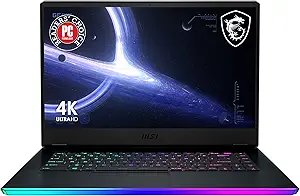
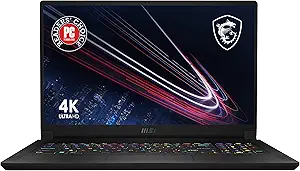
MSI counters with a display engineering strategy squarely focused on high-speed visual performance, motion clarity, and specialized creative certification. MSI’s gaming notebooks, including the Raider and Stealth lines, lead the market in refresh rates, offering panels running at 240Hz, 360Hz, and beyond, with minimal response times and integrated NVIDIA G-Sync technology to eliminate tearing. In its Creator series, MSI implements 'True Color' factory calibration and Calman-verified Mini-LED panels that yield extreme HDR peak brightness. While HP provides a more balanced and aesthetically pleasing viewing experience for everyday consumers, MSI caters more decisively to competitive gamers and high-end visual editors requiring zero-latency rendering.
Performance
Performance delivery showcases fundamentally different thermal and hardware philosophies between the two manufacturers. MSI is renowned for engineering aggressive, high-wattage hardware configurations designed for sustained maximum throughput. Utilizing advanced cooling architectures with multiple dedicated heat pipes, dual or triple exhaust fans, and vapor chambers in flagship models like the Titan, MSI pushes mobile CPUs and GPUs to their maximum allowable Thermal Design Power (TDP). This uncapped approach yields superior benchmark scores and frame rates, making MSI machines formidable desktop replacements for hard-core 3D rendering, scientific computing, and competitive gaming.
HP approaches performance with an emphasis on thermal balance, acoustic comfort, and consistent sustained operation. Devices in the Omen line offer respectable gaming power with clean thermal regulation, but HP often tunes its hardware curves to maintain lower fan noise and cooler chassis temperatures rather than chasing peak overclocked frequencies. For general enterprise, productivity, and everyday multitasking, HP’s laptops deliver exceptionally snappy, stable responsiveness without thermal throttling under normal workloads. However, when measured by raw, unconstrained computational power and thermal headroom under continuous heavy loads, MSI's enthusiast-driven engineering routinely outclasses HP's more conservatively tuned hardware.