HP vs LG: Overview
Comparing HP and LG helps you determine which brand is best suited for your needs in Laptops. Both brands offer strong choices depending on your budget and key feature requirements.
Key Features & Comparison
Evaluate factors such as build quality, warranty, customer satisfaction, and total value before making your final purchase choice between HP and LG.
Affordability
When evaluating affordability, HP commands a decisive advantage over LG due to its vastly broader product portfolio and vertically integrated supply chain economics. HP addresses every consumer tier, from entry-level Chromebooks and sub-$500 budget daily drivers like the HP Pavilion and HP 14/15 series up to ultra-premium configurations in the Spectre and Envy lineages. This extensive range allows price-conscious consumers, enterprise fleets, and students to find capable hardware at accessible price points, frequently benefiting from aggressive retail discounts and modular configuration choices that tailor cost directly to user needs.
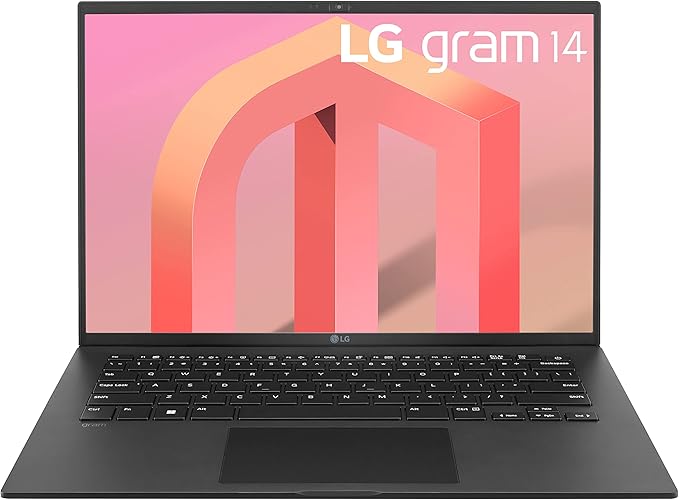
Conversely, LG largely foregoes the budget and mid-range consumer markets to focus almost exclusively on premium, ultra-lightweight computing through its LG gram lineup. While an entry-tier HP model might compromise chassis materials to hit an economical threshold, LG’s starting price is inherently high, commonly exceeding the $1,000 baseline due to magnesium alloy engineering, specialized thinness, and high-density battery integration. Consequently, LG offers superior value proposition metrics only if lightness and form factor are heavily weighted, whereas HP undeniably wins on pure raw financial accessibility and tiered purchasing flexibility.
Battery Life
In battery endurance metrics, LG’s gram lineup stands as an industry benchmark in the Windows ecosystem, frequently rivaling or outlasting HP’s most power-efficient machines. LG integrates high-capacity power cells—regularly ranging between 72Wh and 90Wh—into impossibly lightweight chassis, pairing them with aggressive firmware power limits and low-power IPS or OLED panels. This engineering yields authentic all-day, and sometimes multi-day, real-world longevity (regularly exceeding 12 to 15 hours of productivity workflows), making LG the default choice for mobile professionals who prioritize untethered operation.
HP delivers highly competitive battery runtimes within its premium Spectre and elite business Dragonfly/EliteBook series, frequently leveraging dynamic thermal scaling and intelligent refresh rates to squeeze maximum longevity from sub-70Wh cells. However, HP’s broad product stack means endurance varies dramatically across tiers; lower-cost Pavilion or OMEN gaming models often prioritize peak wattage and cost-efficiency over battery longevity, leading to mediocre off-charger performance. While an optimized HP Spectre x360 can certainly last through an eight-hour workday, LG demonstrates greater architectural consistency and raw endurance across its portfolio.
Display
LG leverages its formidable corporate heritage in display manufacturing to outfit the LG gram family with outstanding visual hardware. LG laptops consistently feature 16:10 productivity aspect ratios, expansive color space coverage (often exceeding 99% DCI-P3), and exceptional panel clarity, whether deploying anti-glare IPS matrices or high-contrast OLED options. Furthermore, LG avoids the heavy reflective coatings that often plague modern laptops, engineering glare-reducing surfaces without introducing micro-grain artifacts, which makes their screens superb for extended text editing, content creation, and media consumption alike.
HP retaliates with higher peak customizability and extreme visual fidelity at the top of its lineup, particularly within the Spectre and Envy tiers, which frequently offer breathtaking 2.8K and 4K OLED touch displays with HDR certification and precision pen digitizers. HP also leads in integrated privacy screen technology through its proprietary Sure View filter, an essential feature for corporate environments that LG lacks. However, at the budget-to-mid tiers, HP often cuts costs with subpar 250-nit, low-sRGB panels, making display quality an inconsistent gamble across their catalog compared to LG’s uniformly high visual standard.
Performance
HP holds an unequivocal edge in performance flexibility, peak thermal headroom, and system power limits. Because HP engineers machines across varied thermal envelopes—spanning thin-and-light convertibles to beefy OMEN and Victus gaming rigs and ZBook mobile workstations—their laptops frequently supply sustained high-wattage throughput to Intel Core, AMD Ryzen, and discrete NVIDIA RTX graphics cards. Advanced vapor-chamber cooling and dual-fan architectures in models like the HP Envy 16 and Spectre series allow sustained multi-threaded processing, making HP vastly superior for heavy rendering, CAD, compiled coding, and gaming.
LG, by contrast, deliberately tunes the LG gram for mobility, thermal quietness, and lightweight convenience rather than raw computing horsepower. Because the ultralight magnesium chassis provides limited thermal dissipation capacity, LG aggressively throttles sustained processor wattage (often capping PL1 power limits conservatively) to control heat and fan noise. While modern LG gram models effortlessly handle complex office productivity, web multitasking, and lightweight media editing via modern Intel processors and Iris Xe or Arc graphics, they will noticeably throttle under sustained heavy computational loads where a comparably spec'd HP laptop would pull ahead.
Compare current retail pricing, active promotions, and verified stock availability directly from authorized stores:
Compare current retail pricing, active promotions, and verified stock availability directly from authorized stores: