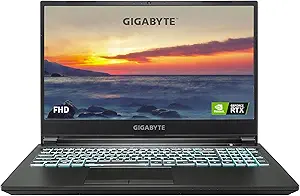
HP vs GigaByte: Overview
Comparing HP and GigaByte helps you determine which brand is best suited for your needs in Laptops. Both brands offer strong choices depending on your budget and key feature requirements.
Key Features & Comparison
Evaluate factors such as build quality, warranty, customer satisfaction, and total value before making your final purchase choice between HP and GigaByte.
Affordability
When evaluating affordability, HP leverages its massive global supply chain to deliver competitive pricing across virtually every consumer segment. From the ultra-budget HP Stream and entry-level Pavilion series to the enterprise-grade EliteBooks, HP provides accessible price-to-performance ratios tailored for students, office workers, and general users. HP frequently incorporates cost-cutting measures in its budget models—such as the use of plastic chassis, lower-tier TN panels, and modest thermal configurations—which allows the brand to capture entry-level markets while still packaging reliable, modern internal components like Intel Core i3/i5 or AMD Ryzen 3/5 processors at very approachable price points.
Conversely, GigaByte targets an enthusiast-centric market, concentrating almost entirely on gaming and creator laptops through lines like the G-series, AORUS, and AERO. Because GigaByte rarely produces sub-$500 entry-level productivity machines, its entry price threshold is considerably higher than HP's. However, within the high-performance gaming segment, GigaByte offers exceptional value per compute cycle. Budget gaming models like the GigaByte G5 frequently undercut HP's comparable Victus or OMEN offerings while packing higher-tier discrete NVIDIA GeForce RTX graphics and higher-refresh-rate displays. Thus, while HP dominates general low-cost affordability, GigaByte presents superior price-to-spec value for buyers demanding dedicated graphical compute.
Battery Life
HP holds a decisive structural advantage in overall battery longevity due to its diverse product ecosystem and deep integration with low-power mobile platforms. Laptops within the HP Spectre and Envy families regularly feature large 60Wh to 80Wh batteries paired with energy-efficient Intel Core Ultra or AMD Ryzen U-series silicon. Supported by sophisticated proprietary power-management profiles like HP Smart Sense, these ultraportables routinely surpass 10 to 14 hours of real-world productivity on a single charge. Even within business contexts, HP’s hardware is optimized for standby states and low idle draw, making it ideal for road warriors and mobile professionals.
GigaByte, by contrast, faces structural hurdles regarding battery endurance due to its focus on high-wattage hardware. Because GigaByte machines primarily feature power-hungry H- and HX-series processors alongside discrete GPUs and high-refresh-rate screens, they suffer from significant idle and baseline power draw. While models like the AERO series include large 99Wh batteries to maximize legal carry-on capacity, practical endurance rarely exceeds 5 to 7 hours of standard office tasks, plunging to under 2 hours under intensive workloads or gaming. For users prioritizing unplugged longevity, HP is the far more versatile option, whereas GigaByte laptops generally necessitate frequent access to high-output AC adapters.
Display
HP provides a comprehensive display spectrum that spans from functional, utilitarian FHD panels in entry-level Pavilions to cutting-edge OLED and IPS displays in the Spectre and OMEN lineups. HP frequently equips its premium notebooks with 2.8K or 4K OLED touchscreens boasting 100% DCI-P3 color gamuts, VESA DisplayHDR True Black certification, and 16:10 aspect ratios that optimize vertical screen real estate for productivity. In the gaming arena, HP OMEN panels prioritize balanced fidelity with high color accuracy, 165Hz to 240Hz refresh rates, and low response times, though budget Victus configurations sometimes cut corners with dimmer 250-nit panels and narrower color volumes.
GigaByte approaches display engineering with an intense focus on professional creator validation and high-frequency gaming metrics. The creator-focused AERO series is renowned for incorporating factory-calibrated Samsung AMOLED panels that feature dual X-Rite and Pantone certifications, offering Delta-E color accuracy ratings below 1 straight out of the box. Meanwhile, the gaming-centric AORUS lineup prioritizes blistering speed, frequently integrating 240Hz to 360Hz refresh rates and low-latency IPS panels tailored to competitive esports. While HP offers better variety and more touchscreen or convertible options, GigaByte delivers more specialized, high-spec visual panels aimed directly at digital artists, video editors, and competitive gamers.
Performance
HP’s performance architecture is characterized by versatility, quiet acoustics, and targeted thermal tuning suited to balanced consumer use. In thin-and-light segments, HP focuses on sustained efficiency rather than raw, unrestrained wattage, ensuring that Spectre and Envy models deliver responsive multitasking without generating excessive chassis heat or fan noise. For heavier demands, the HP OMEN series utilizes advanced OMEN Tempest Cooling technology with multi-fan arrays and vapor chambers to let desktop-class GPUs and processors run reliably. However, HP typically tunes its performance profiles conservatively to maintain long-term stability and acoustic comfort over aggressive peak overclocks.
GigaByte, on the other hand, embraces an uncompromised, raw-performance engineering ethos via its proprietary Windforce Infinity thermal systems. GigaByte designs its laptops to push internal components to their maximum allowable Total Graphics Power (TGP) and processor wattage limits. The AORUS line, in particular, leverages complex heat pipe arrays, phase-change thermal compounds, and high-rpm blower fans to sustain maximum clock speeds across multi-threaded rendering, CAD workloads, and intensive 4K gaming. The trade-off is often noticeably louder fan noise and bulkier chassis profiles, but for consumers who measure performance purely by benchmark scores, sustained frame rates, and render times, GigaByte generally outmuscles equivalent HP models.
Compare current retail pricing, active promotions, and verified stock availability directly from authorized stores:
Compare current retail pricing, active promotions, and verified stock availability directly from authorized stores: