GigaByte vs Microsoft: Overview & Brand Philosophy
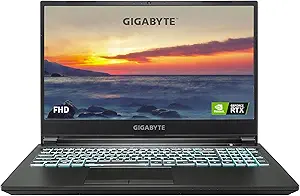
The laptop market presents two fundamentally distinct philosophies when Comparing GigaByte and Microsoft. GigaByte, a Taiwanese hardware heavyweight with deep roots in motherboards and PC components, approaches mobile computing through the lens of raw performance and engineering efficiency. Their primary focus within the laptop space centers on the AORUS gaming sub-brand and the AERO creator lineup. GigaByte positions its machines as high-throughput workstations capable of handling punishing thermal loads, advanced multi-threaded tasks, and top-tier AAA gaming. Form factor frequently yields to functionality, as GigaByte designs chassis to accommodate robust cooling apparatuses, desktop-class expansion, and discrete graphics processing units.
Conversely, Microsoft approaches the laptop ecosystem from a holistic, platform-first perspective. As the creator of Windows, Microsoft developed its Surface portfolio to serve as the definitive benchmark for the operating system, mirroring the vertical hardware-software integration championed by Apple. Microsoft’s engineering ethos revolves around minimalist aesthetic elegance, versatility, high-DPI displays with productivity-focused aspect ratios, and seamless digital inking capabilities. The Surface line—encompassing traditional laptops, detachables, and studio-grade devices—prioritizes touch interfaces, mobile portability, and boardroom-ready design over brute computing power.
Consequently, the divergence between GigaByte and Microsoft represents a conscious choice between maximum compute density and refined everyday ergonomics. While GigaByte seeks to empower power users, eSports competitors, and 3D animators who measure laptop value in frames per second and render times, Microsoft targets corporate executives, digital artists, academics, and mobile professionals who prioritize touch precision, premium tactile materials, and all-day battery performance.
Key Differences & Technological Comparison
The technical disparities between GigaByte and Microsoft are most evident in component selection, display engineering, thermal architecture, and industrial design.
Silicon & Compute Power: GigaByte laptops virtually always feature high-wattage H- and HX-series processors from Intel or AMD, coupled with high-TGP (Total Graphics Power) NVIDIA GeForce RTX laptop GPUs. This configuration ensures peak sustained performance for sustained workloads. Microsoft, by contrast, historically focuses on lower-wattage U- and P-series processors optimized for thermal efficiency and silent operation, though they have recently expanded into custom ARM architecture (such as Qualcomm-developed Snapdragon X Elite platforms) for superior battery life and on-device AI acceleration. While select Surface models offer discrete graphics, their power envelopes are heavily curtailed compared to GigaByte's gaming-grade silicon.
Display Technology: Display implementation highlights the differing intended audiences. GigaByte features ultra-fast 16:9 or 16:10 panels ranging from 144Hz up to 360Hz refresh rates, alongside factory-calibrated OLED panels on AERO devices certified with dual Pantone color accuracy for print and film workflows. Microsoft champions the proprietary PixelSense display, characterized by a taller 3:2 aspect ratio designed to maximize vertical screen real estate for documents, coding, and web browsing. Microsoft screens feature 10-point multi-touch, active stylus digitizers, and sharp resolutions, typically capped at 60Hz or dynamically variable 120Hz refresh rates.
Thermal Architecture & Noise: GigaByte relies on complex multi-pipe, dual-fan cooling systems (such as WINDFORCE Infinity) featuring substantial heat exhaust vents, which are necessary to manage components exceeding 150W of combined power draw. This yields peak performance under heavy load, accompanied by noticeable fan acoustics. Microsoft relies on passive cooling or ultra-quiet, vapor-chamber-assisted cooling loops that prioritize whisper-quiet operation and cool lap temperatures, sometimes at the expense of sustained processing performance under extended rendering loads.
Chassis & Build Quality: Microsoft leads in structural refinement, crafting its devices from precision-milled, anodized aluminum or magnesium alloys with tight tolerances and seamless hinges. GigaByte employs a mix of CNC aluminum and reinforced polycarbonates. While structurally sound and increasingly streamlined, GigaByte chassis are inherently thicker, heavier, and optimized for internal serviceability and airflow rather than ultra-thin minimalism.
Pros & Cons Comparison
GigaByte: Pros
- Class-Leading Computing Power: Equipped with high-wattage CPUs and unrestricted RTX GPUs capable of handling heavy gaming, 3D modeling, and video rendering.
- Extensive I/O Connectivity: Comprehensive port selections, including full-sized HDMI 2.1, Ethernet (RJ-45), multiple USB-A, USB-C/Thunderbolt 4, and high-speed SD card readers.
- Upgradability & Maintenance: Dual SO-DIMM RAM slots and multiple M.2 NVMe SSD bays allow easy post-purchase hardware upgrades.
- High-Refresh and OLED Display Options: Options for lightning-fast competitive gaming screens or color-certified 4K OLED panels.
GigaByte: Cons
- Subpar Battery Life: Power-hungry internals deplete the battery rapidly, often requiring access to an AC outlet after 3 to 6 hours of moderate use.
- Bulky Form Factor: Thicker profiles and heavy power bricks reduce mobility compared to ultrabooks.
- Unremarkable Peripheral Hardware: Webcams, trackpads, and onboard speakers generally lag behind premium productivity standards.
Microsoft: Pros
- Exemplary Build Quality: Minimalist industrial design utilizing premium materials, class-leading glass precision trackpads, and excellent tactile keyboards.
- Productivity-Centric 3:2 Touchscreens: The taller aspect ratio and native active stylus support make Surface devices exceptional for productivity and note-taking.
- Portability and Battery Efficiency: Lightweight designs paired with efficient architectures allow for all-day operational battery life.
- Clean Software Experience: Shipped with a clean Windows installation free from third-party bloatware and deeply integrated with Windows Hello biometric authentication.
Microsoft: Cons
- Thermal Throttling Under Sustained Load: Slim chassis designs and restricted thermal headroom limit performance during prolonged compute-intensive tasks.
- Poor Repairability and Upgradability: Most Surface models feature soldered RAM and limited access to internal components, driving up the cost of long-term ownership.
- Higher Price-to-Performance Ratio: Substantially more expensive per unit of raw computational power (CPU/GPU) than GigaByte.
- Limited Legacy I/O: Minimalist port selections often necessitate external dongles or Surface Dock adapters.
Performance, Durability & Value Analysis
From a performance perspective, GigaByte dominates across raw benchmark metrics. In multi-threaded CPU rendering, GPU compute workloads, and gaming framerates, GigaByte outpaces comparable Microsoft machines tier-for-tier. However, performance must be evaluated in context: GigaByte relies on tethered AC power to hit peak operation, as high-power components drop throughput significantly when running on battery. Microsoft delivers a more consistent experience whether plugged in or untethered, maintaining responsiveness, silent operation, and power efficiency for productivity software, video conferencing, and light content creation.
In terms of durability and value, the two brands cater to opposing consumer priorities. Microsoft boasts superior structural fit and finish, making its devices resilient to the flex, creaks, and chassis wear that can accompany frequent travel. However, their internal lack of modularity compromises long-term value; if soldered memory fails or performance demands outpace factory specs, the entire device must be replaced. GigaByte offers superior longevity through end-user upgradability and cost-to-performance efficiency. Dollar for dollar, a GigaByte laptop yields considerably higher computational capacity, storage headroom, and repairability, making it the more cost-effective choice for heavy workloads over a 3- to 5-year operational lifecycle.
Final Verdict: Which Brand Should You Choose?
Your choice between GigaByte and Microsoft hinges primarily on how you define utility in a portable computer:
Choose GigaByte if:
- Your daily routine involves high-end PC gaming, 3D rendering, local machine learning, or complex video post-production.
- You view upgradable RAM and expandable internal storage as essential requirements for long-term ownership.
- You prefer a portable desktop replacement with built-in ports (Ethernet, HDMI, SD cards) over carrying separate USB-C adapters.
- You want the highest hardware specifications achievable for your budget.
Choose Microsoft if:
- You prioritize industrial design, mobility, low carry weight, and extended battery life for travel or campus use.
- Your workflow relies on intuitive touch input, digital pens, or versatile 2-in-1 hybrid form factors.
- Your software usage centers on office productivity, document analysis, software development, or UI design where the 3:2 screen ratio shines.
- You demand quiet thermal performance, clean operating system images, and high-fidelity video conferencing hardware.
Affordability
When evaluating affordability between GigaByte and Microsoft in the laptop space, consumers are presented with fundamentally divergent philosophies on where manufacturing budgets are allocated. GigaByte operates primarily as a performance-per-dollar powerhouse, targeting gamers, content creators, and STEM students who prioritize raw computing muscle over aesthetic luxury. In the entry-level to mid-range tiers, GigaByte’s G-series and AORUS lineups routinely incorporate high-TGP NVIDIA GeForce RTX graphics cards and high-refresh-rate displays at price points where Microsoft offers only integrated graphics. The trade-off for GigaByte’s aggressive component-to-cost ratio lies in exterior engineering: chassis designs frequently rely on thick, polycarbonate plastics, battery life is comparatively modest, and cooling solutions prioritize thermal dissipation over acoustic quietness. Consequently, GigaByte delivers exceptional functional affordability for technical workloads, maximizing silicon yield per dollar spent.
Conversely, Microsoft approaches the laptop market from a premium lifestyle perspective through its Surface line, where "affordability" is defined by industrial design, display fidelity, and software integration rather than high-octane processing power. At comparable price points to GigaByte’s discrete-GPU offerings, Microsoft typically equips its Surface Laptop or Surface Pro devices with entry-level Intel Core or Qualcomm Snapdragon processors, modest RAM, and minimal solid-state storage. However, Microsoft justifies this pricing disparity through superior build quality: unibody CNC-machined aluminum or magnesium chassis, industry-leading 3:2 PixelSense touchscreens with high color accuracy, exceptional haptic trackpads, and superior power efficiency. Where Microsoft falters on the affordability index is long-term value retention and upgradeability; soldered memory, proprietary components, and expensive first-party accessories—such as the Surface Pen or detachable Type Covers—quickly inflate the total cost of ownership.
Ultimately, the financial calculus between these two brands hinges on whether your usage demands raw processing throughput or polished portability. For budget-conscious users requiring heavy multi-threading, 3D rendering, or high-frame-rate gaming, GigaByte is undeniably the superior value proposition, offering desktop-replacement performance at prices that undercut mainstream rivals. On the other hand, Microsoft represents an investment in ergonomic longevity and mobile refinement for corporate and academic environments. While Microsoft demands a noticeable premium for its silicon configurations, it delivers an ultra-portable, enterprise-ready experience that GigaByte’s aggressively priced, utility-focused machines do not attempt to replicate.
Battery Life
When evaluating battery life between GigaByte and Microsoft, consumers are effectively choosing between raw, sustained computational throughput and ultra-optimized mobile endurance. GigaByte focuses predominantly on high-performance gaming laptops and creator workstations, such as its AORUS and AERO series. These machines are engineered with massive watt-hour batteries—often pushing the legal Federal Aviation Administration limit of 99.9Wh. However, because they must supply power to high-TDP Intel Core or AMD Ryzen HX-class processors paired with dedicated NVIDIA GeForce RTX graphics chips, the physical drain on these batteries is severe. Even when utilizing battery-saver modes and display MUX switches to defer to integrated graphics, GigaByte laptops typically yield between 4 to 7 hours of standard productivity, which plummets to roughly 60 to 90 minutes under heavy, uncapped gaming or rendering loads.
Conversely, Microsoft’s engineering ethos for its Surface lineup centers on seamless, all-day ultraportable productivity. With the introduction of custom silicon and Qualcomm Snapdragon X Series ARM-based architectures in the latest Surface Pro and Surface Laptop devices, Microsoft has achieved industry-leading battery efficiency that directly rivals Apple's M-series chips. Rather than relying solely on brute-force cell capacity, Microsoft pairs moderate 45Wh to 65Wh batteries with aggressive low-power platform management, dynamic refresh-rate displays, and deep Windows 11 hardware-software co-engineering. The real-world result is transformative for mobile professionals: current ARM-powered Surface models frequently achieve between 14 and 20 hours of continuous web browsing and video playback, requiring significantly less frequent tethering to a wall outlet compared to their x86 counterparts.
Ultimately, the technical trade-offs reflect divergent use cases. GigaByte sacrifices untethered longevity to deliver uncompromised graphics performance, making the battery essentially an uninterruptible power supply rather than a multi-day energy source, further hindered by massive, heavy proprietary charging bricks. Microsoft prioritizes low thermal output, standby efficiency, and versatile universal USB-C Power Delivery, making its devices the undisputed champions for business travelers, students, and remote workers who prioritize true all-day cord-cutting over desktop-grade gaming power.
Display
When evaluating display engineering between GigaByte and Microsoft, consumers are met with fundamentally divergent design philosophies shaped by their distinct target demographics. GigaByte, deeply rooted in the enthusiast gaming and content creation arenas via its AORUS and AERO product lines, prioritizes ultra-high refresh rates, rapid response times, and exceptional color fidelity. The brand frequently deploys cutting-edge display technologies, including factory-calibrated Samsung 4K OLED panels certified by X-Rite and Pantone, alongside high-velocity IPS panels reaching up to 360Hz. These technical strengths ensure virtually imperceptible motion blur, profound contrast ratios with infinite blacks, and 100% DCI-P3 color gamuts. In contrast, Microsoft’s Surface lineup is engineered specifically for modern productivity, corporate workflows, and versatile creative tasks. Microsoft focuses on optical clarity and ergonomics through its proprietary PixelSense displays, which universally adopt a productivity-optimized 3:2 aspect ratio. While typically capped at dynamic 120Hz refresh rates, Microsoft’s panels boast exceptional factory calibration for sRGB and Vivid profiles, paired with high-resolution densities (often exceeding 200 PPI) that render typography and static vectors with print-like precision.
The practical trade-offs between the two brands largely manifest in interactability versus raw visual throughput. Microsoft commands a decisive lead in tactile engineering and versatility; virtually all Surface displays feature integrated 10-point capacitive multitouch and active digitizer support for the Surface Slim Pen, augmented by haptic feedback engine integration under the glass. Furthermore, Microsoft often implements ambient light sensors and adaptive color technologies (similar to True Tone) that automatically adjust white balance based on room illumination, reducing eye fatigue during prolonged office sessions. Conversely, GigaByte rarely includes touch capabilities, as gaming and traditional content workflows favor matte anti-glare coatings to eliminate reflections in high-ambient environments over glossy touch digitizers. While Microsoft excels in day-to-day versatile utility, it falls short for demanding video editors and competitive gamers due to its reliance on standard sRGB/sRGB-adjacent spectrums rather than wider film gamuts, higher gray-to-gray (GtG) latency times prone to ghosting, and an absence of Mini-LED or wide-spread OLED panel options found in premium GigaByte configurations.
Ultimately, the choice in display architecture hinges on whether your workflow demands raw kinetic fidelity or tactile, vertical productivity. GigaByte holds the technical advantage for gamers and media professionals requiring extreme color accuracy, deep HDR mastering capabilities via OLED, and fluid frame rates that capitalize on discrete GPU performance. Microsoft, however, delivers a superior everyday visual environment for executives, coders, and digital note-takers through its tall 3:2 vertical canvas, peerless pen latency, and refined glare-reducing bonded glass, solidifying its place as the premier choice for interactive productivity.
Performance
When evaluating performance, GigaByte and Microsoft occupy fundamentally different engineering philosophies, catering to distinct ends of the computing spectrum. GigaByte designs its laptops—most notably the AORUS and AERO lineups—around maximum sustained compute power and high thermal envelopes. Powered by high-wattage Intel Core H/HX series or AMD Ryzen processors paired with fully unlocked, high-TGP NVIDIA GeForce RTX graphics, GigaByte machines excel at sustained heavy workloads such as AAA gaming, 3D rendering, and local machine learning tasks. Their engineering prioritizes multi-fan cooling arrays, vapor chambers, and aggressive fan curves to prevent thermal throttling under continuous multi-threaded stress, delivering raw desktop-replacement performance at the cost of acoustic comfort and power efficiency.
Conversely, Microsoft’s Surface lineup approaches performance through the lens of balanced, ultra-portable productivity, relying on power-efficient Intel Core Ultra, legacy U/P-series, and increasingly Qualcomm Snapdragon X Elite ARM architectures. While flagship devices like the Surface Laptop Studio 2 do offer dedicated NVIDIA RTX graphics, they operate at significantly constrained thermal design power (TDP) levels compared to GigaByte’s hardware. Microsoft focuses heavily on system responsiveness, Neural Processing Unit (NPU) integration for native AI acceleration, and immediate wake states rather than brute-force computation. Thermal designs in Surface devices favor silent or near-silent passive cooling in lighter form factors, which inherently leads to thermal throttling under long-duration synthetic loads or high-end gaming.
The practical trade-offs between the two brands center on peak computational capability versus sustained battery-bound efficiency. GigaByte provides industry-leading graphical throughput, robust multi-core performance, and advanced hardware multiplexer (MUX) switches with NVIDIA Advanced Optimus, making it the definitive choice for professionals and gamers requiring raw horsepower, though it severely penalizes untethered battery life. Microsoft delivers exceptional performance-per-watt, seamless multi-tasking in everyday office and creative workflows, and far superior longevity when unplugged. Consumers must weigh GigaByte’s high-heat, high-output desktop-grade prowess against Microsoft’s refined, whisper-quiet mobile optimization.
Compare current retail pricing, active promotions, and verified stock availability directly from authorized stores:
Compare current retail pricing, active promotions, and verified stock availability directly from authorized stores: