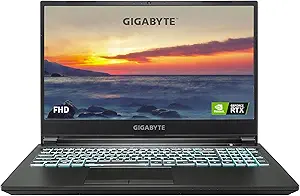
GigaByte vs LG: Overview & Brand Philosophy
In the expansive landscape of modern laptops, few brand match-ups represent such diametrically opposed philosophies as GigaByte and LG. GigaByte, a Taiwanese hardware giant with deep roots in enthusiast PC motherboards and graphics cards, approaches the laptop market with a primary focus on raw compute power, thermal headroom, and high-performance gaming. Through sub-brands like AORUS (dedicated to competitive gaming) and the AERO lineup (tailored for demanding digital content creators), GigaByte engineers machines designed to sustain intense workloads without compromise, often sacrificing battery life and ultra-slim profiles in pursuit of peak hardware utilization.
Conversely, South Korea's LG Electronics approaches mobile computing through the lens of extreme lifestyle ergonomics, screen technology, and portability. Anchored predominantly by its celebrated "LG gram" series, the brand has essentially defined the ultra-lightweight laptop segment. LG's design philosophy prioritizes whisper-quiet operation, multi-day battery endurance, and cutting-edge display technology—leveraging its industry-leading position in OLED and high-resolution IPS panel manufacturing. Rather than competing in the workstation or high-end esports spaces, LG focuses on executive, academic, and business users who demand maximum productivity across global transit.
Understanding this fundamental philosophical contrast is vital for prospective buyers. While GigaByte treats the laptop as a portable desktop replacement designed to crush heavy 3D rendering and high-refresh gaming, LG treats it as an extension of the mobile professional’s everyday carry—delivering full-sized displays and exceptional endurance in chassis that frequently weigh under a single kilogram.
Key Differences & Technological Comparison
The core differences between GigaByte and LG manifest across thermal design, silicon configuration, chassis architecture, and visual hardware:
- Processing Architecture & Thermal Management: GigaByte machines feature high-TDP (Thermal Design Power) Intel Core H-series and AMD Ryzen processors paired with high-wattage NVIDIA GeForce RTX discrete graphics. To cool these chips, GigaByte utilizes complex "Windforce Infinity" thermal solutions featuring dual or triple vapor chambers, multiple exhaust vents, and thick heat pipes. In contrast, LG opts for low-voltage, power-efficient Intel Core U-series or balanced P-series chips (and increasingly, integrated Arc or entry-level discrete chips). LG uses lightweight, single-fan cooling loops optimized for low acoustics and energy conservation rather than sustained, maximum-clock-speed computing.
- Chassis Engineering & Portability: LG dominates the mobility metric through proprietary magnesium-alloy materials that achieve featherweight footprints. A 17-inch LG gram, for instance, often weighs around 2.98 lbs (1.35 kg)—a figure lighter than most competitors' 13-inch devices. GigaByte relies on CNC-machined aluminum and reinforced composite plastics; their machines are thicker, denser, and substantially heavier (often between 4.5 to 6.5 lbs), but they offer rigid stability under intense desktop use.
- Display Implementations: Both brands excel visually, but serve different masters. GigaByte deploys factory-calibrated displays (frequently with X-Rite and Pantone certifications) with refresh rates stretching from 144Hz to an ultra-fast 360Hz, serving both twitch-reflex gamers and video editors. LG leverages its display supremacy by delivering 16:10 aspect ratio OLED and high-grade IPS panels with ultra-deep contrast, DCI-P3 99% color gamuts, and anti-glare coatings optimized for spreadsheet workflows and multimedia consumption.
- Battery Life vs. Sustained Power: LG routinely leads the industry in battery benchmarks, with its 72Wh to 90Wh batteries delivering between 12 to 20 hours of real-world productivity on a single charge. GigaByte laptops, constrained by heavy graphics switching and bright, power-draining high-refresh displays, rarely surpass 4 to 6 hours away from an outlet, requiring bulkier proprietary power bricks compared to LG's compact USB-C chargers.
Pros & Cons Comparison
GigaByte: Advantages
- High-wattage performance profiles capable of triple-A gaming and complex 3D rendering.
- Comprehensive port selections including high-bandwidth Thunderbolt 4, HDMI 2.1, Mini DisplayPort, and multi-gigabit Ethernet.
- Exceptional, color-accurate displays with lightning-fast refresh rates tailored for competitive esports and creative fidelity.
- Generous internal upgradability, often featuring dual user-accessible M.2 NVMe SSD slots and dual SO-DIMM RAM slots.
GigaByte: Disadvantages
- Significantly heavier chassis and cumbersome external power bricks that reduce travel readiness.
- Mediocre battery life that necessitates tethering to an outlet for demanding work.
- Louder fan profiles under system load and occasional bloatware/finicky proprietary control software.
LG: Advantages
- Peerless ultra-light engineering; full-sized 14, 16, and 17-inch laptops with class-leading lightness.
- Exceptional real-world battery endurance that easily spans entire transcontinental flights or full workdays.
- Productivity-first 16:10 display ratios available in gorgeous, high-resolution OLED configurations.
- Surprisingly resilient build quality meeting MIL-STD-810H durability standards despite minimal chassis mass.
LG: Disadvantages
- Limited thermal envelope leads to thermal throttling under prolonged high-intensity workflows.
- Lack of robust discrete GPU options restricts modern gaming and heavy mechanical CAD workloads.
- Noticeable keyboard deck and screen lid flex due to the thin magnesium-alloy composition.
- Memory (RAM) is frequently soldered directly to the motherboard, limiting post-purchase upgrades.
Performance, Durability & Value Analysis
From an absolute performance standpoint, GigaByte stands far ahead of LG in raw compute output. When rendering 4K timeline exports in Premiere Pro, compiling multi-threaded software builds, or playing modern ray-traced games, a GigaByte AORUS or AERO machine will complete tasks in fractions of the time an LG gram requires. However, durability takes on two different definitions here. GigaByte machines are structurally stiff and act as anchored productivity hubs, but their thermal stress can cause faster component degradation if not maintained. LG, despite exhibiting a flexible, somewhat hollow-feeling chassis that off-puts some users, passes rigorous military-standard drop and pressure tests (MIL-STD-810H). Its lack of extreme heat generation also means internal components and battery health often survive longer without hardware degradation.
Regarding value retention and price-to-performance metrics, the evaluation hinges entirely on what you prioritize. GigaByte consistently delivers exceptional computational value per dollar spent; getting an RTX 4070 or 4080 paired with an Intel i7/i9 inside an AORUS model often undercuts competitors like Razer or Alienware by several hundred dollars. LG grams command premium prices for what is often mid-tier processing silicon. However, the value of an LG is not found in internal gigahertz, but in its lifestyle integration—it eliminates the weight of your travel bag, removes the need to carry external power adapters, and offers display longevity that makes it an unrivaled daily-driver investment for knowledge workers.
Final Verdict: Which Brand Should You Choose?
Your choice between GigaByte and LG should be dictated purely by mobility thresholds versus processing requirements:
Choose GigaByte if: You are a creative professional, architect, engineer, or serious PC gamer who demands desktop-grade performance on the go. If your workflow includes Blender, Unreal Engine, DaVinci Resolve, or running high-frame-rate titles like Cyberpunk 2077 and Call of Duty, GigaByte is your obvious answer. The brand provides the necessary thermal architecture, high-wattage GPUs, and expandability to handle multi-layered industrial software, provided you don't mind working near an electrical outlet.
Choose LG if: You are an executive, corporate worker, traveling researcher, or student whose daily computing consists of intensive multitasking, writing, coding, spreadsheet analysis, and streaming. If you spend significant time working in coffee shops, airport terminals, or boardrooms, the LG gram's unmatched battery life, featherweight ergonomics, and brilliant 16:10 displays offer a vastly superior ownership experience that heavy, fan-blaring performance laptops simply cannot match.
Affordability
When evaluating affordability between Gigabyte and LG in the laptop space, the two brands approach value through fundamentally divergent engineering philosophies and target demographics. Gigabyte operates primarily as a high-performance, gaming- and creator-focused manufacturer, consistently offering some of the most competitive price-to-performance ratios on the market. In budget-to-midrange lines such as the G5 and G6 series, Gigabyte manages to undercut competitors by pairing capable, high-wattage Intel or AMD processors with dedicated NVIDIA GeForce RTX graphics at entry-level price thresholds. Conversely, LG concentrates its engineering prowess almost exclusively on the ultra-lightweight productivity segment through its flagship gram lineup. While LG gram laptops demand a premium price tag, their value proposition is anchored in specialized metallurgical engineering—employing magnesium-alloy chassis to achieve sub-kilogram weights—alongside massive battery capacities and high-resolution, color-accurate displays that drive up baseline manufacturing costs.
The practical trade-offs regarding affordability highlight how each brand allocates its bill of materials. To keep their machines accessible to gamers and content creators on a budget, Gigabyte often compromises on secondary build elements; users frequently encounter dense, plastic-heavy chassis, pedestrian aesthetic designs, audible cooling solutions, and modest battery life, though premium lines like the AORUS series reverse some of these compromises at a higher tier. LG, on the other hand, rarely produces truly "budget" hardware, rarely dipping into sub-$800 territory without significant promotional markdowns. What consumers pay for with LG is an investment in durability (MIL-STD-810H certification), exceptional portability, and silent thermal performance, rather than sheer graphical compute power. An LG gram relying on integrated Iris Xe or Intel Arc graphics often retails for the same price as—or more than—a Gigabyte machine equipped with a discrete RTX 4060 or 4070 GPU.
Ultimately, determining which brand offers better affordability depends entirely on the consumer's operational use case. For users who measure value in raw computational throughput, frames-per-second, and thermal headroom for 3D rendering or gaming, Gigabyte is undeniably the superior economic choice, delivering desktop-replacement performance per dollar that LG simply does not attempt to match. However, for mobile professionals, frequent flyers, and corporate users whose metric of value centers on day-long battery endurance, ergonomic featherlight chassis, and display fidelity without the requirement of a heavy power brick, LG justifies its elevated price of entry, yielding lower long-term ergonomic fatigue despite its higher upfront cost.
Battery Life
When evaluating battery life, GigaByte and LG represent fundamentally opposing philosophies in laptop engineering. GigaByte designs primarily for the high-performance gaming, creative, and enthusiast markets (through its AORUS and AERO product lines), which inherently creates significant battery life hurdles. Even when GigaByte equips its machines with high-capacity batteries—frequently pushing against the 99-watt-hour FAA legal limit on flagship models—the architecture is burdened by power-hungry components. High-TDP Intel or AMD processors, discrete NVIDIA GeForce RTX graphics cards, and high-refresh-rate 4K or QHD panels rapidly deplete reserves. Even with advanced MUX switches, NVIDIA Advanced Optimus, and aggressive battery-saver profiles, a GigaByte laptop typically delivers between 4 to 7 hours of standard productivity, which can plummet to roughly an hour under heavy rendering or gaming workloads. The thermal and power design prioritizes component performance over energy conservation, resulting in devices that are essentially portable desktop replacements meant to operate tethered to an AC adapter.
Conversely, LG’s flagship laptop family, the LG gram series, represents the gold standard of ultralight, all-day battery efficiency. LG achieves remarkable stamina by integrating massive battery packs—often up to 80 or 90 watt-hours—into hyper-lightweight magnesium alloy chassis weighing under three pounds. Rather than driving discrete, high-voltage GPUs, LG predominantly leverages lower-wattage, highly efficient Intel Core or Core Ultra platforms with integrated graphics. Coupled with custom panel self-refresh technology, intelligent display dimming, and low-power memory, an LG laptop can effortlessly sustain between 12 to 20 hours of continuous, real-world productivity on a single charge. LG’s software suite also features sophisticated charge-management algorithms that mitigate battery degradation over extended recharge cycles, prioritizing mobile longevity over peak computing burst performance.
Ultimately, the trade-offs between these two brands highlight a distinct operational divide. Consumers opting for GigaByte must accept compromised untethered endurance and heavy, cumbersome power bricks in exchange for desktop-grade computing and gaming prowess on the go. In contrast, LG delivers an uncompromising endurance experience tailored for corporate travelers, remote workers, and students who require true all-day freedom from wall outlets without sacrificing display quality or build integrity. For consumers prioritizing pure battery life and lightweight convenience, LG is the clear and decisive victor, while GigaByte is suited strictly for those who view battery operation as a temporary emergency backup rather than a primary workflow mode.
Display
When evaluating laptop displays, Gigabyte and LG approach engineering from fundamentally divergent philosophies, catering to drastically different user demographics. Gigabyte, primarily known for its AORUS gaming and AERO creator lineups, focuses heavily on motion clarity, ultra-fast responsiveness, and specialized color accuracy for professional workflows. High-end AORUS models frequently boast IPS panels with staggering refresh rates ranging from 240Hz to 360Hz, paired with rapid sub-3ms response times and NVIDIA G-Sync compatibility to virtually eliminate screen tearing and ghosting during high-speed gaming. In contrast, LG’s laptop division is dominated by the lightweight LG gram series, where display engineering prioritizes panel efficiency, spatial utility, and maximum portability. LG predominantly equips its machines with high-resolution IPS displays featuring a productivity-oriented 16:10 aspect ratio—often at WQXGA (2560x1600) resolution—delivering significantly more vertical screen real estate for multitasking, coding, and document processing, albeit at standard 60Hz or conservative 144Hz refresh rates with slower pixel transit times.
In terms of panel technology and visual fidelity, both brands have embraced advanced display advancements, but their implementation serves distinct use cases. Gigabyte’s creator-centric AERO series has set an industry benchmark by leveraging cutting-edge 4K OLED and Mini-LED panels that feature factory-calibrated color profiles with X-Rite or Pantone certifications, achieving Delta E < 1 metrics alongside full 100% DCI-P3 gamut coverage. These panels produce infinite contrast ratios, inky blacks, and HDR brilliance, though they demand considerable battery reserves and are prone to reflective glare unless treated. LG answers this with exceptional IPS and newer OLED iterations of its own, but strongly emphasizes ergonomics through proprietary anti-glare, low-reflection (AGLR) coatings. While LG’s displays also achieve an impressive 99% to 100% DCI-P3 color reproduction, their peak SDR and HDR brightness levels generally lag behind Gigabyte's Mini-LED flagships, opting instead to limit power consumption in alignment with the gram’s renowned battery endurance.
Ultimately, the practical trade-off between the two brands centers on performance versus power efficiency and form factor. Consumers choosing Gigabyte invest in thick, high-performance panels designed for competitive gaming, visual arts, and 3D rendering, accepting the penalties of thermal output, bulkier chassis bezels, and rapid battery depletion. Conversely, LG provides a display experience tailored for mobile professionals and corporate power users who require crisp text clarity, generous vertical space, and minimal glare in fluctuating lighting conditions, while maintaining ultra-slim bezel designs that keep laptop weight under three pounds. For raw speed, advanced HDR mastering, and pixel response, Gigabyte represents the technically superior display architecture, whereas LG excels in balancing high-density visual comfort, color fidelity, and battery conservation for on-the-go productivity.
Performance
When evaluating performance between GigaByte and LG laptops, consumers are essentially choosing between raw, sustained computational muscle and highly optimized ultraportable efficiency. GigaByte designs its laptops—primarily across the AORUS enthusiast and G5/AERO creative lines—with an uncompromising focus on peak throughput. Engineering-wise, GigaByte prioritizes high Total Graphics Power (TGP) allocations, pairing top-tier Intel Core and AMD Ryzen processors with high-wattage NVIDIA GeForce RTX discrete graphics cards. To prevent thermal throttling under heavy sustained loads, GigaByte utilizes heavy-duty copper heat pipes, high-fin-density heatsinks, and proprietary Windforce cooling systems with aggressive fan profiles. This makes their hardware exceptionally capable of handling demanding workflows such as competitive 4K gaming, 3D rendering, and video production, where consistent high clock speeds and GPU acceleration are non-negotiable.
Conversely, LG approaches performance through the lens of extreme mobility, power efficiency, and daily productivity, as demonstrated by its flagship Gram series. Rather than prioritizing blistering graphical compute, LG engineers its machines with low-to-medium wattage Intel Core processors—frequently the U-series or balanced P-series chips—often relying on integrated Intel Iris Xe or Arc graphics, with only select flagship configurations offering entry-level discrete GPUs. Consequently, the cooling architecture in an LG laptop is engineered for whisper-quiet operation and extreme featherweight form factors rather than maximum heat dissipation. While an LG Gram excels in rapid-burst workloads, snappier-than-average daily multi-tasking, office suites, and streaming with exceptional battery optimization, it inevitably enforces aggressive thermal throttling and reduced clock speeds under sustained multi-core rendering or high-end modern gaming.
The practical trade-offs between these two brands ultimately hinge on user workload and physical tolerance. GigaByte delivers workstation-level processing capabilities and class-leading frame rates, but this high-tier performance comes at the expense of portability, resulting in substantial chassis thickness, prominent fan acoustics, and a battery life that drains rapidly without direct AC wall power. LG, on the other hand, intentionally trades off high-TGP ceilings and raw graphical rendering capabilities to deliver an ultra-efficient user experience that prioritizes all-day battery life, near-silent performance, and rapid application switching. For power users needing desktop-replacement muscle, GigaByte is the clear technical victor; for enterprise executives, students, and mobile professionals needing reliable, tether-free everyday computing, LG represents the gold standard in power-per-ounce optimization.
Compare current retail pricing, active promotions, and verified stock availability directly from authorized stores:
Compare current retail pricing, active promotions, and verified stock availability directly from authorized stores: