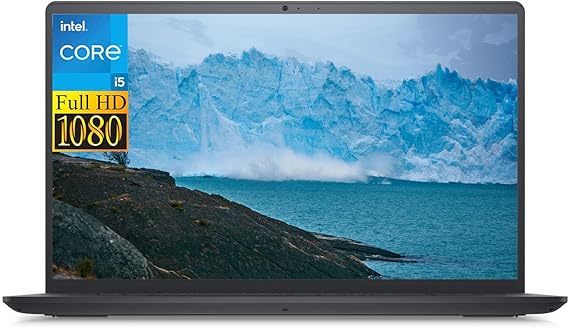
Dell vs Razer: Overview
Comparing Dell and Razer helps you determine which brand is best suited for your needs in Laptops. Both brands offer strong choices depending on your budget and key feature requirements.
Key Features & Comparison
Evaluate factors such as build quality, warranty, customer satisfaction, and total value before making your final purchase choice between Dell and Razer.
Affordability
When evaluating affordability, Dell and Razer occupy fundamentally different tiers of the laptop market. Dell operates across a massive pricing spectrum, offering budget-conscious consumers entry-level devices through its Inspiron and Chromebook lines, dependable mid-range computing via the Latitude series, and high-end configurations in the XPS and Alienware families. This vertical breadth allows Dell to leverage vast supply-chain efficiencies, passing substantial cost savings to the buyer. Shoppers can easily find highly functional Dell machines under $600 that capably handle day-to-day productivity, while Dell's frequent direct-to-consumer sales and diverse configuration options make it possible to tailor hardware directly to a strict financial limit.
Conversely, Razer eschews the entry-level and mid-range markets entirely, positioning itself as a boutique, luxury lifestyle brand where affordability is rarely a design consideration. The entry barrier for a Razer Blade is exceptionally high, frequently starting north of $1,500 and climbing past $4,000 for flagship configurations. This premium price tag stems from Razer's commitment to unibody CNC-machined aluminum chassis, custom vapor-chamber cooling solutions, and ultra-high-end internal specifications. While Dell provides accessible price-to-performance ratios across various tiers, Razer demands a steep luxury tax for industrial design, portability, and elite aesthetics, making Dell the undisputed victor for budget-conscious and value-seeking buyers.
Battery Life
Battery performance reveals a stark divergence in operational philosophy, primarily because Dell targets enterprise and mobile productivity, whereas Razer optimizes for sustained, high-power gaming. Dell's flagship ultrabooks, particularly the XPS series, are engineered with energy conservation as a primary pillar. By integrating low-wattage Intel Core Ultra or AMD Ryzen processors, dynamic refresh rate panels, and high-capacity battery cells, Dell ultrabooks regularly achieve between 10 to 18 hours of real-world productivity on a single charge. Dell's proprietary Power Manager software also grants users granular control over thermal thresholds and charging behaviors, extending both daily endurance and long-term chemical battery health.
Razer laptops, on the other hand, struggle significantly in the endurance department due to their hardware-intensive engineering. Even during mundane tasks, the demanding display controllers, advanced RGB backlighting, and background GPU standby draw substantial power from the battery. While modern Razer Blade models incorporate NVIDIA Advanced Optimus to switch to integrated graphics during light workloads, users rarely see more than 5 to 7 hours of casual use, with that figure dropping precipitously to under 90 minutes when engaging in 3D rendering or gaming untethered. For professionals and students who prioritize all-day autonomy away from an AC outlet, Dell provides a vastly superior battery experience.
Display
In the display arena, both manufacturers deliver world-class panels, but they tune their engineering toward distinct user bases. Dell has long set the gold standard for creative and productivity workflows with its InfinityEdge displays, which feature micro-bezels, a tall 16:10 aspect ratio, and exceptional pixel density. Top-tier Dell XPS and Alienware configurations offer breathtaking OLED panels that cover 100% of the DCI-P3 color gamut, boasting deep contrast ratios, Dolby Vision certification, and peak brightness levels exceeding 500 nits. This makes Dell panels exceptionally well-suited for color-accurate video editing, graphic design, and document multitasking, where vertical screen real estate is paramount.
Razer caters aggressively to esports enthusiasts and high-end gamers, pushing the envelope in refresh rates and panel responsiveness while maintaining impressive color accuracy. Razer Blade displays range from blazing-fast 240Hz to 360Hz QHD panels to bleeding-edge dual-mode Mini-LED screens that allow users to toggle natively between ultra-crisp 4K at 120Hz and high-speed FHD at 240Hz. Furthermore, Razer factory-calibrates every display to ensure precise color reproduction out of the box. While Dell wins in productivity ergonomics and ultrabook bezel minimization, Razer leads the industry in delivering ultra-fluid, motion-blur-free visual fidelity for competitive gaming and high-framerate visual content.
Performance
Thermal architecture and component headroom define the performance divide between Dell and Razer. Dell balances performance across diverse form factors; its thin-and-light XPS machines prioritize quiet operation and thermal throttling management over raw graphical muscle, making them stellar performers for sustained CPU compute but modest for heavy 3D loads. However, Dell's dedicated gaming subsidiary, Alienware, delivers raw, uncompromised power with thick chassis designs, quad-fan systems, and maximum total graphics power (TGP) ratings capable of driving desktop-replacement chips without immediate thermal limitations.
Razer achieves an engineering marvel by packing desktop-grade performance into remarkably svelte, sub-one-inch profiles. By employing custom-sealed vapor chambers, high-fin-density heat sinks, and dual-exhaust fans, Razer Blades push high-wattage NVIDIA GeForce RTX graphics cards and unlocked Intel Core i9 processors near their theoretical limits within a slim chassis. While Alienware matches or slightly exceeds Razer's raw power through sheer thermal volume, Razer vastly outperforms standard Dell lines in graphics-intensive computing while maintaining a thin, highly portable form factor. The trade-off is higher surface temperatures and aggressive fan acoustics under sustained load, but for sheer performance density, Razer remains an elite contender.
Compare current retail pricing, active promotions, and verified stock availability directly from authorized stores:
Compare current retail pricing, active promotions, and verified stock availability directly from authorized stores: