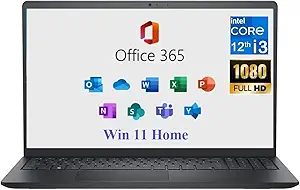
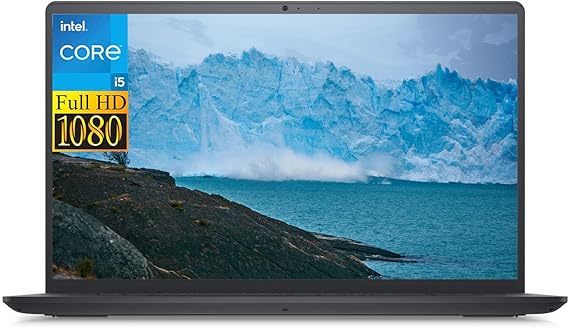
Dell vs Microsoft: Overview
Comparing Dell and Microsoft helps you determine which brand is best suited for your needs in Laptops. Both brands offer strong choices depending on your budget and key feature requirements.
Key Features & Comparison
Evaluate factors such as build quality, warranty, customer satisfaction, and total value before making your final purchase choice between Dell and Microsoft.
Affordability
When evaluating affordability, Dell offers a vastly broader and more accessible spectrum of price-to-performance tiers compared to Microsoft. Operating across multiple dedicated product lines—from the entry-level Inspiron series to the mid-tier G-Series gaming rigs and premium XPS ultrabooks—Dell can accommodate virtually any budget constraint. Because Dell manufactures at immense enterprise scale, it consistently delivers superior baseline component specifications (such as larger SSD capacities and higher memory ceilings) at lower retail price points, making its budget-friendly devices exceptional value propositions for students, everyday users, and cost-conscious IT departments.
In contrast, Microsoft positions its Surface portfolio almost exclusively within the premium category, resulting in a significantly higher barrier to entry. While Microsoft occasionally introduces lower-cost hardware like the Surface Laptop Go, these models often feature technical compromises, such as lower display resolutions and modest base storage, to hit their sub-flagship price points. Furthermore, Microsoft’s reliance on proprietary accessories—such as the Surface Pen and detachable Type Covers, which are frequently sold separately—inflates the total cost of ownership. For buyers seeking raw hardware value per dollar spent, Dell represents a far more pragmatic and cost-effective choice.
Battery Life
Battery performance between Dell and Microsoft is heavily dictated by their divergent hardware architectures and platform choices. Historically, Dell laptops have relied on high-capacity physical battery packs (often scaling up to 86Wh or 99.5Wh in chassis like the XPS 15 and XPS 16) paired with aggressive firmware optimizations to sustain full workdays. Dell's business-grade Latitudes and Intel/AMD-powered XPS models provide dependable runtimes under mixed productivity workloads, though high-resolution 4K OLED display options can severely degrade endurance, sometimes cutting operational life by up to 30 to 40 percent under sustained loads.
Microsoft has recently taken a massive leap forward in battery longevity by fully embracing ARM architecture with the Qualcomm Snapdragon X Elite and X Plus processors in its Surface Pro and Surface Laptop lines. These newer Surface devices deliver unprecedented power efficiency that rivals Apple's silicon, routinely offering 15 to 20 hours of real-world video playback and all-day active productivity without generating excess heat. While Dell has also introduced Snapdragon variants within its XPS and Inspiron lineups, Microsoft's deep, native hardware-to-OS integration within Windows 11 allows Surface devices to extract maximum standby efficiency and sustained battery life under everyday mobile conditions.
Display
Display engineering represents a core differentiator in philosophy between the two manufacturers, particularly in aspect ratios and panel technology. Microsoft’s Surface lineup is renowned for standardizing the 3:2 PixelSense display across almost all its devices. This taller aspect ratio offers substantial vertical screen real estate, making it superior for reading documents, coding, and web browsing. Surface panels also boast high pixel densities, factory color calibration supporting sRGB and DCI-P3 color spaces, dynamic 120Hz refresh rates, and universal 10-point multi-touch with active stylus support featuring haptic feedback.
Dell, on the other hand, prioritizes cinematic fidelity, bezel reduction, and visual versatility with its InfinityEdge displays. Typically adopting a 16:10 aspect ratio on modern XPS and Latitude machines, Dell excels in offering cutting-edge OLED and mini-LED configurations that produce infinite contrast ratios, deep true blacks, and exceptionally high peak brightness levels that outperform Microsoft's predominantly IPS LCD catalog. Dell also provides a wider variety of finishes, including advanced anti-reflective and anti-glare coatings tailored for brightly lit office environments, whereas Microsoft's displays are predominantly high-gloss glass designed to accommodate digitizer pens.
Performance
In terms of raw thermal headroom and performance ceilings, Dell holds a decisive advantage over Microsoft. Because Dell engineers laptops across various form factors—including robust mobile workstations (Precision) and performance-focused ultrabooks (XPS)—its thermal management systems are designed to dissipate higher wattages. Dell frequently pairs high-TDP Intel Core Ultra and AMD Ryzen processors with dedicated NVIDIA GeForce RTX graphics chips, providing the sustained graphical and multi-threaded horsepower required for 3D rendering, software compilation, video production, and even mid-to-high-end gaming.
Microsoft Surface hardware is engineered with an emphasis on thermal balance, whisper-quiet acoustics, and ultra-portable efficiency rather than sheer peak compute power. Apart from specialized configurations like the Surface Laptop Studio, most Surface units employ low-to-medium TDP processors designed for fanless or near-silent single-fan operation. While Microsoft’s adoption of Snapdragon X Series chips provides blazing-fast burst performance and exceptional NPU-driven AI processing capabilities for day-to-day office workflows, the hardware is constrained by strict thermal throttles and potential ARM software emulation overhead, making Dell the superior choice for users demanding uncompromising, sustained computational power.
Compare current retail pricing, active promotions, and verified stock availability directly from authorized stores: