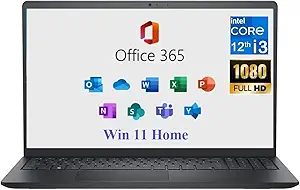
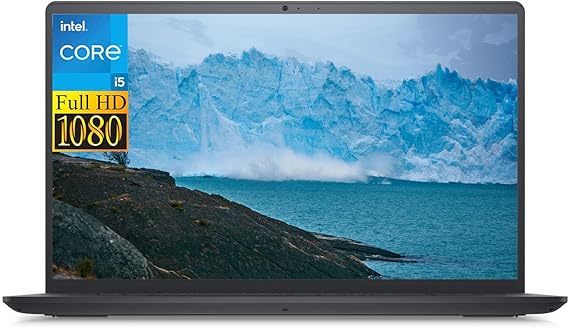
Dell vs LG: Overview
Comparing Dell and LG helps you determine which brand is best suited for your needs in Laptops. Both brands offer strong choices depending on your budget and key feature requirements.
Key Features & Comparison
Evaluate factors such as build quality, warranty, customer satisfaction, and total value before making your final purchase choice between Dell and LG.
Affordability
When evaluating affordability, Dell offers a vastly broader and more accessible spectrum of price points than LG. Dell caters to virtually every budget tier, from entry-level Inspiron models priced for students to mid-range workhorses and ultra-premium XPS or Alienware configurations. This manufacturing scale allows Dell to compete aggressively at the budget-friendly end of the market, offering serviceable hardware for basic computing tasks without requiring a substantial financial commitment. Frequent promotional discounts, customizable component tiers, and a robust certified refurbished ecosystem further enhance Dell's appeal to price-conscious consumers who prioritize cost-to-spec ratios.
In contrast, LG largely avoids the entry-level segment, focusing its engineering and marketing almost exclusively on the premium ultraportable category with its flagship Gram line. Because LG invests heavily in specialized lightweight materials such as magnesium-alloy chassis, substantial battery capacities, and premium display panels, its baseline entry price is comparatively high. Consumers seeking sub-budget machines will find very few, if any, options within LG's catalog. Consequently, while an LG Gram provides solid value in terms of portability and premium features per dollar, Dell remains the undisputed leader in sheer pricing accessibility and budget diversity.
Battery Life
Battery life is the defining hallmark of LG's laptop engineering, where the Gram series consistently establishes class-leading endurance metrics. By pairing massive 72Wh to 90Wh batteries with exceptionally light chassis and efficient, low-power display panels, LG achieves runtimes that often stretch from 15 to over 20 hours under moderate real-world workloads. LG's power management firmware is heavily tuned to minimize idle drain and optimize background processing, making these devices ideal for frequent travelers, remote workers, and professionals who demand true all-day freedom from AC adapters without carrying excess bulk.
Dell delivers strong battery longevity in specific configurations, but its performance across the portfolio is considerably more variable. Machines such as the lower-spec Dell XPS 13 or corporate Latitude models with standard FHD displays can easily achieve 10 to 14 hours of continuous productivity. However, opting for Dell's high-tier configurations—specifically those with 3.5K OLED or 4K touch displays, paired with power-hungry Intel H-series chips or discrete NVIDIA GPUs—causes battery life to degrade drastically, often dropping to between 5 and 7 hours. While Dell provides capable fast-charging technologies and granular power profiles via Dell Optimizer, LG maintains a distinct architectural advantage in sustained endurance.
Display
Dell's display engineering stands among the best in the personal computing industry, defined by its pioneering InfinityEdge design and versatile panel options. Across the flagship XPS line, Dell offers stunning 16:10 visual real estate featuring razor-thin bezels that maximize screen-to-body ratios. Users can tailor their visual experience with options ranging from anti-glare Full HD+ panels tailored for productivity to breath-taking 3.5K and 4K OLED touchscreens. These high-end panels boast deep contrast ratios, true blacks, Dolby Vision, and expansive color coverage (covering 100% DCI-P3), making Dell the preferred choice for creative professionals, video editors, and visual artists demanding color accuracy.
LG counters by outfitting the Gram lineup with expansive, productivity-centric displays characterized by vibrant 16:10 aspect ratios, crisp WQXGA (2560x1600) resolutions, and high color accuracy spanning 99% of the DCI-P3 gamut. LG typically utilizes advanced anti-glare IPS panels that minimize reflections in brightly lit environments, prioritizing office productivity and comfort during extended viewing sessions. While LG occasionally offers OLED options in select Gram variants, Dell provides a broader array of touch-enabled, ultra-high-resolution, and factory-calibrated panels designed to meet the rigorous demands of multimedia creation and consumption.
Performance
Dell establishes a decisive advantage in raw performance and thermal scalability through its expansive portfolio. Dell engineers machines for every conceivable performance tier, deploying high-wattage Intel Core and AMD Ryzen processors paired with powerful discrete NVIDIA GeForce RTX graphics in lines like the XPS 15/17, Precision mobile workstations, and Alienware gaming laptops. To sustain these thermal demands, Dell utilizes sophisticated vapor chamber cooling systems, dual-fan exhausts, and aggressive performance profiles via the Dell Command suite. This allows Dell systems to excel in heavy workloads such as 3D rendering, video encoding, software compiling, and high-end gaming without crippling thermal throttling.
LG, by contrast, deliberately tunes its hardware around thermal efficiency and weight minimization rather than raw sustained computing power. While LG Gram machines feature the latest Intel Core processors with capable integrated graphics, the pursuit of an ultralight, sub-three-pound chassis severely constrains internal thermal dissipation. Consequently, LG's cooling fans ramp up quickly, and the firmware enforces aggressive thermal throttling under extended multi-threaded stress to manage temperatures and acoustic noise. While an LG Gram is remarkably responsive and fluid for office multitasking, web browsing, data analysis, and media playback, it cannot match Dell's capacity for heavy-duty, sustained creative or professional computational workloads.
Compare current retail pricing, active promotions, and verified stock availability directly from authorized stores:
Compare current retail pricing, active promotions, and verified stock availability directly from authorized stores: