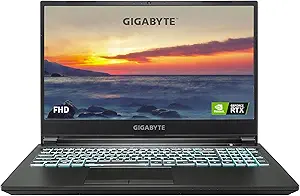
Dell vs GigaByte: Overview
Comparing Dell and GigaByte helps you determine which brand is best suited for your needs in Laptops. Both brands offer strong choices depending on your budget and key feature requirements.
Key Features & Comparison
Evaluate factors such as build quality, warranty, customer satisfaction, and total value before making your final purchase choice between Dell and GigaByte.
Affordability
When analyzing pricing and value proposition, Dell and Gigabyte adopt fundamentally divergent approaches that cater to different consumer mindsets. Dell operates as a full-spectrum manufacturer, offering hardware ranging from low-cost Inspiron models to ultra-premium XPS and Alienware machines. However, within comparable performance brackets—particularly among mid-range productivity and gaming devices—Dell often commands a premium price tag. Consumers pay not only for the internal components but also for Dell’s extensive global support network, build-to-order customizability, and proprietary software suites. Entry-level budget models from Dell frequently cut corners on chassis materials and display quality to maintain lower starting prices, which can dilute the perceived value relative to pure hardware output.
In contrast, Gigabyte maintains a tightly focused catalog centered around gaming and creator machines, specifically through its G-series, AORUS, and AERO sub-brands. Gigabyte consistently prioritizes raw component-to-dollar efficiency, often undercutting Dell by providing higher-tier graphics processors and faster silicon at substantially lower MSRPs. The Gigabyte G5 and G6 series, for instance, frequently represent the most accessible price floors for modern dedicated GPUs on the market. While Gigabyte laptops may lack the polished industrial design or the expansive post-purchase customer infrastructure associated with Dell, they represent a considerably more economical investment for users who prioritize computational hardware density over corporate support and prestige.
Battery Life
Battery performance reveals a substantial technical division governed by the core system architectures Dell and Gigabyte prioritize. Dell engineers several of its consumer and professional lines—most notably the XPS and high-end Latitude series—with energy-conscious platforms that frequently incorporate expansive battery cells (ranging up to 99.9Wh, the legal limit for air travel) combined with rigorous firmware-level thermal and power tuning. When paired with lower-wattage Intel Core Ultra or AMD Ryzen chips, Dell productivity laptops routinely achieve all-day endurance, eclipsing 10 to 14 hours of real-world office workflows. Even within Dell's Alienware division, proprietary hybrid graphics switching (Advanced Optimus) and intelligent sleep states help temper high power draw during non-gaming tasks.
Gigabyte laptops, predominantly configured around high-TDP processors and discrete GPUs, generally struggle in battery longevity benchmarks. Even the creator-focused AERO lineup, which houses large capacity cells, must contend with power-demanding display technologies like 4K OLED panels that aggressively drain reserves, seldom exceeding 5 to 7 hours of moderate productivity. The more budget-oriented Gigabyte gaming models exacerbate this issue by employing smaller internal batteries—often between 54Wh and 76Wh—to accommodate cooling channels and budget constraints. As a result, Gigabyte users typically experience rapid battery depletion, reinforcing the brand's identity as a 'portable desktop' provider where reliable performance remains tethered to a dedicated AC adapter.
Display
Visual fidelity and panel variety are areas where both manufacturers demonstrate high-level engineering, albeit targeted at distinct end-user requirements. Dell delivers an exceptionally diverse display portfolio, recognized widely for pushing thin-bezel InfinityEdge engineering and ergonomic 16:10 aspect ratios that maximize vertical workspace for productivity. Across XPS and high-tier Alienware units, Dell provides high-resolution IPS, QHD+ fast-refresh, and stunning 3.5K to 4K OLED panels with expansive color gamuts (100% DCI-P3) and robust peak brightness figures often exceeding 500 nits. Dell's anti-reflective coatings and factory calibration are tuned specifically to benefit content creators, executives, and multi-window multitaskers who need sustained eye comfort and pinpoint color accuracy.
Gigabyte distinguishes itself by tailoring its visual technology heavily toward competitive gaming metrics and professional digital color standards. The flagship AORUS series frequently pushes extreme refresh rates—spanning 240Hz to 360Hz—paired with ultra-low response times to cater to competitive esports scenarios where input lag is unacceptable. Simultaneously, Gigabyte’s AERO series stands out as an industry pioneer in display precision, offering factory X-Rite Pantone-certified displays that guarantee near-zero color deviation out of the box. While entry-tier Gigabyte gaming laptops can feature somewhat dim panels with mediocre sRGB coverage, the brand's upper tiers rival or surpass Dell by providing targeted display solutions engineered explicitly for uncompromising motion clarity or turnkey professional design work.
Performance
Performance delivery hinges directly on how each manufacturer approaches thermal dissipation, silicon power budgets, and chassis limits. Dell generally strikes a delicate balance between form-factor sleekness, acoustic discipline, and peak burst performance. In its ultraportable XPS line, thermal throttling can occur under prolonged all-core stress due to space constraints, leading the system to dial back sustained clock speeds in favor of keeping noise levels and external temperatures manageable. Conversely, Dell’s Alienware gaming division applies heavy-duty engineering—incorporating vapor chambers, gallium-silicone liquid metal interfaces, and quad-fan setups—to extract sustained power out of top-tier processors, albeit at the expense of significant chassis thickness and elevated fan decibels under load.
Gigabyte adopts a more uncompromised, performance-first ethos throughout its product stack, typically provisioning its components with generous Total Graphics Power (TGP) allocations. Utilizing their proprietary Windforce cooling architecture, Gigabyte laptops feature dense heat pipe layouts and high-blade-count fans designed to dissipate extreme thermal loads continuously. This thermal architecture allows Gigabyte machines to maintain boost clocks during extended 3D rendering or prolonged gaming sessions without significant thermal throttling. The trade-off is tactile and acoustic: Gigabyte’s fan profiles can become intensely aggressive and loud under load, and keyboard deck temperatures often run warmer than Dell's equivalents. Nevertheless, for users seeking maximum frame rates and sustained multi-threaded throughput per dollar, Gigabyte’s performance tuning holds a distinct competitive edge.
Compare current retail pricing, active promotions, and verified stock availability directly from authorized stores:
Compare current retail pricing, active promotions, and verified stock availability directly from authorized stores: