Asus vs MSI: Overview
Comparing Asus and MSI helps you determine which brand is best suited for your needs in Laptops. Both brands offer strong choices depending on your budget and key feature requirements.
Key Features & Comparison
Evaluate factors such as build quality, warranty, customer satisfaction, and total value before making your final purchase choice between Asus and MSI.
Affordability
When evaluating affordability, Asus demonstrates a significantly broader reach across various price tiers, offering well-engineered solutions from entry-level budgets to premium flagship brackets. Asus leverages its VivoBook and TUF Gaming lineups to democratize high-end features, routinely outfitting budget-conscious machines with metal chassis accents, optimized thermal designs, and high-refresh-rate panels. The TUF Gaming series, in particular, represents exceptional value per dollar by pairing modern mid-tier GPUs with capable CPUs while cutting costs selectively on chassis materials rather than structural durability or cooling efficiency. This approach ensures that buyers at lower price points still receive balanced machines with reliable warranties and modern connectivity standards without severe hardware compromises.
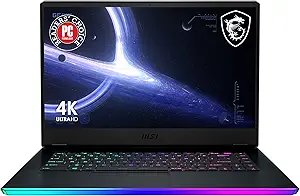
MSI takes a contrasting approach, historically concentrating its engineering around mid-to-high-tier gaming and workstation hardware, which skews its perceived value proposition. At the ultra-budget level, MSI models such as the GF63 and Thin series manage to achieve competitive price points by pairing respectable internal specifications with deeply aggressive cost-cutting. However, this often manifests in compromised hinge engineering, single-fan thermal architectures, and flexible plastic chassis that feel less durable than Asus equivalents. Where MSI excels in affordability is in the mid-range enthusiast tier, where models like the Katana and Sword offer raw, high-TGP compute capability at prices that frequently undercut comparable Asus ROG Strix machines, appealing directly to performance-first buyers willing to overlook utilitarian aesthetics.
Battery Life
Battery performance reveals one of the starkest engineering divergences between Asus and MSI, with Asus holding a distinct technological advantage. Asus has invested heavily in proprietary power-management microcode alongside aggressive adoption of energy-efficient platform designs, such as AMD Ryzen HS-series processors. In premium portables like the ROG Zephyrus and ZenBook series, Asus consistently integrates 70Wh to 90Wh batteries coupled with advanced dynamic display switching (advanced Optimus and MUX switches), allowing these machines to routinely achieve between 8 to 12 hours of productivity workloads. Furthermore, the Asus Armoury Crate and MyASUS software suites feature granular eco-modes and charge-threshold caps, giving users precise control over power draw and long-term cell health.
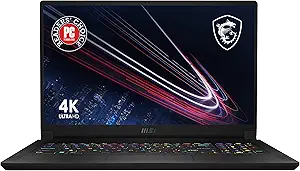
Conversely, MSI systems are engineered almost exclusively around maximum electrical throughput and tethered performance, which frequently comes at the expense of untethered longevity. Many of MSI's enthusiast and mid-range gaming laptops feature relatively modest battery capacities (often hovering around 51Wh to 65Wh to cut costs and chassis weight) paired with aggressive baseline power profiles that deplete charge rapidly. While MSI has begun integrating larger 99.9Wh cells into flagship models like the Raider and Stealth lines, background power draw from peripheral controllers and less optimized platform idle states often cap real-world light-workload runtimes to roughly 4 to 6 hours. For users who prioritize true all-day mobile productivity without carrying a heavy AC adapter, MSI's hardware portfolio demands greater compromise.
Display
In display technology, Asus has established itself as an industry leader through its aggressive push for OLED ubiquity and elite gaming panel integration. Through its 'Lumina OLED' branding across ZenBook, ProArt, and Vivobook devices, Asus offers factory-calibrated, DCI-P3 100% color-accurate panels with infinite contrast ratios even at mid-range pricing. For gamers, Asus pioneered Nebula and Nebula HDR displays in the ROG series, combining ultra-fast response times with Mini-LED backlighting capable of reaching peak brightness levels exceeding 1100 nits. This relentless focus on color fidelity, variable refresh rate technologies (G-Sync and FreeSync Premium), and high dynamic range ensures that both competitive gamers and creative professionals receive superior visual clarity and reduced motion blur across nearly every category.
MSI’s display engineering focuses squarely on competitive esports metrics, excelling in refresh rate throughput and panel responsiveness. Premium MSI lines frequently lead the market in raw frequency, being among the first to deploy 360Hz and 480Hz IPS panels, which provide exceptional frame-pacing and reduced system latency for elite gaming scenarios. MSI's Creator series and high-end Titan systems also feature brilliant True Color-certified 4K Mini-LED displays that rival the best on the market. However, MSI's budget and mid-tier tiers suffer from inconsistent panel binning; lower-priced models like the Thin and Katana are notorious for utilizing displays with subpar 45% NTSC color coverage, slower pixel response times, and limited peak brightness, creating a noticeably wider experiential divide between MSI's budget and flagship visual experiences than seen in Asus's lineup.
Performance
From a pure performance and thermal management perspective, Asus emphasizes balance, acoustic engineering, and consistent sustained clock speeds. Asus equips the vast majority of its ROG lineup with liquid metal thermal interfaces applied through automated manufacturing, significantly reducing the thermal barrier between dies and heatsinks. Paired with dual or triple-fan setups and vapor chambers, Asus manages to extract near-peak performance from Intel, AMD, and Nvidia silicon while carefully tuning fan curves to mitigate high-frequency acoustic pitch. While thin-and-light models like the Zephyrus modestly limit Total Graphics Power (TGP) to preserve acoustics and portability, Asus's larger Strix SCAR models compete at the absolute ceiling of mobile computing, demonstrating exceptional multi-threaded rendering and gaming benchmarks.
MSI approaches performance with an unconstrained, raw-power philosophy that often prioritizes absolute benchmark supremacy over noise suppression or chassis temperature. Flagship machines like the MSI Titan and Raider are designed to feed maximum allowable wattage into the CPU and GPU simultaneously via high OverBoost headroom and fully unthrottled TGPs. MSI's Cooler Boost technology employs dense copper heat-pipe arrays and high-RPM blowers to relentlessly clear heat, enabling world-record benchmark scores and blistering gaming frame rates under sustained loads. The trade-off is an engineering tolerance for significantly louder acoustic profiles, elevated surface temperatures, and bulky power bricks, making MSI the brand of choice for extreme enthusiasts who demand desktop replacement performance without compromises on electrical limits.