Acer vs MSI: Overview
Comparing Acer and MSI helps you determine which brand is best suited for your needs in Laptops. Both brands offer strong choices depending on your budget and key feature requirements.
Key Features & Comparison
Evaluate factors such as build quality, warranty, customer satisfaction, and total value before making your final purchase choice between Acer and MSI.
Affordability
When evaluating affordability, Acer generally holds a commanding advantage across the broader consumer spectrum due to its diversified portfolio and aggressive entry-level pricing. Lines such as the Acer Aspire and Chromebook series provide highly functional computing hardware at price points that undercut most competitors, making them ideal for students and budget-conscious professionals. Even within the budget gaming segment, Acer's Nitro series delivers compelling raw specifications per dollar, although this cost efficiency frequently comes at the expense of chassis rigidity, premium trackpad materials, and cooling acoustic refinement.
MSI approaches affordability with a distinctly performance-oriented baseline, historically catering to the enthusiast and gaming demographics before expanding into productivity with its Modern and Prestige lines. Entry-level MSI laptops, like the Thin and GF series, attempt to compete directly with budget rigs, yet they often suffer from thermal throttling and plastic build compromises that make them feel less balanced than comparable budget machines. Consequently, while MSI offers competitive hardware-to-price ratios for high-end creative and gaming gear, Acer remains the uncontested leader for absolute consumer affordability and everyday value across mainstream tiers.
Battery Life
Battery endurance represents a significant point of divergence between the two manufacturers, primarily driven by their core engineering priorities and target audiences. Acer consistently achieves superior battery runtimes across its mainstream and ultralight lineups, such as the Swift series. By leveraging Intel and AMD efficiency-focused processors, optimizing display backlight power draws, and aggressively tuning system-level sleep states, Acer machines can reliably deliver full workday longevity exceeding eight to ten hours of continuous productivity and media playback without requiring a top-up.
Conversely, MSI struggles to maintain competitive battery life across much of its catalog due to its gaming pedigree and power-hungry performance profiles. High-refresh-rate panels, discrete graphics cards, and robust background utilities systematically deplete battery reserves, often restricting high-end Raider and Vector models to under four to five hours off the wall adapter. While MSI's business-oriented Prestige and Summit laptops feature larger battery capacities that bridge this gap admirably, Acer maintains an overall structural lead in thermal and energy efficiency for untethered, all-day mobility.
Display
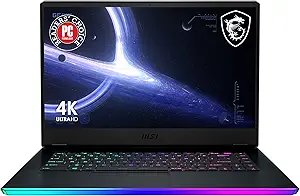
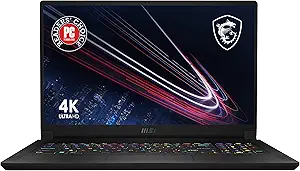
In the display department, both brands offer starkly different engineering paradigms tailored to distinct use cases. MSI shines exceptionally bright in high-performance and content creation displays, frequently integrating industry-leading Mini-LED, vibrant OLED, and ultra-high-refresh-rate IPS panels reaching up to 360Hz. MSI’s proprietary True Color technology provides rigorous factory calibration that ensures near-perfect DCI-P3 and AdobeRGB coverage, making high-tier MSI laptops the preferred choice for digital artists, competitive gamers, and professional video editors who demand uncompromising color fidelity and response times.
Acer counters by democratizing high-resolution displays within mainstream and mid-range price brackets. Through its Swift and Predator Helios lines, Acer has been a major proponent of 16:10 aspect ratios, high-density 2.8K OLEDs, and fast response times that make everyday tasks, programming, and casual gaming visually striking. However, Acer's lower-end models—particularly within the budget Aspire and Nitro ranges—frequently cut costs by utilizing panels with sub-par color gamuts (around 45% NTSC) and low peak brightness, meaning MSI typically offers a higher baseline display standard despite Acer’s impressive mid-tier OLED achievements.
Performance
Performance is where MSI’s engineering ethos delivers its greatest dividends, establishing the brand as a heavyweight in sustained compute and graphical throughput. MSI equips its performance machines with advanced thermal architectures, such as Cooler Boost technology featuring dense heat pipe layouts and multiple high-CFM fans. This aggressive thermal headroom allows MSI to configure components at their maximum Total Graphics Power (TGP) limits, extracting exceptional sustained frame rates, swift 3D rendering times, and minimal thermal throttling during extended, heavy workloads.
Acer provides exceptionally strong performance tuning in its specialized Predator and ConceptD series, yet its mainstream lineup is calibrated for thermal equilibrium and acoustic comfort rather than sheer computational brute force. Acer’s consumer notebooks often cap power limits lower to maintain cool operating temperatures and quiet fan profiles in compact chassis designs. While Acer's high-end gaming laptops can trade blows with MSI on an architectural level, MSI generally commands the edge in maximum performance ceilings, overclocking flexibility, and sustained power delivery for power users.