Acer vs LG: Overview
Comparing Acer and LG helps you determine which brand is best suited for your needs in Laptops. Both brands offer strong choices depending on your budget and key feature requirements.
Key Features & Comparison
Evaluate factors such as build quality, warranty, customer satisfaction, and total value before making your final purchase choice between Acer and LG.
Affordability
When evaluating affordability, Acer maintains a massive competitive advantage over LG through its extensive, tiered product portfolio. Acer has built its market dominance by offering highly competitive price-to-performance ratios across entry-level and mid-range segments, epitomized by its Aspire, Swift, and Nitro lines. By utilizing strategic material choices—such as high-grade plastics alongside brushed aluminum—and leaning on economies of scale, Acer consistently delivers machines with modern processors and dedicated graphics at sub-$500 and sub-$1,000 price tiers. This democratic pricing model ensures students, casual users, and budget-conscious gamers can access contemporary computing standards without significant financial compromise.
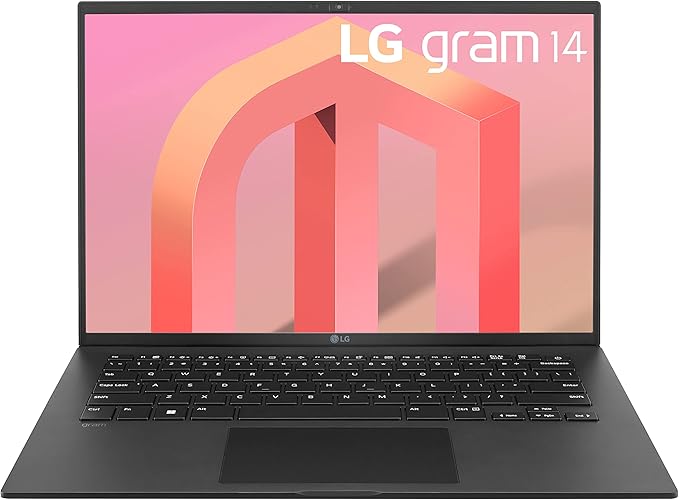
In contrast, LG largely foregoes the budget market entirely, focusing almost exclusively on the premium ultra-lightweight category with its Gram family. LG laptops are engineered using exotic materials like magnesium alloy and incorporate bespoke high-density battery architectures, which fundamentally elevate the manufacturing baseline and retail price. While an entry-level Acer can be purchased for a fraction of the cost, even the most basic LG Gram typically starts above the $1,000 mark. Consequently, consumers seeking raw cost efficiency and maximum component specs per dollar will consistently find Acer superior in affordability, whereas LG’s pricing reflects a premium valuation tailored specifically to executive-class portability.
Battery Life
In the domain of battery longevity, LG stands as an industry benchmark that consistently outperforms Acer across comparative form factors. The LG Gram lineup is engineered from the ground up around extreme power efficiency and internal volume optimization, allowing LG to pack high-capacity 72Wh to 90Wh batteries into chassis that weigh less than a kilogram. Combined with stringent Intel Evo platform tuning, optimized display backlights, and intelligent dynamic refresh rate management, LG Gram laptops regularly achieve between 14 to 20 hours of real-world productivity on a single charge, making them the gold standard for road warriors and business travelers who cannot rely on immediate wall power.
Acer’s battery performance, while respectable in dedicated ultraportables like the Swift series, is considerably more varied and generally less ambitious across its broader catalog. Because Acer caters heavily to performance-driven, gaming, and cost-optimized demographics, thermal compromises and smaller battery packs (frequently ranging from 45Wh to 65Wh) result in more modest endurance metrics. Mainstream Aspire models typically top out at 6 to 8 hours of moderate usage, while the power-hungry Predator and Nitro lines can deplete their reserves in under two hours under load. While Acer delivers sufficient battery life for standard desktop-replacement roles, LG comfortably secures the endurance crown through sheer battery capacity and chassis-level energy engineering.
Display
Display technology reveals divergent priorities between the two brands, with LG capitalizing on its corporate heritage as a premier panel manufacturer. LG’s Gram notebooks feature factory-calibrated, high-resolution IPS and vibrant OLED panels characterized by generous 16:10 aspect ratios, up to 99% DCI-P3 color gamut coverage, and anti-glare coatings that excel in mixed lighting. The visual fidelity, sharp contrast ratios, and exceptional color accuracy across LG’s lineup cater directly to content creators, spreadsheet power-users, and media consumers who demand professional-grade visuals in an ultra-portable footprint.
Acer counters this unified premium visual experience with extraordinary diversity across various specialized market tiers. On one end, Acer’s budget and mid-tier models often incorporate utilitarian 1080p IPS or TN panels that exhibit mediocre peak brightness (often capping at 250 nits) and muted sRGB reproduction to keep unit costs low. On the other end of the spectrum, Acer’s enthusiast gaming displays—found in the Predator and Helios series—push boundary-pushing refresh rates reaching 240Hz or 360Hz with low response times and Mini-LED backlighting technologies that outpace LG's productivity-focused screens. Ultimately, while Acer offers superior speed and HDR brightness for gamers, LG provides a vastly more consistent, color-accurate, and universally premium display experience across its entire catalog.
Performance
Performance benchmarks between Acer and LG showcase a classic design trade-off between sustained computational horsepower and thermal-constrained portability. Acer embraces higher thermal design profiles (TDP), allowing its devices to unlock the full computational potential of modern Intel Core, AMD Ryzen, and NVIDIA GeForce RTX hardware. The physical chassis depth in lines like the Nitro, Predator, and even thicker Aspire laptops allows for robust multi-fan, heat-pipe, and vapor-chamber cooling solutions. This thermal headroom enables Acer machines to sustain high clock speeds during protracted workloads such as 3D rendering, video encoding, and AAA gaming without precipitous thermal throttling.
LG, conversely, designs the Gram lineup with featherweight chassis ergonomics as the paramount objective, which imposes unavoidable physical limitations on heat dissipation. Despite utilizing cutting-edge Core Ultra processors, LG often tunes internal power envelopes down to preserve chassis surface temperatures and acoustic comfort within its ultra-thin magnesium enclosures. While burst performance in productivity tasks like web browsing, document editing, and light photo manipulation is snappy, prolonged heavy workloads trigger aggressive thermal throttling far sooner than on equivalent Acer machines. Therefore, users demanding relentless sustained compute and dedicated GPU muscle will find Acer significantly more capable, whereas LG provides calibrated efficiency optimized strictly for general productivity.