Acer vs GigaByte: Overview
Comparing Acer and GigaByte helps you determine which brand is best suited for your needs in Laptops. Both brands offer strong choices depending on your budget and key feature requirements.
Key Features & Comparison
Evaluate factors such as build quality, warranty, customer satisfaction, and total value before making your final purchase choice between Acer and GigaByte.
Affordability
When evaluating affordability, Acer maintains one of the most dominant footprints in the consumer electronics market by operating across virtually every price bracket. From ultra-low-cost Aspire everyday notebooks and budget-friendly Swift ultraportables to mid-range Nitro gaming units, Acer exercises massive economies of scale to keep retail pricing aggressive. Even within their enthusiast-level Predator and premium Swift Go lineups, Acer frequently undercuts competitors by strategically selecting chassis materials—often mixing polycarbonate plastics with stamped aluminum lids—which lowers production costs while still delivering capable, current-generation internal components.
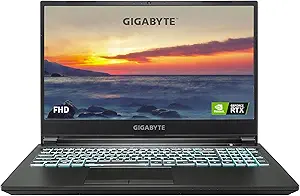
Gigabyte, by contrast, operates on a narrower, performance-first pricing model that primarily targets gamers, digital creators, and technical professionals through its G-Series, AORUS, and AERO families. While Gigabyte does not cater to sub-$500 entry-level segments, its budget-focused G5 and G6 models consistently rank among the most cost-effective methods for acquiring modern discrete GPUs and high-wattage processors. However, Gigabyte's aggressive pricing on entry gaming rigs often entails trade-offs in external fit-and-finish, thermal acoustics, and peripheral ports, whereas their upscale AORUS and AERO flagships command a distinct premium that trades sheer value for refined industrial engineering and top-tier silicon configurations.
Battery Life
Battery performance between these two brands highlights fundamentally divergent engineering objectives. Acer excels in the ultraportable and productivity sectors, equipping its Swift, Spin, and business-focused TravelMate models with power-efficient Intel Core Ultra, AMD Ryzen U-series, or Qualcomm Snapdragon processors. Acer pairs these platforms with aggressive firmware-level power management, dynamic screen refresh toggles, and modest power envelopes, routinely enabling 10 to 15 hours of real-world productivity on a single charge. While Acer's high-draw Nitro and Predator gaming laptops naturally suffer from standard gaming runtimes of two to four hours, their broader product portfolio is packed with genuine all-day battery performers.
Gigabyte approaches battery architecture from a hardware standpoint dominated by high-TDP components, which structurally inhibits prolonged off-wall endurance across most of its catalog. Even premium creative platforms like the Gigabyte AERO, which house capacious 99Wh batteries—the maximum legal capacity for air travel—struggle to match the battery longevity of mainstream Acer notebooks due to the relentless power demands of factory-calibrated OLED panels, high-tier GPUs, and H-class CPUs. Gigabyte's control software lacks the nuanced low-power states seen in Acer's productivity devices, positioning Gigabyte machines as transportable desktop replacements that mandate carrying a hefty proprietary charging brick for any sustained computing session.
Display
Acer offers an immense variety of display technologies that track closely with specific sub-brands and user demographics. Mainstream lineups like the Swift Go have democratized visual fidelity by introducing high-refresh-rate 2.8K and 3.2K OLED options into the mid-tier consumer bracket, boasting 100% DCI-P3 color gamuts and VESA DisplayHDR True Black certifications. In the gaming arena, Acer equips Predator and Nitro models with panels scaling from competitive 1080p 360Hz esports displays up to advanced Mini-LED panels featuring thousands of local dimming zones. However, prospective buyers shopping Acer's rock-bottom Aspire or budget Nitro tiers must be cautious, as those entry tiers occasionally feature dimmer 250-nit IPS panels with limited sRGB color coverage.
Gigabyte distinguishes itself by making professional-grade panel specifications a primary brand pillar, particularly across the AERO and AORUS lines. The creator-centric AERO laptops frequently ship with factory X-Rite Pantone-certified 4K AMOLED or OLED screens that undergo individual unit calibration to guarantee sub-1 Delta E color accuracy, an invaluable perk for video editors and graphic designers. On the dedicated gaming side, AORUS models prioritize fast-response IPS and OLED panels with low input latency and rapid refresh rates up to 360Hz. While Gigabyte's entry G-series relies on utilitarian, mid-gamut displays to hit aggressive price points, the brand's overall panel baseline leans toward color fidelity and pro-grade calibration far more consistently than Acer's mass-market offerings.
Performance
In sustained performance metrics, Acer provides a comprehensive spectrum of computing power driven by tailored cooling platforms. Everyday Acer ultraportables balance passive and low-noise active cooling to maximize thermal efficiency within thin-and-light chassis parameters. At the high end, Acer utilizes advanced thermal engineering inside the Predator Helios and Triton lines, deploying custom-engineered 5th Gen AeroBlade 3D all-metal fans, liquid metal thermal interface material on the CPU, and expansive vapor chambers. This allows Acer's flagship hardware to drive both Intel and AMD silicon alongside unlocked NVIDIA RTX graphics cards at maximum Total Graphics Power (TGP) ratings with minimal thermal throttling, albeit often accompanied by loud fan acoustics under full load.
Gigabyte approaches performance with a no-compromise, brute-force mindset embedded into its hardware heritage. Utilizing proprietary Windforce Infinity cooling systems across AORUS and AERO systems, Gigabyte features dense heat pipe arrays, phase-change thermal pads, and multi-fan layouts designed to dissipate immense thermal loads. Gigabyte's performance tuning software provides advanced users with granular control over GPU overclocking, voltage regulation, and fan curves, enabling sustained clock speeds that often edge out comparable Acer configurations out of the box. While entry-level Gigabyte G-series models run hotter and louder due to simplified cooling assemblies, their high-end hardware is deliberately optimized to extract every megahertz of potential from modern gaming and workstation silicon.