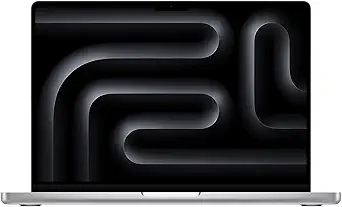
Acer vs Apple: Overview
Comparing Acer and Apple helps you determine which brand is best suited for your needs in Laptops. Both brands offer strong choices depending on your budget and key feature requirements.
Key Features & Comparison
Evaluate factors such as build quality, warranty, customer satisfaction, and total value before making your final purchase choice between Acer and Apple.
Affordability
When evaluating affordability, Acer occupies a fundamentally different segment of the market compared to Apple, prioritizing maximum hardware value across wide-ranging price tiers. From budget-conscious Chromebooks and entry-level Aspire models starting well under five hundred dollars to mid-tier Swift and Nitro laptops, Acer provides functional computing power accessible to virtually any budget. Acer accomplishes this cost efficiency by utilizing diverse component suppliers, incorporating high-impact plastic chassis in lower tiers, and leveraging standardized platform designs. This democratized pricing structure makes Acer the indisputable choice for students, casual users, and cost-focused professionals who require modern hardware without substantial financial commitment.
Apple, conversely, deliberately avoids the entry-level price bracket, positioning its MacBook Air and MacBook Pro lineups entirely within the premium and luxury tiers. Even Apple's most economical offerings require an entry investment nearly double that of a functional mid-range Acer machine, with proprietary upgrades for unified memory and high-capacity storage priced at steep premiums. However, evaluating Apple’s affordability strictly through initial retail pricing overlooks total cost of ownership; MacBooks traditionally exhibit substantially higher resale values over three to five years and feature exceptional structural durability that minimizes replacement frequency. Nonetheless, from a pure barrier-to-entry standpoint, Acer decisively captures the affordability metric with sheer accessibility and competitive performance-per-dollar ratios.
Battery Life
The introduction of Apple’s proprietary Apple Silicon completely redefined laptop battery performance, giving the brand an unmatched competitive advantage in sustained runtime. Because Apple designs the ARM-based processors, memory architecture, operating system, and hardware enclosure holistically, MacBooks achieve astronomical performance-per-watt efficiency. Even under demanding productivity workflows, a standard MacBook Air or MacBook Pro regularly delivers between fifteen and twenty-two hours of actual real-world usage on a single charge. Furthermore, Apple devices maintain identical performance curves whether tethered to a wall outlet or running entirely on battery power, eliminating the throttle-down trade-offs historically associated with mobile computing.
Acer laptops, which predominantly rely on traditional x86 processor architectures from Intel and AMD, face significant engineering challenges in achieving comparable endurance. While higher-end ultrabooks like the Acer Swift series have achieved impressive longevity through Intel Evo certification—delivering reliable eight to twelve hours of lighter office productivity—they cannot match Apple's idle efficiency or active workload endurance. Demanding computational tasks on Acer machines, particularly in dedicated-GPU lineups like the Predator or Nitro series, rapidly deplete battery reserves within two to four hours. For consumers prioritizing all-day endurance away from AC outlets without sacrificing responsiveness, Apple remains the definitive market leader.
Display
Apple’s display engineering represents an industry benchmark for precision, calibration, and premium panel technologies. Across the lineup, MacBooks feature custom Retina displays, Liquid Retina, and high-end Liquid Retina XDR mini-LED panels that offer exceptional pixel density, ultra-wide P3 color gamut support, and factory-calibrated color accuracy essential for creative professionals. The mini-LED implementations found on MacBook Pro models deliver astonishing dynamic range, reaching peak HDR brightness of 1,600 nits and extreme contrast ratios with true deep blacks. Complemented by True Tone ambient light adaptation and ProMotion 120Hz variable refresh rates, Apple ensures a consistently luxurious visual experience across both text rendering and high-end visual production.
Acer’s display quality varies dramatically across its expansive product portfolio, requiring consumers to carefully verify specific model configurations. While baseline Aspire models often utilize pedestrian IPS or TN panels with limited color volume and modest 250-to-300 nit brightness, Acer’s higher-end Swift and gaming displays counter with impressive technical innovations. Acer was an early adopter of consumer-grade OLED panels, offering breathtaking contrast, pure black levels, and 100% DCI-P3 coverage at price points far lower than Apple's premium tiers. Additionally, Acer’s specialized Predator gaming panels surpass Apple in sheer motion clarity with refresh rates reaching 240Hz and beyond, though they lack the universally uniform factory calibration and cohesive scaling that define the MacBook ecosystem.
Performance
The performance comparison between Acer and Apple centers on fundamentally divergent computing architectures and optimization strategies. Apple's system-on-a-chip (SoC) methodology integrates the CPU, GPU, Neural Engine, and Unified Memory Architecture onto a single die, yielding extraordinarily high memory bandwidth and near-zero latency. For video editing in Final Cut Pro, audio mastering, software development, and everyday productivity, MacBooks execute complex workloads with blistering speed while generating minimal thermal footprint and remaining virtually silent. This integrated optimization ensures that macOS extracts maximum sustained utility from its silicon without requiring massive active cooling solutions or excessive power draw.
Acer, on the other hand, embraces raw computational power and peak hardware ceiling by deploying high-wattage Intel Core and AMD Ryzen CPUs alongside discrete NVIDIA GeForce RTX graphics. In raw graphical compute, parallel 3D rendering, machine learning environments dependent on CUDA, and modern AAA gaming, high-end Acer machines like the Predator Helios comprehensively outperform Apple silicon. The critical trade-off lies in efficiency: Acer’s peak performance requires aggressive thermal management, loud multi-fan cooling solutions, and heavy external power bricks, often suffering noticeable degradation in performance when disconnected from wall power. For unified efficiency and creator workflows, Apple reigns supreme; for unconstrained gaming, complex CAD rendering, and x86 software compatibility, Acer provides the superior high-power ceiling.