












Trane: The premium ducted stack we are evaluating is the XV20i variable-speed central AC, the S9V2-VS variable-speed gas furnace, and the XV20i variable-speed heat pump. This trio is built around steady low-rpm operation, top-discharge outdoor airflow that behaves well in tight yards, and pairing tables that help installers hit target airflow in real duct systems. The focus below is how this set performs when commissioned together as a communicating system in a typical 2 to 4 ton home.
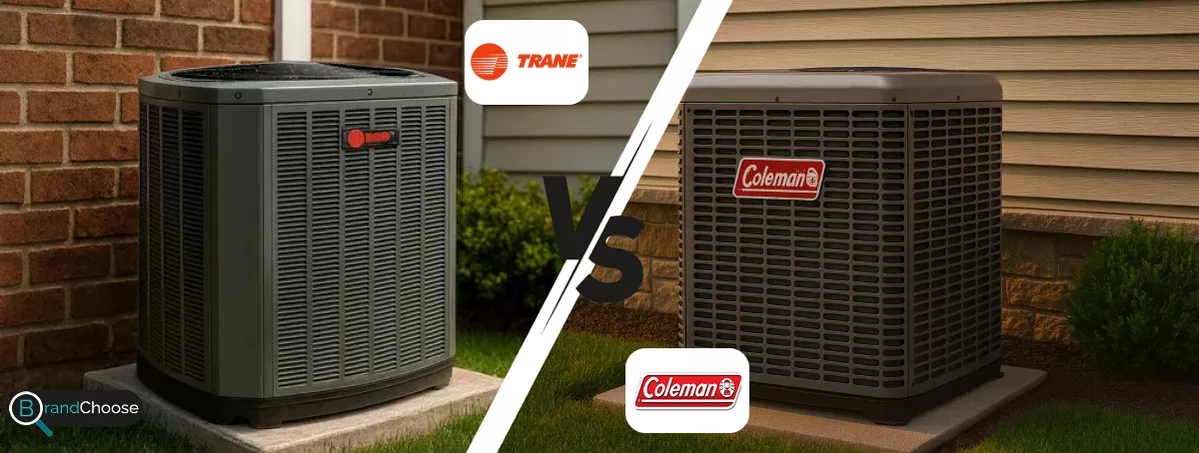
Coleman: The flagship Echelon tier aims for quiet, predictable comfort with a straightforward control stack. For parity with our single-brand pick, we are using the AC21 variable-capacity central AC, the CP9C modulating gas furnace, and the HC20 variable-capacity heat pump. The intent is premium staging without making day-to-day ownership feel complex, using published matched-system combinations so features survive coil or size changes.
Features
Trane's feature set is distinguished by sophisticated proprietary innovations designed to fine-tune indoor air quality and thermal control. Central to its modern lineup is the ComfortLink II communicating technology, which continuously synchronizes the condenser, furnace, and indoor air handler to optimize refrigerant flow and airflow volume dynamically. In its high-tier offerings, such as the XV20i TruComfort series, Trane leverages multi-stage and variable-speed inverter compressors capable of stepping down to a mere 25% capacity in precise 1/10th-of-a-percent increments. Paired with Trane’s CleanEffects electronic air cleaner—certified to remove up to 99.98% of airborne allergens—the brand’s integration capabilities through the Trane Home app cater seamlessly to advanced smart home ecosystems.
Coleman counters with modern conveniences anchored by its Hx3 Touch-Screen communicating zoning systems and ECM fan motors across its higher-echelon Echelon and mid-range LX series. While Coleman utilizes Johnson Controls’ standardized communicating protocols rather than a completely proprietary silicon architecture, its multi-stage and modulating variable-capacity units still deliver consistent thermal management and humidity extraction. Coleman’s Climate Connect feature allows contractors to calibrate system operations based on specific regional climates (dry, humid, or normal) via localized control boards. However, compared to Trane's hyper-granular modulating algorithms and bespoke air-filtration integrations, Coleman’s feature suite feels more pragmatic, prioritizing user-friendly digital interfaces and straightforward utility over boundary-pushing atmospheric control.
Performance
In terms of operational performance, Trane sets an exceptionally high benchmark, particularly under intense thermal loads and prolonged runtimes. The brand's top-tier heat pumps and air conditioners push SEER2 ratings beyond 21.5, supported by the hyper-efficient Climatuff variable-speed compressor that excels at steady-state humidity abatement. Because the system can run continuously at fractional capacities, it virtually eliminates the noticeable temperature swings common to single-stage equipment. Furthermore, Trane's acoustic attenuation is industry-renowned; integrated compressor sound insulators and uniquely pitched Weather-Beater top grilles allow flagship units to operate at sound levels as hushed as 55 to 57 dBA, making them barely audible in close-proximity residential lots.
Coleman's performance profile is commendable and fully capable of satisfying modern energy codes, with its premier Echelon series achieving SEER2 ratings up to the 20 to 21 range using modulating inverter compressors. In milder climates and standard continuous duty, Coleman units provide reliable cooling and heating cycles with effective power consumption metrics. However, when pushed to extreme thermal thresholds—such as prolonged sub-freezing winter spells or ambient desert heat exceeding 110°F—Coleman units typically exhibit slightly higher performance degradation and shorter run-to-run consistency compared to Trane's thermal resilience. Acoustically, while Coleman integrates swept-wing fan blades and composite base pans to deaden vibration, their operational decibels often sit slightly higher (60 to 72 dBA), reflecting their more utilitarian mechanical execution.
Design
From an industrial design and structural engineering perspective, Trane's build quality remains virtually unmatched in the HVAC sector. The hallmark of Trane's outdoor units is the proprietary all-aluminum Spine Fin coil, which drastically reduces the number of brazed joints compared to traditional copper tube-and-aluminum fin coils, thereby lowering the probability of refrigerant leaks. This coil design is encased within the DuraTuff rust-proof composite base pan and shielded by heavy-gauge, full-sided louvered steel panels. The entire enclosure is powder-coated and weather-tested to withstand coastal salt spray, windblown debris, and accidental impacts, reflecting a physical architecture optimized for heavy abuse and decades-long structural integrity.
Coleman employs a more traditional, yet highly functional, plate-fin coil architecture alongside microchannel coil technology on select models to reduce overall refrigerant volume and chassis footprint. Its exterior cabinetry is constructed from galvanized steel finished with a durable powder-paint coating that meets rigorous 1,000-hour salt spray testing standards. Coleman's design philosophy places a strong emphasis on service technician accessibility; panels are arranged for quick removal, internal wiring harnesses are logically routed, and the reliance on non-proprietary mechanical components simplifies field diagnostics and component sourcing. While Coleman's chassis may not possess the tank-like feel or the leak-resistant elegance of Trane’s Spine Fin metallurgy, its design prioritizes ease of installation, lightweight handling, and straightforward serviceability.
Conclusion
Both stacks are true premium comfort. Trane leans into a cohesive ducted ecosystem with top-discharge outdoor units, disciplined airflow targets and diagnostics that keep ownership low drama. Coleman focuses on a crisp upgrade path to variable capacity, a modulating furnace that feels exceptionally even in winter and IAQ add-ons that play nicely with quiet low-speed operation. If seamless dual fuel and deep one-brain orchestration are priorities, pick Trane. If you want refined modulation with an approachable interface and typically friendlier quotes, Coleman is a confident choice.
Compare current retail pricing, active promotions, and verified stock availability directly from authorized stores:







