Viofo vs Kenwood: Overview
Comparing Viofo and Kenwood helps you determine which brand is best suited for your needs in Dash Cams. Both brands offer strong choices depending on your budget and key feature requirements.
Key Features & Comparison
Evaluate factors such as build quality, warranty, customer satisfaction, and total value before making your final purchase choice between Viofo and Kenwood.
Features
In terms of feature sets, Kenwood leans heavily into active driver safety and ecosystem synergy. Many Kenwood models incorporate Advanced Driver Assistance Systems (ADAS), such as lane departure warnings, forward collision alerts, and stop-and-go delay warnings. Additionally, select Kenwood dash cams offer seamless integration with their proprietary multimedia head units, enabling direct touch control, footage playback, and setting adjustments directly on the vehicle’s central display. However, their companion mobile applications and software ecosystems can feel dated and less agile compared to dedicated modern smart platforms.
Viofo, on the other hand, prioritizes utility-focused recording features over broad infotainment perks. The brand excels in flexible parking surveillance, offering multi-mode buffered parking capabilities, motion detection, and low-bitrate continuous recording powered by robust hardwire kits. Viofo is also renowned for integrating superior multi-channel configurations—including 2-channel and 3-channel (front, interior, rear) systems—with high-bitrate recording pipelines and integrated CPL (circular polarizing lens) filters to eliminate windshield glare. While Viofo eschews complex ADAS gimmicks, its targeted feature suite focuses strictly on what enhances capture certainty and evidentiary value.
Performance
Image quality and optical performance represent the area of sharpest contrast between the two manufacturers, with Viofo holding a distinct technical advantage. Viofo was among the first manufacturers to aggressively implement Sony’s cutting-edge STARVIS and STARVIS 2 image sensors across its product lines, pairing them with wide-aperture multi-element glass lenses. This engineering focus results in exceptional dynamic range (HDR), superior low-light sensitivity, and the critical ability to capture legible license plates at night or at high speeds—a benchmark where many legacy competitors stumble.
Kenwood provides respectable optical performance that handles standard daytime commuting and basic incident documentation adequately. Most Kenwood units produce balanced color reproduction and stable video feeds under optimal lighting conditions, supplemented by High Dynamic Range (HDR) processing to mitigate extreme light changes like tunnel exits. However, under demanding low-light conditions or high-contrast night driving, Kenwood’s capture resolution, compression algorithms, and sensor tech generally lag behind Viofo’s crisper, higher-bitrate 2K and 4K pipelines, resulting in softer fine details when pausing frames for critical identification.
Design
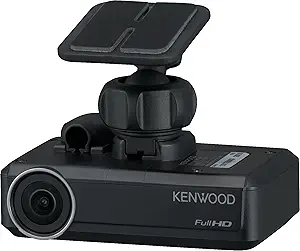
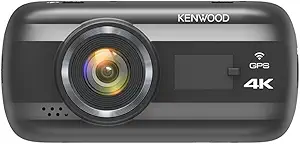
From an industrial design standpoint, Kenwood favors traditional camera silhouettes, often featuring integrated LCD viewfinders mounted on articulated suction or adhesive brackets. Their devices exhibit solid build quality with high-grade plastics designed to survive severe in-cabin temperature fluctuations. However, this classical form factor tends to be bulkier and more noticeable from outside the vehicle, which may compromise the stealth profile that many drivers desire to prevent break-ins or visual clutter across the windshield.
Viofo champions the wedge-shaped form factor, pioneered to hug the windshield contour tightly directly behind the rearview mirror. This ultra-low-profile aesthetic makes Viofo cameras virtually invisible to both the driver and outside passersby, eliminating unnecessary visual distractions while preserving structural stability against vibrations. Crucially, Viofo utilizes supercapacitors instead of lithium-ion batteries across its lineup, ensuring vastly superior thermal resistance to both blistering heat and freezing cold, which significantly extends hardware longevity and operational reliability over time.