Garmin vs Kenwood: Overview
Comparing Garmin and Kenwood helps you determine which brand is best suited for your needs in Dash Cams. Both brands offer strong choices depending on your budget and key feature requirements.
Key Features & Comparison
Evaluate factors such as build quality, warranty, customer satisfaction, and total value before making your final purchase choice between Garmin and Kenwood.
Features
Garmin distinguishes itself with a feature set driven by modern connectivity, automation, and advanced driver assistance systems (ADAS). Many Garmin models include forward collision warnings, lane departure alerts, and 'Go' notifications to alert distracted drivers when stopped traffic begins moving. A standout capability is Garmin's voice control, which allows drivers to safely save videos, take pictures, or toggle audio recording without removing their hands from the steering wheel. Furthermore, Garmin's ecosystem supports multi-camera sync—allowing up to four dash cams to connect via the Garmin Drive app—alongside Vault cloud storage and Live View capabilities when paired with an active Wi-Fi connection or parking cable.
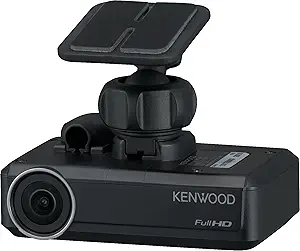
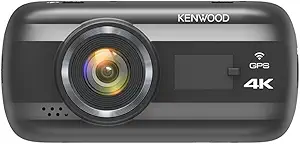
Kenwood takes a more hardware-centric approach to its feature architecture, emphasizing specialized recording modes and multi-angle surveillance. Many Kenwood models feature integrated dual-camera inputs directly on the unit, specialized polarizing filters (CPL) to cut windshield glare, and supercapacitors designed to withstand extreme cabin temperatures far better than standard lithium-ion batteries. Kenwood's flagship models often integrate high-precision G-sensors and parking surveillance modes that trigger rapid buffering. Furthermore, their seamless compatibility with Kenwood multimedia receivers allows drivers to view, control, and configure video feeds directly from their in-dash display, bypassing the need to fiddle with smartphone apps entirely.
Performance
In real-world optical performance, both brands deliver crisp video output, yet they handle dynamic lighting differently. Garmin uses sophisticated digital image processing, including proprietary Clarity HDR, to balance high-contrast environments such as entering and exiting tunnels or driving directly into blinding sunlight. Garmin models (especially 1440p and 4K variants) achieve impressive sharpness and frame rates, allowing for clear license plate recognition during daytime conditions. However, the ultra-compact form factor of Garmin cameras means their smaller sensor sizes can exhibit digital noise or graininess in pitch-black rural driving scenarios where external light is scarce.
Kenwood prioritizes optical clarity through the use of high-grade glass lenses and industry-standard Sony STARVIS image sensors, which deliver exceptional low-light sensitivity. The optical tuning in Kenwood cameras excels at suppressing headlight flare and capturing critical forensic details in extreme darkness. Additionally, Kenwood units often include an adjustable circular polarizing filter right out of the box, drastically reducing dashboard reflections that can otherwise obscure license plates on sunny days. In terms of thermal performance, Kenwood's robust housing and supercapacitor architecture give it a slight edge in resisting heat-related shutdowns during prolonged parking surveillance in sweltering climates.
Design
The aesthetic and physical design philosophies of these two manufacturers could not be more divergent. Garmin has revolutionized dash cam design by shrinking their devices down to the size of a key fob or matchbox. The Garmin Dash Cam Mini series, for instance, eliminates the screen entirely to achieve an ultra-stealthy footprint that hides effortlessly behind a rearview mirror, eliminating driver distraction. For models with screens, Garmin utilizes high-density, sharp LCDs alongside magnetic mounting pucks that make removing the camera quick and hassle-free, showcasing a masterclass in modern, minimalist consumer design.
Kenwood favors a classic, tactile automotive form factor that feels substantial and utilitarian. Their dash cams feature larger footprints, robust chassis materials, and generous built-in displays with dedicated physical buttons for navigation. While this makes Kenwood cameras more noticeable on the windshield, the larger chassis facilitates superior thermal dissipation and incorporates quick-release suction or adhesive mounts with integrated pass-through power connectors. The physical layout of Kenwood devices is tailored for instant on-dash review without a smartphone, appealing to drivers who prefer independent, fail-safe hardware over software-dependent, ultra-compact gadgets.