Karinear vs Summit: Overview
Comparing Karinear and Summit helps you determine which brand is best suited for your needs in Cooktops. Both brands offer strong choices depending on your budget and key feature requirements.
Key Features & Comparison
Evaluate factors such as build quality, warranty, customer satisfaction, and total value before making your final purchase choice between Karinear and Summit.
Features
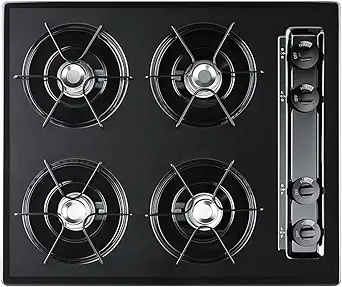
Summit approaches its feature set with utilitarian precision, focusing on mechanical reliability and essential kitchen safety. Depending on the model line, Summit cooktops feature tactile analog rotary dials, heavy-duty cast-iron continuous grates on gas variants, and push-to-turn safety mechanisms that prevent accidental activation. While Summit does offer digital touch-control induction and radiant models with timers and residual heat warnings, the brand prioritizes simplicity and robust electrical architecture over complex digital microprocessors, which significantly minimizes potential electronic failure points in high-heat cooking environments.
Karinear, by contrast, adopts a feature-dense strategy that punches well above its price class by equipping nearly all its cooktops with sleek, touch-sensitive sensor controls. Karinear units frequently incorporate 99-minute integrated digital timers, multi-stage child safety locks, precise 9-level power settings, and “booster” functions that temporarily surge wattage for rapid boiling. Additionally, Karinear frequently provides flexible zone pairing or dual-ring expansion elements on its radiant and induction models, giving users greater versatility when cooking with oversized pans—a dynamic feature layer that outpaces Summit’s more utilitarian, traditional element layouts.
Performance
In terms of thermal dynamics and power delivery, Summit delivers consistent, predictable output engineered to withstand intensive everyday use. Summit’s gas burners, often sourced with high-efficiency sealed Italian components, provide reliable simmer control alongside potent high-BTU output suitable for rapid searing. In their electric and induction segments, Summit units prioritize balanced duty cycles that manage internal ambient heat effectively within tight cabinetry enclosures, ensuring the appliances do not throttle power prematurely even under sustained high-load cooking conditions.
Karinear delivers impressive immediate thermal responsiveness, especially through its electromagnetic induction units that transfer energy directly to ferrous cookware with minimal heat loss. Water boils rapidly, and the discrete 9-level digital controls allow for fast adjustments across the cooking spectrum. However, Karinear’s lower-tier power electronics may exhibit more pronounced duty-cycling (pulsing on and off) at low-simmer settings compared to Summit’s smoother thermal stability. Additionally, under simultaneous multi-burner maximum loads, Karinear’s internal power-sharing management can lead to slight wattage throttling across shared zones, whereas Summit typically provides a more continuous, predictable baseline.
Design
Summit’s design language is rooted in industrial pragmatism, prioritizing clean lines, durable materials, and space-saving integration. The brand leans heavily into brushed 304-grade stainless steel surfaces, heavy enamel steel, and durable tempered ceramic glass sourced from industry leaders like EuroKera or Schott Ceran. Summit excels in odd-sized and compact dimensions—such as 12-inch, 20-inch, and 24-inch cutouts—making their units the architectural standard for galley kitchens, tiny homes, and compliant retrofits where precision dimensioning is paramount.
Karinear champions a minimalist, contemporary aesthetic characterized by frameless, ultra-low-profile black crystal glass surfaces that mount nearly flush with standard countertops. The absence of raised bezels and physical knobs gives Karinear cooktops a streamlined, modern visual appeal that is easy to wipe clean after meal prep. However, while Karinear’s aesthetic matches modern luxury kitchen trends, its glass substrates and light-gauge chassis construction may not offer the same structural resilience against heavy cast-iron cookware impacts as the heavily reinforced casings and grates found throughout Summit’s product catalog.