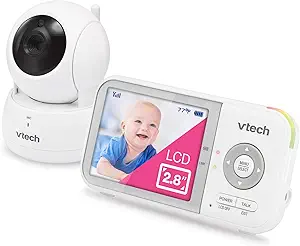









Babysense and VTech are two leading brands in the baby monitor market, each offering a range of models with various features to suit different needs. Babysense baby monitors are known for their advanced technology and high-quality video and audio. The brand offers a variety of monitors, including those with infrared night vision, room temperature monitoring, and two-way communication. A standout feature of Babysense monitors is the under-the-mattress movement sensor pad, which can detect if a baby stops moving for more than 20 seconds, providing an extra layer of safety. However, some users have reported false alarms with this feature. On the other hand, VTech baby monitors are recognized for their affordability and durability. They offer a range of audio and video monitors, with features such as DECT 6.0 digital technology for clear, interference-free audio, infrared night vision, and temperature sensors. Some models also include a two-way, intercom-like feature, allowing parents to soothe their baby from another room. However, compared to Babysense, VTech monitors often have a lower video quality and fewer advanced features. Despite this, VTech's reputation for reliable, straightforward technology makes it a popular choice among parents.
Key Features Comparison
Features
When evaluating feature sets, BabySense and VTech represent fundamentally different engineering philosophies, catering respectively to localized reliability and expansive, high-tech connectivity. BabySense leans heavily into dedicated, closed-loop FHSS (Frequency Hopping Spread Spectrum) architecture, which deliberately avoids Wi-Fi to eliminate hacking vulnerabilities and latency. Because of this focus, its core features are engineered around the immediate sensory environment of the nursery. Premium BabySense models stand out with their proprietary split-screen technology, allowing parents to monitor two cameras simultaneously on a single handheld screen with real-time audio tracking that switches dynamically to whichever room detects sound. Furthermore, BabySense often integrates specialized infant wellness features directly into its ecosystem, such as non-wearable movement sensor pads that track micromovements beneath the mattress, advanced multi-color ambient nightlights, and pre-programmed, high-fidelity acoustic lullabies designed to mask sudden ambient noises.
Conversely, VTech leverages its vast telecommunications infrastructure to provide feature-dense, digitally agile systems that frequently employ hybrid connectivity—functioning both as a local parent unit and via a smartphone app over Wi-Fi. This architectural difference gives VTech the technical upper hand regarding modern smart features, offering ultra-crisp 1080p to 2K resolutions, expansive digital zoom (up to 30x on high-end models like the VM901), and wide-angle panoramic panning with 360-degree mechanical rotation. VTech's technical strengths lie in its algorithmic monitoring, often boasting integrated sleep-tracking analytics, motion and sound-triggered video recording, and geofencing capabilities. While BabySense focuses on hardware-driven sensory monitoring, VTech excels in software-driven convenience, incorporating on-board temperature and humidity sensors with customizable alert profiles, two-way intercoms with natural voice filtering, and multi-user access permissions that allow remote caregivers to view feeds from anywhere in the world.
The practical trade-offs between these feature suites ultimately balance digital convenience against fail-safe physical monitoring. BabySense's closed system means fewer points of technological failure, instantaneous wake times, and plug-and-play simplicity; however, it lacks remote accessibility away from the home and typically settles for lower display resolutions (often 720p). VTech delivers rich, feature-loaded smart-home flexibility, advanced pan-and-tilt mechanics, and superior visual clarity, but it inherently introduces software complexities, such as firmware update dependencies and reliance on stable network bandwidth. For parents prioritizing specialized sensor-pad integration and zero-latency split-screen monitoring, BabySense is technically superior, whereas VTech remains the undisputed champion for parents demanding remote app versatility and advanced motorized optical controls.
Performance
When evaluating the core performance of baby monitors, transmission stability and signal reliability form the baseline of parental peace of mind, an area where BabySense and VTech take distinctly different engineering approaches. BabySense predominantly focuses on closed-circuit, non-Wi-Fi monitors utilizing enhanced 2.4GHz FHSS (Frequency-Hopping Spread Spectrum) technology. This design philosophy yields an exceptionally low latency feed, practically zero buffering, and an impenetrable local connection that is immune to home network outages or hacking vulnerabilities. VTech, conversely, spans both purely digital local monitors and versatile hybrid systems that integrate Wi-Fi connectivity. While VTech's local transmission is generally stable, its broader reliance on dual-mode features introduces the inherent performance variables of home broadband, occasionally suffering from occasional app-sync delays or bandwidth-throttling compared to BabySense's rock-solid, direct-link consistency.
In terms of audio-visual fidelity and sensory performance, the brands cater to slightly different end-user priorities. BabySense monitors excel in raw visual throughput, frequently boasting high-resolution pan-tilt-zoom (PTZ) cameras paired with balanced, high-contrast infrared night vision that avoids washing out a sleeping infant’s facial features. Furthermore, BabySense integrates seamlessly with its proprietary under-mattress micro-movement sensor pads, translating physical respiration data into real-time visual alerts with minimal false alarms. VTech answers with a richer suite of interactive software features and exceptional audio processing. VTech cameras often provide wider-angle lenses, superior dynamic range in low-light environments, and remarkably crisp, noise-filtered two-way talk channels. Additionally, VTech’s high-end monitors offer intelligent sound detection (differentiating between baby cries and ambient room noise) and dynamic multi-color night lights, pushing the boundary of technical feature sets, even if visual latency is slightly higher than that of BabySense.
The practical trade-offs regarding performance ultimately balance specialized continuous monitoring against holistic nursery ecosystem integration. BabySense delivers uncompromising real-time responsiveness and an ultra-reliable, plug-and-play architecture with exceptional physical battery endurance on its parent units, making it the superior technical performer for parents anxious about signal dropouts or software glitches. In contrast, VTech provides superior flexibility through its hybrid-connectivity hardware, giving working parents the ability to monitor the feed via a smartphone from outside the house while maintaining a dedicated base station inside. While VTech slightly trails BabySense in dedicated, sub-second video responsiveness and sensor-pad integration, it outpaces BabySense in peripheral digital enhancements, environmental tracking accuracy, and overall audio-filtering quality.
Design
When evaluating the design philosophy of baby monitors, BabySense and VTech represent two distinct approaches to nursery hardware. BabySense prioritizes a streamlined, utilitarian aesthetic built around rugged durability and intuitive, tactile interaction. Their parent units frequently feature ergonomic contours, thick bezels, and matte-finished plastics that resist scuffs and drops, making them ideal for the sleep-deprived parent. The button layouts are purposefully physical and deliberate, reducing accidental inputs in the dark. In contrast, VTech leans toward a sleeker, consumer-tech design language reminiscent of modern smart devices. VTech’s parent units often boast larger, edge-to-edge glass displays, high-gloss accents, and minimalist profiles that blend seamlessly into contemporary home decor. However, while VTech scores higher on initial modern visual appeal, the lighter, glossier casing can feel somewhat less robust in the hand compared to the dense, impact-resistant construction of BabySense units.
In terms of camera engineering and nursery integration, both brands showcase strong technical strengths tailored to different mounting and operational needs. BabySense cameras are compact, dome- or cylinder-style enclosures engineered with tight mechanical tolerances, resulting in whisper-quiet motorized pan-and-tilt mechanisms that prevent waking light sleepers. Their stable, weighted bases are designed to sit securely on flat surfaces, though their integrated wall-mounting brackets are somewhat basic. VTech, leveraging decades of telecommunications engineering, excels in versatile mounting mechanics. Many VTech baby units feature multi-axis ball joints, integrated screw grooves, and even flexible silicone wrap mounts in specific product lines, offering superior flexibility for awkward crib angles. Additionally, VTech frequently integrates ambient features directly into the camera chassis—such as multi-color nightlights and subtle, non-intrusive infrared LEDs—creating an all-in-one nursery aesthetic that eliminates the need for separate nightstand gadgets.
The practical trade-offs in design ultimately center on interface ergonomics and ecosystem cohesion. BabySense embraces a specialized, closed-system design where hardware is engineered solely for low-latency, RF-based monitoring. This allows their handheld units to include dedicated physical shortcut keys for split-screen viewing, volume, and zoom without navigating nested digital menus, though it limits design modularity. Conversely, VTech's design versatility stems from hybrid connectivity, where the physical industrial design accommodates both direct-to-parent-unit transmission and Wi-Fi streaming. While this yields sophisticated touchscreen interfaces and ultra-thin parent monitors, it often forces users into touchscreen menus for simple adjustments, which can be frustrating during nighttime check-ins. Parents seeking a focused, rugged tool designed for foolproof tactile handling will favor BabySense, while those prioritizing chic, multi-functional hardware with expansive screen real estate will find VTech's engineering more aligned with their lifestyle.
Related Videos
Conclusion
Babysense and VTech baby monitors both offer advanced technologies to ensure the safety of your child. Babysense monitors come with a variety of features such as infrared night vision, two-way talk back communication, room temperature monitoring, and lullaby playing capabilities. They also have a long-range of up to 900 feet in open space, which allows parents to monitor their baby from a distance. However, the brand has been criticized for occasional false alarms and connectivity issues. On the other hand, VTech baby monitors also offer features such as infrared night vision, two-way talk, and temperature sensors. They are known for their DECT 6.0 digital technology which provides crystal clear transmission, eliminating the annoying white noise you hear from analog monitors. Additionally, VTech monitors often have a longer battery life compared to Babysense. However, some users have reported issues with the monitor's range and durability. Comparatively, both brands offer similar features but the choice between the two often comes down to personal preference and specific needs such as range, battery life, and reliability.