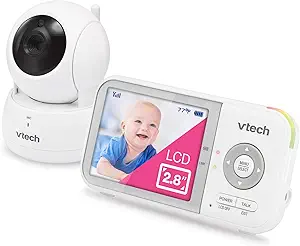






Nanit and VTech baby monitors are two leading brands in the baby monitor market, both offering a range of unique features and technologies. Nanit baby monitors are renowned for their advanced technology and comprehensive sleep tracking features. The Nanit Plus, for instance, offers high-definition video, background audio, real-time motion and sound notifications, and even insights into your baby's sleep patterns. It also boasts a humidity and temperature sensor, ensuring the baby's environment is always optimal. However, these advanced features come at a higher price point compared to other brands. On the other hand, VTech baby monitors are known for their affordability and reliability. The VTech DM221, for example, is a popular choice for its DECT 6.0 digital technology that guarantees clear, interference-free audio. It also offers a two-way, talk-back intercom system, allowing parents to soothe their baby from another room. However, VTech monitors generally lack the video capability and advanced sleep tracking features found in Nanit monitors. Therefore, while VTech may be a suitable choice for parents on a budget or those who prefer simplicity, Nanit may be more appealing to tech-savvy parents or those willing to invest in advanced sleep tracking capabilities.
Key Features Comparison
Features
Nanit’s feature suite is engineered around proprietary computer vision and machine learning. Its standout capability is Breathing Motion Monitoring, which reads specialized geometric patterns on fabric wraps and sleep sacks to monitor infant breathing rates without electronics touching the baby's skin. Beyond live streaming, the companion mobile application compiles comprehensive sleep architectures, automatically tracking sleep onset, wakeups, and caregiver interventions. Features such as customized sleep guidance, time-lapse video highlights, split-screen viewing, and digital memory books reflect its software-centric DNA, though unlocking its full historical analytic depth requires an ongoing Nanit Insights subscription.
VTech takes a hardware-forward approach, emphasizing practical utility and immediate parent control. Typical mid-to-high-tier VTech monitors include physical motorized pan-tilt-zoom cameras, localized ambient temperature and humidity sensors, two-way intercom capabilities, and pre-programmed lullabies with soothing sound profiles. Higher-end models feature hybrid functionality—allowing monitoring via an included 5-to-7-inch parent unit as well as an optional mobile app. VTech omits complex biometric tracking and algorithmic sleep coaching, but compensates by providing essential surveillance tools straight out of the box with zero subscription fees, making it an exceptionally feature-rich option for everyday nursery management.
Performance
Performance benchmarks highlight clear divergent engineering choices between the two manufacturers. Nanit relies entirely on local and cloud Wi-Fi transmission, streaming in crisp 1080p HD video with superior high-dynamic-range color reproduction and exceptional digital night vision. Because Nanit continues to stream over a local network even if the external internet goes down, local reliability is robust; however, performance remains vulnerable to home router congestion, bandwidth limitations, and occasional application load times. The low-latency audio stream and background audio mode on mobile devices are well-executed, but relying exclusively on a smartphone can lead to battery drain and notification interference.
VTech excels in plug-and-play operational stability through the use of dedicated 2.4GHz FHSS (Frequency-Hopping Spread Spectrum) wireless technology on its handheld units. This closed-circuit connection ensures near-zero latency, total immunity to internet service outages, and heightened security against unauthorized network access. While VTech's video resolutions (often 720p or standard HD) and night-vision clarity lag behind Nanit’s ultra-sharp optics, its instantaneous audio response and physical parent console eliminate the friction of app navigation. VTech monitors deliver rock-solid, uninterrupted feed reliability within typical suburban home ranges, making them ideal for rapid night-waking response.
Design
Nanit’s industrial design is minimalist, architectural, and safety-conscious. The camera head features a clean, puck-shaped form factor with smooth matte plastics that easily detaches for travel. Its mounting solutions—including the signature overhead Floor Stand and secure Wall Mount—incorporate thoughtful integrated cable management channels that enclose cords safely against the wall, neutralizing strangulation hazards. The aesthetic fits seamlessly into high-end, contemporary nurseries. Furthermore, the specialized Breathing Wear garments are thoughtfully designed with 100% cotton constructions and high-contrast geometric prints specifically calibrated for optical recognition without compromising infant comfort.
VTech embraces standard consumer electronics ergonomics, prioritizing functionality, modularity, and durability over boutique styling. Its cameras generally feature rounded domes or robotic pan-tilt designs, while the parent units are fitted with tactile navigation buttons, kickstands, and intuitive battery indicators. Wall-mounting brackets are often included, though cord management is typically standard and requires third-party safety covers. While VTech hardware lacks the sleek, modern aesthetic and premium materials of Nanit, its rugged design withstands inevitable drops, and the physical parent monitor offers an intuitive interface that babysitters and grandparents can operate without instruction.
Related Videos
Conclusion
Nanit and VTech baby monitors are both highly regarded in the field of baby monitoring technology, but they have different strengths and weaknesses. Nanit baby monitors are known for their advanced features and high-quality video. They offer sleep tracking and insights, which is a unique feature that not many baby monitors on the market have. The Nanit Plus even offers temperature and humidity sensors, a nightlight, and nature sounds to help soothe your baby to sleep. However, these advanced features come with a higher price tag. On the other hand, VTech baby monitors are a more budget-friendly option. They offer reliable basic features like high-quality audio and video, two-way, talk-back intercom, and infrared night vision. Some models also offer lullabies and temperature sensors. However, they lack the advanced sleep tracking and insights that Nanit offers. In terms of video quality, VTech's full-color video might not be as crisp as Nanit's, but it's still clear enough for you to keep an eye on your baby. Both brands are reliable and offer a range of options to suit different needs and budgets.
Compare current retail pricing, active promotions, and verified stock availability directly from authorized stores: