Infant Optics vs Safety 1st: Overview
Comparing Infant Optics and Safety 1st helps you determine which brand is best suited for your needs in Baby Monitors. Both brands offer strong choices depending on your budget and key feature requirements.
Key Features & Comparison
Evaluate factors such as build quality, warranty, customer satisfaction, and total value before making your final purchase choice between Infant Optics and Safety 1st.
Features
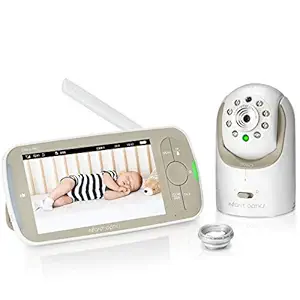
Infant Optics approaches feature development through a mechanical and sensory lens, providing tangible, hardware-level controls rather than software gimmicks. The hallmark of their lineup is the optical lens interchangeability, allowing parents to physically switch between normal, wide-angle, and zoom lenses to suit the nursery layout. Advanced audio features, particularly their Active Noise Reduction (ANR) chip, filter out ambient background hums from white noise machines or fans to isolate a baby's genuine cries. Additionally, their parent units feature tactile buttons, physical antenna deployment, accurate temperature sensors, and two-way talk channels, offering a suite of zero-latency features that require no account creation or firmware updates to function reliably.
In contrast, Safety 1st builds its feature set around digital connectivity, cloud software, and ecosystem synergy. Their cameras typically rely on ultra-wide fixed lenses paired with digital zoom, compensating for the lack of optical modularity with high-resolution digital sensors and smart app overlays. Safety 1st smart monitors frequently incorporate features such as motion and sound alerts sent directly to smartphones, background audio playback while using other apps, temperature and humidity tracking, and compatibility with voice assistants like Amazon Alexa or Google Assistant. While Safety 1st excels in remote access and multi-user sharing—allowing grandparents or working parents to check in from anywhere—Infant Optics holds the advantage in deterministic, dedicated hardware features that don't depend on cloud uptime.
Performance
Performance in baby monitoring centers on video clarity, audio fidelity, and transmission reliability. Infant Optics excels exceptionally in transmission stability and responsiveness due to its secure 2.4GHz FHSS wireless link. Because it does not compete for home Wi-Fi bandwidth, the video stream on the dedicated parent unit is virtually free of lag, delivering real-time frame rates with instant two-way audio feedback. In low-light conditions, Infant Optics cameras utilize finely tuned infrared arrays that deliver crisp, noise-free grayscale imaging. Battery performance on their standalone parent units is engineered for full-night duty, reinforced by modular, user-replaceable battery packs that extend the functional lifespan of the system.
Safety 1st monitors, while capable of delivering sharp 1080p high-definition streams under optimal network conditions, are inherently subject to the constraints of home Wi-Fi and cloud routing. When internet bandwidth fluctuates, users may experience dropped frames, resolution downscaling, or momentary disconnections. However, where Safety 1st shines is in boundary-free operational range; as long as the home camera has an internet connection and the caregiver has mobile data, the monitor performs across town or across the globe. Low-light infrared performance is competitive and clean, but the continuous streaming load can rapidly deplete smartphone batteries, positioning Safety 1st slightly behind Infant Optics for seamless, hands-off overnight monitoring.
Design
From an industrial design standpoint, Infant Optics embraces a functional, utilitarian aesthetic. The camera units are compact, motorized, and built to withstand years of repositioning, featuring a balanced base suitable for both wall mounting and tabletop placement. The distinct manual lens collar serves as both a design signature and an intuitive mechanical interface. The accompanying parent units prioritize ergonomics with contoured grips, clearly textured physical buttons, tactile volume rockers, and kickstands designed for bedside nightstands. The aesthetic is intentionally medical and utilitarian—eschewing sleek minimalism in favor of rugged, immediate usability that sleepy parents can operate by muscle memory in the dark.
Safety 1st designs its monitors with a softer, contemporary home-decor approach. Their cameras frequently feature minimalist silhouettes, subtle color accents, matte finishes, and smooth geometric lines intended to blend seamlessly into modern nursery styling without drawing attention. Because the smartphone acts as the primary display, Safety 1st eliminates the bulk of dedicated parent hardware, resulting in a cleaner nursery aesthetic overall. The physical camera mounts are often flexible and unobtrusive, engineered for quick, non-damaging installation. While Safety 1st captures the modern design award for visual integration into living spaces, Infant Optics wins on human-centered ergonomics with a dedicated receiver built specifically for bedside vigilance.