



Infant Optics vs BabySense: Overview & Brand Philosophy
In the competitive arena of nursery technology, few names carry as much dedicated hardware prestige as Infant Optics and BabySense. Both brands built their reputations by prioritizing closed-loop, non-Wi-Fi solutions that appeal directly to parents concerned about digital privacy, network dropouts, and cybersecurity vulnerabilities. While the broader consumer electronics market has trended heavily toward cloud-connected, app-reliant monitors, these two manufacturers have maintained focus on ultra-reliable, dedicated radio frequency (FHSS) systems engineered specifically for zero-latency monitoring.
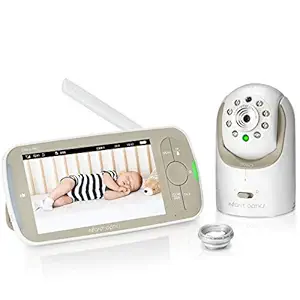
Infant Optics revolutionized the domestic baby monitor market with the launch of its legendary DXR-8, focusing its brand philosophy on optical modularity, mechanical dependability, and user-serviceable components. Rather than chasing every iterative tech trend, Infant Optics views the baby monitor as an essential safety utility that must operate flawlessly out of the box, night after night. Their engineering ethos emphasizes high-grade physical lenses, tactile controls, and durable construction designed to withstand the inevitable drops and spills of parenthood.
BabySense, developed by Hisense Ltd., approaches nursery monitoring from a distinctly medical and holistic safety pedigree. Originating as a pioneer in non-contact infant breathing movement monitors in the early 1990s, BabySense approaches the nursery with an ecosystem-oriented mindset. Their modern video monitor lineup reflects a brand philosophy grounded in comprehensive coverage and sensory redundancy, offering advanced split-screen viewing, integrated sensor mat compatibility, and expansive display sizes tailored for parents who prioritize continuous, simultaneous monitoring of multiple children or zones.
Key Differences & Technological Comparison
While both brands utilize secure 2.4GHz FHSS digital transmission to bypass the vulnerabilities of home Wi-Fi, their execution diverges significantly across optics, audio processing, and system architecture.
Optical Architecture and Sensor Performance: Infant Optics is renowned for its proprietary interchangeable lens system. On flagship models like the DXR-8 PRO, the company integrates active noise reduction (ANR) chipsets alongside high-definition sensors. The standout technical feature remains their hardware-level optical zoom and wide-angle lenses, which adjust the field of view physically without the digital pixelation and degradation common to digital-only zoom monitors. BabySense, particularly with models like the V43 and MaxView, counters with high-resolution digital pan-tilt-zoom (PTZ) cameras offering expansive physical pan ranges, ultra-wide fields of view, and native high-definition display panels that mitigate digital zoom distortion through sheer sensor resolution.
Audio Processing and Interference Handling: Infant Optics holds a noticeable edge in ambient noise isolation. Their proprietary Active Noise Reduction technology processes incoming nursery audio through a digital sound processor (DSP), filtering out constant background hums from white noise machines, air purifiers, and humidifiers while isolating the specific acoustic frequencies of infant vocalizations and cries. BabySense employs a more traditional, highly sensitive microphone setup featuring standard VOX (Voice Operated Exchange) trigger thresholds, which effectively alerts parents to room activity but may pass through heavy white noise if the threshold sensitivity is set too high.
Display Hardware and Multi-Camera Implementation: BabySense leads in multi-room viewing and display versatility. BabySense parent units frequently feature large 5-inch to 5.5-inch screens with native auto-cycling and true split-screen capabilities that allow parents to view two cameras simultaneously with real-time visual feedback. Infant Optics maintains a more concentrated, single-camera operational focus; while their parent units support multi-camera pairing, viewing multi-camera setups typically requires manual switching or auto-scan intervals rather than a persistent, simultaneous multi-feed split-screen layout.
Pros & Cons Comparison
Infant Optics
- Pro: Active Noise Reduction (ANR) technology successfully eliminates white noise and nursery ambient sound from the parent audio feed.
- Pro: Interchangeable physical optical lenses provide crystal-clear zoom and wide-angle configurations without resolution loss.
- Pro: Exceptionally durable build quality with modular, user-replaceable lithium-ion battery packs.
- Pro: Superior low-light sensor tuning delivers crisp, well-balanced infrared night vision without blowing out highlights.
- Con: Lack of true simultaneous split-screen viewing on parent units limits multi-child surveillance efficiency.
- Con: Generally carries a higher price point per camera unit compared to competitor bundles.
BabySense
- Pro: True split-screen and multi-camera display modes allow concurrent real-time monitoring of multiple rooms.
- Pro: Generous display real estate, with vivid 5-inch to 5.5-inch parent units offering high visual clarity.
- Pro: Excellent value propositions, frequently bundled with two pan-tilt cameras or compatible breathing sensor pads.
- Pro: Extensive physical pan and tilt articulation limits blind spots in larger nursery layouts.
- Con: Standard audio monitoring lacks advanced background noise filtering, often relaying sound machine noise.
- Con: Parent unit plastic enclosures feel slightly more lightweight and less ruggedized against hard drops than Infant Optics.
Performance, Durability & Value Analysis
From an operational standpoint, signal stability on both platforms is exceptional, maintaining clear audio-video feeds through multiple interior walls up to approximately 700 to 1,000 feet in standard residential layouts. However, long-term durability metrics reveal divergent engineering strategies. Infant Optics builds parent units with substantial structural ribbing and modularity in mind. The ability to source and replace the battery independently extends the operational lifespan of an Infant Optics monitor well beyond the typical toddler phase, yielding high trade-in or resale value. BabySense units demonstrate solid internal component reliability, though their parent monitors are more prone to scuffs and exhibit standard lithium-polymer degradation that is less readily serviceable by the end user.
When assessing value, BabySense undeniably delivers more hardware per dollar. For parents requiring dual-camera coverage from day one, a BabySense two-camera bundle routinely costs substantially less than an Infant Optics base unit paired with an add-on camera. Infant Optics positions itself firmly as a premium, single-stream monitoring investment where the cost premium is justified by acoustic engineering, proprietary optical glass, and heavy-duty industrial design. If absolute fidelity in a single crib environment is the baseline, Infant Optics provides unmatched day-to-day satisfaction, whereas BabySense dominates the multi-room cost-to-performance equation.
Final Verdict: Which Brand Should You Choose?
The decision between Infant Optics and BabySense rests on your nursery architecture, acoustic environment, and the number of children you need to monitor simultaneously.
Choose Infant Optics if: You are monitoring a single nursery, rely heavily on loud sound machines or air filters, and prioritize pristine audio-visual fidelity. The active noise cancellation alone is transformative for light-sleeping parents who do not want to listen to a steady stream of static hiss all night. Furthermore, if you value mechanical longevity, user-replaceable parts, and true optical zoom, Infant Optics stands as the premier hardware choice.
Choose BabySense if: You are expecting twins, monitoring siblings across two distinct rooms, or want maximum physical screen real estate without breaking the bank. BabySense provides the superior multi-camera command center via its seamless split-screen interfaces and cost-effective bundles. It is the definitive pick for budget-conscious parents who require expansive multi-angle coverage and seamless integration with broader infant movement monitoring ecosystems.
Features
When comparing feature sets and technical engineering, Infant Optics and BabySense approach the baby monitor market with distinct product philosophies. Infant Optics, anchored by its flagship DXR-8 PRO, focuses on modular optical engineering and refined audio clarity. Its hallmark technical strength is the proprietary Active Noise Reduction (ANR) chipset, which uses real-time sound processing to filter out ambient background hums from white noise machines, fans, and purifiers, isolating only the baby’s cries. Additionally, Infant Optics utilizes an interchangeable optical lens system, allowing parents to mechanically swap between standard, wide-angle, and optical zoom lenses. This optical zooming capability maintains high-definition clarity without the pixelation common to purely digital zoom mechanisms. Combined with seamless remote pan, tilt, and digital zoom (PTZ), an integrated room temperature display, and robust 2.4GHz FHSS wireless security that bypasses the cloud entirely, Infant Optics designs its hardware for hyper-focused, latency-free parental utility.
Conversely, BabySense offers a feature set geared toward multi-camera ecosystems and dual-view functionality, best exemplified by models like the V43 and Cloud/HD hybrid monitors. BabySense excels significantly in split-screen and auto-scan capabilities, allowing parents with multiple children to simultaneously monitor two camera feeds side-by-side with dynamic audio switching—a feature where Infant Optics historically struggles due to single-view limitations. Beyond the standard remote PTZ, temperature sensing, and secure non-Wi-Fi transmissions, BabySense frequently integrates an array of ambient soothing tools directly into the camera base, such as multi-color nightlights and pre-programmed, high-fidelity lullabies and white noise. While their digital zoom lacks the physical lens customization of Infant Optics, BabySense makes up for it in operational flexibility, offering wider native digital viewing angles, longer-range antenna engineering, and broader bundled multi-camera packages out of the box.
Ultimately, the practical trade-offs regarding features boil down to environmental noise-management versus multi-room coverage. Infant Optics provides superior engineering precision for single-nursery monitoring; its Active Noise Reduction and true optical lenses deliver a clearer acoustic and visual experience when dealing with noisy environments and distant crib placements. However, it lacks advanced multi-child tracking tools. BabySense represents the more versatile, feature-dense system for growing families, trading specialized optical hardware and background-noise filtering for indispensable split-screen monitoring, integrated sensory soothing functions, and superior dual-camera synchronization.
Performance
When evaluating core performance in the baby monitor space, Infant Optics and BabySense represent two distinct engineering philosophies centered on dedicated, hack-proof FHSS (Frequency Hopping Spread Spectrum) wireless technology. Infant Optics, best exemplified by its flagship DXR-8 PRO, delivers exceptional acoustic performance and signal reliability. Engineered with active Noise Reduction technology, the unit uses digital signal processing to filter out ambient background hums from white noise machines, air purifiers, and fans, ensuring parents only hear genuine vocalizations and crying. Its visual clarity relies on a robust 720p HD sensor complemented by interchangeable optical lens technology, providing true optical zoom without the pixel degradation common in digital-only zoom monitors. The pan-tilt-zoom (PTZ) mechanism is nearly silent, operating with fluid precision that minimizes the risk of waking light sleepers.
Conversely, BabySense directs its engineering strengths toward comprehensive surveillance throughput and multi-camera split-screen processing. Flagship models, such as the BabySense Max View, push display performance to a vivid 1080p full-HD resolution paired with expansive 5.5-inch parent units. BabySense outperforms Infant Optics when monitoring multiple children simultaneously, as its chipset seamlessly processes split-screen feeds without the severe frame rate drops or audio latency that often afflict multi-camera setups. Furthermore, BabySense typically integrates enhanced microbolometer-driven infrared sensors that illuminate dark nurseries more evenly, eliminating the "flashlight" glare effect in the center of the frame that can obscure fine movements in dimly lit environments.
The practical trade-offs between the two brands boil down to acoustic refinement versus multi-room visual versatility. Infant Optics excels in audio fidelity and localized optical manipulation, making it the superior choice for single-room installations where isolating infant vocalizations from ambient soundscapes is paramount. However, its range throughput can be slightly more vulnerable to signal degradation through dense structural materials like brick or plaster. BabySense counters with raw visual resolution, stronger multi-camera scalability, and an exceptionally stable wireless transmission range that reliably bridges dead zones in larger, multi-story homes. While BabySense lacks the active acoustic filtering hardware found in Infant Optics, its balance of high-definition night vision and fluid split-screen execution presents a superior operational package for growing families.
Design
When evaluating the design philosophy of Infant Optics against BabySense, the contrast lies primarily between specialized mechanical engineering and sleek, screen-centric consumer electronics. Infant Optics, heralded by its flagship DXR-8 and DXR-8 PRO models, adopts an industrial, utilitarian design built with durability and ergonomics at the forefront. Its defining architectural achievement is the modular optical lens system, allowing parents to physically swap between wide-angle, normal, and optical zoom lenses. This approach ensures pure optical clarity without the digital pixelation common in purely electronic zooms. The parent unit is engineered with tactile, physical buttons and an external antenna that may appear retro compared to modern smartphones, but this deliberate layout allows for effortless, one-handed navigation in a pitch-black nursery. The camera base features robust, ultra-quiet mechanical pan-and-tilt gimbals designed to withstand frequent adjustments without alerting a sleeping infant.
Conversely, BabySense approaches baby monitor design through a contemporary, lifestyle-oriented lens characterized by minimalist housings and larger display interfaces, such as those found on the V43 and MaxView lines. BabySense units prioritize high screen-to-body ratios, featuring expansive 4.3-inch to 5.5-inch parent units with streamlined button layouts, though this occasionally necessitates traversing on-screen menus for functions that Infant Optics assigns to dedicated physical keys. In terms of camera design, BabySense incorporates motorized pan, tilt, and high-ratio digital zoom within compact, dome-like enclosures that blend seamlessly into modern nursery decor. The engineering advantage for BabySense often includes built-in adjustable night-light accents and intuitive split-screen viewing capabilities integrated directly into the parent display architecture, catering well to multi-camera, multi-room setups.
From a practical trade-off perspective, Infant Optics excels in functional longevity, physical interface accessibility, and specialized acoustic-visual hardware, such as its patented active noise reduction and patent-pending LED sound-level bars that clearly wrap around the device. However, its form factor is bulkier, and the manual lens-swapping mechanic requires parents to keep track of small, detached optical accessories. BabySense offers a visually refined, integrated experience where pan, tilt, and zoom are managed entirely digitally from the parent unit, eliminating separate parts and offering a more modern aesthetic. Nevertheless, BabySense’s reliance on digital enlargement results in lower resolution when zoomed in, and its camera enclosures feel slightly more lightweight and plasticky compared to the dense, impact-resistant composite chassis employed by Infant Optics.