Angelcare vs Infant Optics: Overview
Comparing Angelcare and Infant Optics helps you determine which brand is best suited for your needs in Baby Monitors. Both brands offer strong choices depending on your budget and key feature requirements.
Key Features & Comparison
Evaluate factors such as build quality, warranty, customer satisfaction, and total value before making your final purchase choice between Angelcare and Infant Optics.
Features
The defining feature of the Angelcare line is its proprietary wireless movement sensor pad, which uses micro-movement detection technology to alert parents if no movement is recorded for 20 seconds. Beyond this core capability, higher-end Angelcare models provide ambient room temperature tracking with color-changing chromatic notifications, two-way talk-back intercoms, and hybrid viewing architecture that lets users switch between a dedicated handheld monitor and an encrypted smartphone app. This integration of biometric monitoring alongside standard audiovisual surveillance creates a multi-layered safety net that Infant Optics simply does not attempt to replicate.
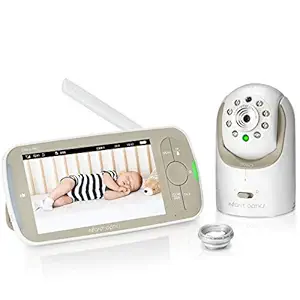
Conversely, Infant Optics directs its engineering prowess entirely into physical camera mechanics and localized transmission. Its hallmark feature is the interchangeable optical lens system, allowing parents to hot-swap between standard, optical zoom, and wide-angle lenses without suffering the severe pixel degradation typical of digital-only zoom monitors. Infant Optics deliberately eschews Wi-Fi connectivity in favor of proprietary, frequency-hopping FHSS 2.4GHz channels, offering instantaneous boot times, zero latency, and absolute immunity to internet outages or remote network intrusions. While Infant Optics lacks respiratory sensor inputs, its physical pan-tilt-zoom (PTZ) agility and modular optical hardware surpass Angelcare's camera versatility.
Performance
In real-world performance metrics, Angelcare excels in continuous physiological monitoring but requires a precise operational environment. The movement sensor pad performs with exceptional sensitivity, reliably distinguishing between shallow neonatal breathing and complete absence of movement, provided it is deployed on a rigid wooden base underneath a standard foam mattress. However, thick spring mattresses or ambient vibrations from ceiling fans can occasionally trigger false positives or mask movement, necessitating user calibration. In terms of wireless stability, Angelcare’s dedicated handheld systems perform well, though their hybrid mobile app components can occasionally suffer from the standard latency spikes and handshake delays inherent to home Wi-Fi networks.
Infant Optics delivers an exceptionally consistent, low-latency performance benchmark on dedicated closed-circuit RF signals. Operating without the overhead of cloud encoding, its video feed renders in genuine real-time, eliminating the audio-video lag that can plague network-connected monitors. Signal range through thick drywall and structural masonry remains among the best in the market, supported by robust active noise-canceling microphones that filter out ambient white noise while amplifying sharp crying frequencies. Infant Optics also boasts rapid response times on motor actuation during pan-tilt adjustments, whereas Angelcare cameras can occasionally feel slightly sluggish when repositioning remotely.
Design
Angelcare’s design language is distinctly modern, minimalist, and European, characterized by smooth, organic curves, clean white matte finishes, and unobtrusive silhouettes that blend seamlessly into contemporary nursery aesthetics. The brand's parent units tend to feature large, high-resolution touchscreens with sleek glass interfaces that mimic modern smartphones. Furthermore, the physical movement pad is ultra-thin and engineered to reside invisibly beneath the mattress, ensuring the nursery remains free of cumbersome wearable attachments or intrusive cabling around the crib rails.
Infant Optics adopts a more utilitarian, tactile, and industrial design ethos. The handheld monitors are deliberately thick, featuring substantial rubberized grips, heavy-duty drop resistance, and dedicated tactile buttons that can be navigated by muscle memory in a dark room. The camera units are sturdy, balanced, and incorporate accessible bayonet mounts for rapid lens changes. While Infant Optics hardware may lack the high-gloss, ultra-sleek aesthetic appeal of Angelcare's minimalist housings, its structural resilience, repairability, and ergonomic layout are explicitly tailored to withstand the rough-and-tumble conditions of everyday parenting.