Pyle vs Arcam: Overview
Comparing Pyle and Arcam helps you determine which brand is best suited for your needs in AV Receivers. Both brands offer strong choices depending on your budget and key feature requirements.
Key Features & Comparison
Evaluate factors such as build quality, warranty, customer satisfaction, and total value before making your final purchase choice between Pyle and Arcam.
Product Selection
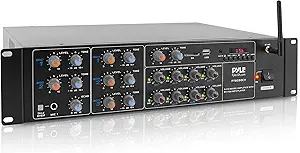
When examining product selection, Pyle and Arcam occupy opposite ends of the audio-visual spectrum, reflecting entirely different manufacturing strategies and target demographics. Pyle casts a wide net with an expansive catalog focused primarily on budget-friendly, multipurpose equipment. Their lineup includes hybrid pre-amplifiers, desktop stereo receivers, commercial multi-zone units, and rudimentary 5.1 channel surround-sound systems. Many Pyle models integrate utilitarian features tailored for casual entertainment and public address, such as dual microphone inputs for karaoke, front-facing USB and SD card media readers, and integrated FM tuners. However, this breadth lacks depth in modern home theater standards, as Pyle rarely offers contemporary decoding formats like Dolby Atmos or high-bandwidth HDMI 2.1 switching.
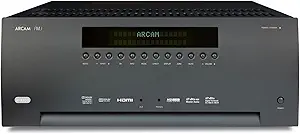
Conversely, Arcam focuses on a curated, precision-engineered portfolio designed specifically for discerning audiophiles and high-end custom home cinema installations. Their AVR lineup, characterized by models such as the AVR11, AVR21, and AVR31, prioritizes high-performance multi-channel audio processing and cutting-edge digital connectivity. Arcam receivers typically feature full 16-channel decoding capabilities for immersive formats like Dolby Atmos, DTS:X, and Auro-3D, along with uncompressed 8K video pass-through and advanced streaming integration via Roon, AirPlay 2, and Chromecast. Rather than flooding the market with dozens of redundant configurations, Arcam provides a scaled hierarchy based on amplification topology and power output, ensuring that each product addresses serious cinephile and audiophile requirements.
Affordability
Most affordable brands





In terms of affordability, Pyle represents the absolute entry point of the audio receiver market, catering to consumers who need functional amplification without a significant financial commitment. The vast majority of Pyle's receiver catalog retails well under two hundred dollars, making their units accessible for workshop sound, budget garage setups, small retail spaces, or rudimentary living room systems. This low pricing is achieved by leveraging high-volume manufacturing, standard commodity parts, and legacy analog circuitry. For buyers with rigid budget constraints who simply need a device to amplify line-level audio and connect a pair of passive speakers, Pyle offers undeniable cost accessibility that few competitors can rival.
Arcam, by contrast, operates in the luxury and high-end specialty tier, where products require an investment that is several orders of magnitude higher. An Arcam receiver regularly demands thousands of dollars, positioning it out of reach for casual listeners and firmly within the domain of affluent home theater enthusiasts and commercial integrators. This price differential is justified by Arcam's investment in premium components, such as toroidal power transformers, advanced digital-to-analog converters (DACs), and proprietary Class G amplification architecture. Additionally, Arcam incorporates expensive third-party licensing, notably full-bandwidth Dirac Live room correction, representing a sophisticated investment in long-term performance rather than short-term cost savings.
Quality/Durability
The build quality and durability of Pyle receivers reflect their extreme cost-cutting design parameters, resulting in mixed long-term reliability. The external chassis work typically consists of lightweight stamped sheet metal with plastic control knobs and toggle switches that convey an inexpensive tactile feel. Internally, Pyle products generally utilize low-cost printed circuit boards, generic power supplies, and minimal heat sinking, which can lead to thermal stress under prolonged use. While these components are often adequate for low-demand, intermittent use, users frequently report issues such as persistent hums, noisy volume potentiometers, and erratic Bluetooth connectivity over extended periods of operation.
In stark contrast, Arcam adheres to rigorous industrial and acoustic engineering standards, delivering robust hardware built to withstand years of demanding performance. Arcam chassis are constructed from heavy-gauge, resonance-damped aluminum and steel, designed to isolate sensitive internal circuitry from both mechanical vibrations and electromagnetic interference. Internally, the architecture features oversized power supplies, custom-designed heat sinks, and high-grade capacitors capable of delivering stable current during dynamic audio transients. While modern Arcam receivers possess complex software that occasionally requires firmware updates to resolve initial bugs, the underlying physical hardware is exceptionally resilient and engineered for longevity.
Reputation
Brand reputation highlights the stark philosophical divide between these two audio manufacturers. Pyle is widely recognized among mainstream consumers as a budget-oriented mass-market brand that prioritizes low prices and diverse utility over prestige. In audio enthusiast and professional circles, Pyle is seldom regarded as a serious home theater manufacturer, instead viewed as a provider of utilitarian, disposable electronics for background listening, novelty use, or budget commercial PA applications. While it enjoys positive feedback from casual shoppers on broad e-commerce platforms, its brand equity carries virtually no weight among high-fidelity purists.
Arcam, originating from Cambridge, England, carries a revered heritage dating back to the mid-1970s and is respected worldwide for its contributions to British high-fidelity engineering. The brand has built an esteemed reputation among audiophiles, custom integrators, and sound engineers for prioritizing musicality in an audio-visual category often dominated by sterile, feature-bloated black boxes. Although Arcam has experienced occasional criticism regarding complex software interfaces and the quirks of advanced digital processing, its standing as a manufacturer of reference-grade, audiophile-approved home theater components remains firmly intact and globally respected.
Sound Quality
Sound quality is the domain where the technical divergence between Pyle and Arcam is most pronounced. Pyle receivers deliver basic, utilitarian sound reproduction that functions adequately for spoken word, party music, or background audio, but falls short of high-fidelity standards. These units often suffer from elevated total harmonic distortion (THD), higher signal-to-noise ratios, and limited dynamic headroom. Consequently, at higher volumes, Pyle amplifiers frequently clip or produce an audible noise floor, while the overall soundstage remains flat, compressed, and lacking in instrumental separation, micro-detail, and bass control.
Arcam designs its receivers with a sound-first philosophy, resulting in an acoustic presentation that excels in both multi-channel movie immersion and delicate two-channel musical reproduction. Leveraging high-end ESS Sabre DACs, meticulous analog filtering, and on higher models, sophisticated Class G amplification, Arcam receivers deliver immense clarity, ultra-low distortion, and profound dynamic range. Bass is rendered with tight, controlled authority, and the soundstage is expansive and three-dimensional. Furthermore, the inclusion of Dirac Live room correction allows Arcam units to actively measure and optimize acoustics to the specific room environment, producing an acoustic precision and tonal neutrality that Pyle cannot emulate.
Compare current retail pricing, active promotions, and verified stock availability directly from authorized stores:
Compare current retail pricing, active promotions, and verified stock availability directly from authorized stores: