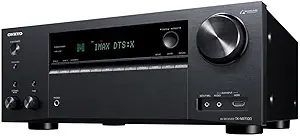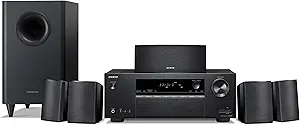





The Onkyo and Marantz AV receivers are two highly regarded brands in the audio industry, each with unique features and technologies. The Onkyo AV receiver, particularly the TX-NR696 model, is known for its THX Certified Select theater reference sound, which provides a cinema-like audio experience. It also features the latest HDMI standards, supporting 4K/60p and HDR (High Dynamic Range), and has integrated Chromecast and DTS Play-Fi, which allows for seamless streaming from various devices. However, some users have reported issues with Onkyo's customer service, and the receiver's interface could be more user-friendly. On the other hand, the Marantz AV receiver, such as the SR5014 model, is renowned for its high-quality sound, featuring HDAM circuit boards for more dynamic, detailed, and accurate sound. It also supports the latest HDMI standards, including 4K/60p and HDR, and features HEOS technology for multi-room streaming. Additionally, the Marantz receiver has a more intuitive user interface compared to the Onkyo. However, the Marantz receiver is generally more expensive than the Onkyo, which could be a deterrent for some buyers. Both brands are highly competitive in the market, each offering unique features that cater to different user preferences.
Key Features Comparison
Product Selection
Onkyo AV Receivers and Marantz AV Receivers both offer a wide product selection to cater to various audio needs and preferences. Onkyo, known for its high-quality sound and innovative features, provides a plethora of options ranging from entry-level receivers to high-end models. Their latest technology includes features such as THX Certified Select for a cinema-like experience, Dynamic Audio Amplification for powerful sound control, and Dolby Atmos and DTS:X for immersive audio. However, some users have reported reliability issues with Onkyo receivers, which could be a potential drawback for some. On the other hand, Marantz AV Receivers, renowned for their warm, musical sound, also offer a diverse product range. Marantz's latest models come equipped with technologies like HEOS Built-in for multi-room streaming, Dolby Atmos, DTS:X, and Auro-3D for an immersive 3D sound experience, and eARC (Enhanced Audio Return Channel) support for the highest quality sound from your TV. The brand is often praised for its reliability and longevity, but some users feel that Marantz receivers are priced higher than comparable models from other brands. When compared to other brands, both Onkyo and Marantz hold their own in terms of product selection, offering a variety of options to suit different user needs and budgets.
Affordability
Most affordable brands





Onkyo and Marantz are both renowned brands in the audio receiver industry. When it comes to price, Onkyo AV receivers are generally more affordable than Marantz AV receivers. Onkyo's latest models, such as the TX-NR696, offer a wide range of features including Dolby Atmos and DTS:X support, 4K HDR pass-through, and integrated streaming services, all at a competitive price point. This makes Onkyo a popular choice for those looking for a balance between cost and performance. On the other hand, Marantz AV receivers, such as the SR6014, are priced higher. However, the higher price tag comes with a reputation for superior sound quality and a robust set of features. Marantz receivers are often lauded for their musicality and warmth, and the latest models also include support for Dolby Atmos, DTS:X, and Auro-3D, as well as advanced room correction technologies. However, the premium pricing may not appeal to budget-conscious consumers. When compared to other brands in the market, both Onkyo and Marantz offer good value for their respective price ranges, with Onkyo being a more budget-friendly option and Marantz catering to the high-end segment.
Quality/Durability
Onkyo AV Receivers are well-known for their quality and durability in the audio equipment market. They are equipped with the latest technology such as Dolby Atmos, DTS:X, and HDMI support for 4K/60 Hz, 3D, Audio Return Channel, DeepColor™, x.v.Color™, and LipSync. The receivers also have built-in Wi-Fi for wireless audio streaming and an enhanced setup experience. Onkyo's build quality is robust, with a solid metal chassis, large power transformer, and high-quality capacitors and resistors. However, some users have reported issues with HDMI boards failing over time, which can be a significant drawback considering the importance of HDMI connectivity in modern home theater setups. On the other hand, Marantz AV Receivers are also renowned for their quality and durability. They feature advanced reference-class 32-bit AKM D/A converters, HDAM circuit boards for more detailed sound, and Audyssey MultEQ XT32 for easy setup and room correction. Marantz receivers are also known for their durability, with a solid metal chassis and high-quality internal components. However, they tend to be more expensive than Onkyo receivers, which may be a consideration for some buyers. In terms of durability, Marantz receivers have a better reputation compared to Onkyo, with fewer reported issues with components like HDMI boards. This makes Marantz receivers a more reliable choice for long-term use.
Reputation
Onkyo and Marantz are two reputable brands in the audio equipment industry, particularly known for their AV receivers. Onkyo AV receivers have a strong reputation for delivering high-quality sound, with the latest models incorporating cutting-edge technologies like Dolby Atmos and DTS:X for immersive, 3D sound. They are also known for their robust build quality, and many users appreciate their user-friendly interfaces and extensive connectivity options. However, some users have reported issues with the HDMI boards in some models, which can affect their long-term reliability. On the other hand, Marantz AV receivers are highly regarded for their exceptional audio performance, with a warm, detailed sound that many audiophiles love. The latest Marantz receivers feature advanced technologies like HEOS multi-room audio and voice control compatibility with Amazon Alexa, Google Assistant, and Apple Siri. They also boast high-quality components and a distinctive design aesthetic that sets them apart from other brands. However, Marantz receivers tend to be more expensive than their Onkyo counterparts, which may be a deciding factor for some consumers. Despite this, both brands are well-respected in the audio industry and offer a range of AV receivers to suit different needs and budgets.
Sound Quality
When evaluating sound quality, Onkyo and Marantz reflect distinctly different sonic philosophies rooted in their proprietary amplification engineering. Onkyo leverages its Dynamic Audio Amplification (DAA) framework, engineered specifically for high current delivery, transient speed, and low-impedance drive capability. This design yields a punchy, articulate, and highly dynamic sound signature that excels at explosive home theater sequences where rapid transient response and visceral low-end impact are paramount. By contrast, Marantz employs its signature Hyper Dynamic Amplifier Modules (HDAM) paired with current feedback topology, prioritizing analog warmth, micro-detail, and an expansive, three-dimensional soundstage. Rather than pushing forward dynamic immediacy, Marantz crafts a smoother, musical presentation with pristine mid-range clarity, rendering dialogue, acoustic instruments, and high-resolution stereo playback with exceptional warmth and nuance.
The acoustic calibration ecosystems supported by both brands further shape their respective auditory outputs. Modern Onkyo AVRs heavily feature Dirac Live room correction alongside their native AccuEQ, giving them a decisive technical edge in modern frequency and impulse-response management. Dirac Live is particularly adept at mitigating room modes and correcting time-domain smearing, resulting in surgical channel steering and tight, controlled bass integration in multi-channel Dolby Atmos and DTS:X environments. Marantz models typically rely on the Audyssey MultEQ XT32 suite (with higher-end units offering optional Dirac Live upgrades at an added cost). While Audyssey XT32 provides accessible, highly musical tonal smoothing and robust low-frequency filtering via Sub EQ HT, out-of-the-box it leans toward a warmer, occasionally less defined acoustic boundary compared to Dirac's clinical phase precision.
Ultimately, the sound quality trade-off between the two brands depends on primary use-case allocation and listener preference. Onkyo delivers superior value for dedicated cinephiles and action gaming enthusiasts who crave uncompromised dynamic headroom, neutral transparency, and aggressive multi-speaker immersion without paying a boutique premium. Marantz represents the premier choice for audiophiles pursuing a dual-purpose home theater and critical stereo listening system. While Marantz commands a higher price-to-performance ratio and may sound comparatively reserved during blockbuster dynamic swings, its harmonic richness, low-noise pre-amplifier stage, and non-fatiguing high-frequency roll-off make it undeniably superior for long, immersive musical sessions.
Conclusion
When it comes to the latest technologies in audio receivers, both Onkyo and Marantz AV receivers have made significant strides. Onkyo AV receivers are known for their high-resolution audio support, Dolby Atmos, and DTS:X compatibility, which provide immersive and realistic sound. They also feature dynamic audio amplification for delivering high current power to control the speakers, ensuring accurate and dynamic sound. On the downside, some users have reported issues with the HDMI board, which could affect the overall performance. Marantz AV receivers, on the other hand, are renowned for their proprietary HDAM circuit boards, offering superior low-level linearity and detail retrieval. They also support the latest audio formats, including Dolby Atmos, DTS:X, and Auro-3D, for a three-dimensional sound experience. Marantz receivers also come with HEOS technology, allowing users to stream music throughout the house using a simple app. However, Marantz receivers are generally more expensive than Onkyo, which might be a deciding factor for some consumers. When compared to other brands, both Onkyo and Marantz have their unique strengths and weaknesses, but they both deliver high-quality sound and support the latest audio technologies.