Marantz vs Harman Kardon: Overview
Comparing Marantz and Harman Kardon helps you determine which brand is best suited for your needs in AV Receivers. Both brands offer strong choices depending on your budget and key feature requirements.
Key Features & Comparison
Evaluate factors such as build quality, warranty, customer satisfaction, and total value before making your final purchase choice between Marantz and Harman Kardon.
Product Selection
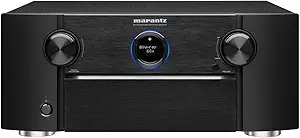
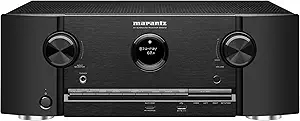
When examining modern product selection in the audio-video receiver market, Marantz holds an overwhelming advantage over Harman Kardon. Marantz maintains a robust, frequently updated portfolio designed to address virtually every segment of the home theater landscape. Their lineup ranges from the innovative, space-saving NR and Cinema slimline series—which cater to consumers wanting high performance without a bulky footprint—up to reference-grade, full-chassis monoliths like the Cinema 30 and AV 10/AMP 10 separates. Marantz systematically incorporates the latest technological standards across this broad range, ensuring compatibility with cutting-edge HDMI 2.1 switching, 8K passthrough, multi-channel processing up to 15.4 channels, and widespread multi-room integration through the HEOS platform.
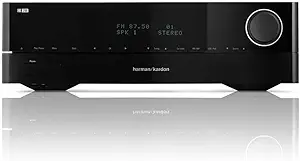
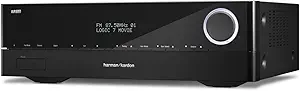
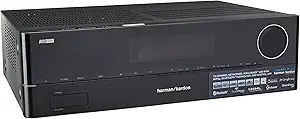
In stark contrast, Harman Kardon has effectively vacated the traditional multi-channel AV receiver category in recent years. While legacy models from the AVR series were once dominant market fixtures, Harman Kardon's parent entity, Harman International (a subsidiary of Samsung), strategically pivoted the brand toward luxury lifestyle audio, Bluetooth speakers, and soundbars like the Citation series. Consequently, consumers seeking an authentic Harman Kardon AV receiver are largely relegated to the secondary market or discontinued vintage stock. This leaves Harman Kardon with virtually no contemporary footprint for multi-channel home cinema receivers, making Marantz the only viable option between the two for modern, forward-compatible AV receiver shopping.
Affordability
Most affordable brands





The question of affordability between these two brands presents an asymmetric comparison due to Harman Kardon's legacy status in the AVR market versus Marantz's active retail presence. Historically, Harman Kardon positioned its AVR series with a strong value proposition, often undercutting Japanese rivals while delivering conservative, high-current power ratings that outperformed their price tags. Today, acquired via pre-owned or refurbished channels, Harman Kardon AVRs represent an exceptionally affordable gateway for budget-conscious consumers seeking traditional 5.1 or 7.1 stereo-centric setups, frequently trading hands for a fraction of the cost of contemporary equipment.
Marantz operates strictly in the premium tier of the consumer audio spectrum, which is reflected in their substantial retail pricing. Even their entry-level slimline models command higher prices than standard entry-level receivers from competing brands like Denon or Yamaha, while their flagship Cinema series easily reaches into several thousands of dollars. However, Marantz justifies this premium investment through extensive modern functionality, proprietary analog processing components, expansive licensing (including Dolby Atmos, DTS:X, Auro-3D, and IMAX Enhanced), and state-of-the-art room calibration suites like Audyssey MultEQ XT32 and Dirac Live. For modern feature sets, Marantz demands a premium budget, whereas Harman Kardon's affordability is tied exclusively to legacy-market bargains.
Quality/Durability
Marantz has cultivated an exceptional standard of build quality and mechanical durability, characterized by meticulous industrial design and audiophile-grade interior architecture. Their modern AV receivers feature rigid, resonance-dampening chassis, copper-plated components in flagship models, and robust multi-layer casing designed to mitigate electromagnetic and mechanical interference. Internally, Marantz uses customized, high-tolerance power transformers and their proprietary Hyper Dynamic Amplifier Modules (HDAM), which yield lower noise and faster slew rates. Coupled with highly refined heat dissipation engineering and stable digital firmware support, Marantz receivers are built to handle prolonged, demanding high-output thermal stress over years of operation.
Harman Kardon receivers earned high marks in their prime for brute-force power supply construction, featuring massive toroidal or heavy-gauge EI transformers coupled with high-current discrete amplification stages. These engineering choices gave their units immense physical heft and dependable dynamic power handling. Nevertheless, later generations of Harman Kardon digital AVRs occasionally suffered from quality-control anomalies, notably around digital processing boards, complex HDMI handshake failures, and cooling fan fatigue. While their analog amplifier sections remain legendary for their endurance, the long-term reliability of legacy digital switching makes vintage Harman Kardon units more vulnerable over time compared to the mature, bulletproof architecture found in contemporary Marantz models.
Reputation
Marantz enjoys an elite reputation that has seamlessly bridged the golden era of analog hi-fi with the complex demands of the digital home theater age. Founded by Saul Marantz, the brand carries a storied pedigree among critical listeners and custom installers alike. Within the AV receiver community, Marantz is universally recognized for prioritizing musicality and warmth alongside cinematic authority, setting it apart from more utilitarian or clinical competitors. Its reputation is continually reinforced by glowing critical acclaim, strong retail distribution, and active support for advanced audio formats and cutting-edge digital integration, solidifying its place as a top-tier benchmark in modern home theater.
Harman Kardon retains legendary status in audio history as an essential pioneer, having introduced the world's first true hi-fi receiver (the Festival D1000) and later cultivating the revered Citation line. Decades of engineering excellence established the brand as a champion of high-current capability and ultra-wide bandwidth, earning deep respect among traditional audiophiles. However, its contemporary reputation has become fractured; while still regarded as a heritage giant, the brand's pivot away from component-level AV receivers toward design-centric lifestyle audio has diluted its standing among home cinema enthusiasts. Today, Harman Kardon is viewed fondly through a lens of nostalgia, whereas Marantz maintains active, authoritative credibility in modern home cinema reproduction.
Sound Quality
Sound quality is the arena where both brands display distinct, deeply engineered sonic philosophies, yet Marantz stands out for its refinement, spatial precision, and tonal elegance. Marantz receivers are celebrated for their proprietary HDAM circuitry, which imparts a signature sound often described as warm, lush, and remarkably musical without sacrificing transient detail. In home cinema applications, Marantz renders dialogue with natural realism and maps complex surround-sound panning with laser-like spatial coherence. Furthermore, the integration of advanced acoustic calibration—such as Audyssey Sub EQ HT and Dirac Live—allows Marantz receivers to correct for room anomalies effectively, preserving bass timing, vocal clarity, and immersive micro-dynamics across multi-channel soundtracks.
Harman Kardon's sonic profile is legendary for its raw dynamic impact, authoritative bass control, and effortless current delivery. Utilizing high-current capability (HCC) and ultra-wide bandwidth amplifier designs, Harman Kardon units historically excelled at driving difficult, low-impedance speaker loads with muscular grip and visceral punch. Their sonic signature leans slightly more neutral and muscular than Marantz, rendering movie explosions and explosive orchestral crescendos with startling impact. However, lacking contemporary 3D spatial decoding like modern Dolby Atmos rendering and constrained by older, rudimentary room-correction algorithms (such as EzSet/EQ), Harman Kardon cannot deliver the immersive dimensionality, delicate resolution, and tailored spatial envelope that a modern Marantz receiver effortlessly provides.