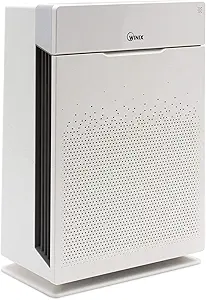
Winix vs Alen: Overview
Comparing Winix and Alen helps you determine which brand is best suited for your needs in Air Purifiers. Both brands offer strong choices depending on your budget and key feature requirements.
Key Features & Comparison
Evaluate factors such as build quality, warranty, customer satisfaction, and total value before making your final purchase choice between Winix and Alen.
Features
The technological architectures of Winix and Alen highlight divergent approaches to airborne contaminant neutralization and user autonomy. Winix heavily emphasizes its proprietary PlasmaWave technology, a bipolar ionization system that generates hydroxyls to actively neutralize viruses, bacteria, and chemical vapors at a molecular level without producing harmful ozone levels. Complemented by responsive infrared or dual Smart Sensors for ambient particulate and gas detection, Winix devices frequently incorporate intuitive auto-modes, light-sensing sleep routines, and basic app connectivity on select models, providing a comprehensive feature set that operates autonomously out of the box.
Alen, on the other hand, approaches air hygiene through high-capacity physical adsorption and mechanical refinement rather than ionization. Its defining feature is the BreatheSmart modularity, allowing users to select specialized True HEPA filters customized with heavy antimicrobial layers, toxic chemical absorbers, or dense carbon beds for severe VOCs and odors. Furthermore, Alen outpaces Winix in digital refinement with its Alen Air app and high-precision laser particle counters that measure PM2.5 concentrations in real time. Rather than relying on simple colored LED rings, Alen delivers actionable indoor air metrics, Wi-Fi-enabled scheduling, and seamless smart-home ecosystem integration designed for data-conscious users.
Performance
In raw particulate capture, both brands adhere to strict True HEPA standards, trapping 99.97% of airborne particles down to 0.3 microns, yet they diverge in mechanical delivery and environmental scalability. Winix purifiers, such as the ubiquitous 5500-2 and C545, demonstrate exceptional air exchange velocity in small to medium-sized rooms. Their fan assemblies are tuned for high static pressure, rapidly clearing smoke, pollen, and pet dander. However, this aggressive throughput comes at the expense of acoustics; Winix units can produce a noticeable high-frequency hum and mechanical turbulence on higher fan settings, making them less ideal for noise-sensitive sleeping environments.
Alen demonstrates its engineering prowess through acoustic management and large-space airflow dynamics. Utilizing aerodynamic chamber designs and heavy-duty, whisper-quiet motor assemblies, Alen units maintain high CADR ratings across massive square footages while generating low-frequency, unobtrusive pink noise. This acoustic profile is clinically validated to promote restful sleep rather than interrupt it. Additionally, Alen's high-capacity filters boast significantly more surface area and deeper active carbon beds than standard Winix cassettes, ensuring superior single-pass removal efficiency of heavy volatile organic compounds and persistent household odors over prolonged operating periods.
Design
From an industrial design standpoint, Winix focuses on conventional, appliance-grade aesthetics built primarily for function over form. Characterized by front-facing plastic intake grilles, top-mounted mechanical or capacitive push-buttons, and monochromatic color palettes, Winix models resemble traditional consumer electronics. While the build quality is durable and includes practical recessed carry handles, the visual presence does not attempt to blend seamlessly into contemporary interior decor. The materials prioritize lightweight handling and straightforward assembly, resulting in a look that feels distinctly utilitarian.
Alen subverts traditional appliance design by treating the air purifier as a customizable architectural element. Featuring clean Scandinavian lines, sleek vertical intake silhouettes, and an array of swappable designer front panels—ranging from faux wood grains and brushed metallics to matte neutral tones—Alen purifiers integrate effortlessly into high-end residential interiors. The tactile quality of Alen’s housings, from the magnetic panel latches to the seamless flush-mounted capacitive touch rings, conveys premium craftsmanship. This deliberate focus on aesthetics ensures that the unit can be placed prominently in a living space without compromising the room's interior design language.